
Trending
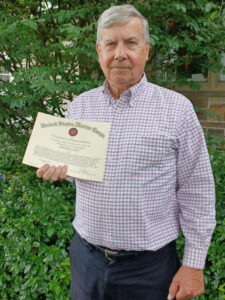
BOARDMAN -- For Michael Shepherd, joining the United States Marine Corps in 1972 was a practical decision.
Fresh out of high school, he wanted to attend college but lacked the financial resources to do so. The Marines offered a path forward through the GI Bill, along with lessons that would shape the rest of his life.
Shepherd, now 72, graduated from high school in June 1972 and reported to Marine Corps Recruit Depot Parris Island that August. After boot camp, he was assigned to Truck Company at Camp Lejeune, North Carolina, where he spent about 18 months transporting troops and supplies.
His professionalism and attention to detail earned him a transfer to Guam, where he joined Charlie Company, Marine Barracks, at a naval installation responsible for protecting highly sensitive military assets during the Cold War.
His assignment placed him at one of the most strategically important military locations in the Pacific. During the Cold War, Guam served as a major forward base for American forces and housed thousands of nuclear weapons intended to deter Soviet aggression. The island's location made it a critical hub for U.S. military operations, and Marines assigned to security details were responsible for protecting some of the nation's most sensitive assets.
"Doing security for nuclear weapons is nasty business," Shepherd said.
The assignment was demanding. Marines conducted nighttime patrols through dense jungle, searching for potential threats to the base.
"We would make sweeps through the jungle at night," he recalled. "It was so intensely dark that you couldn't get any farther apart than you could see the next person."
The constant vigilance took a toll. Shepherd said Marines often averaged only a few hours of sleep each night while balancing patrols, weapons maintenance and other duties.
One night, an attack on the compound brought the danger into sharp focus.
"Suddenly there was a crazy amount of shooting going on," Shepherd said. "Everyone heard it, so we were all running down to the guard shack. Rounds were hitting the shack."
The attackers were never identified, but the incident left a lasting impression. Shepherd said the experiences in Guam led to nightmares that continued for decades. Only recently did he complete treatment for post-traumatic stress disorder connected to those events.
Looking back, he believes the military culture of pushing forward without time to process traumatic experiences contributes to PTSD among veterans.
"Our training meant that if you had a tough day, you just got up the next day and went back on post," he said.
After Guam, Shepherd returned to Camp Lejeune and spent the final 19 months of his service working as driver and assistant to the Division Sergeant Major of the 2nd Marine Division.
"It was the exact opposite of my Guam experience," he said. "There was far less stress with this position."
He completed his active-duty service in 1976 and used his GI Bill benefits to attend Youngstown State University.
The transition back to civilian life was not easy.
"The first year after I left active duty was the toughest time of my life," Shepherd said. "It was as if I had been dropped on a different planet."
Over time, however, he found his footing. After earning his degree, he joined Youngstown State University's Media Services department in 1980. He spent decades working at the university, advancing through several positions before moving into athletics as assistant coordinator and ticket manager.
Even after retirement, his love of learning continued, leading him back to YSU to earn a master's degree in history. Today, Shepherd credits the Marine Corps with providing skills that served him throughout his career and personal life.
"One of the things I took from the military is the ability to remain calm when there is chaos all around," he said. "I can shut out the chaos, see the problem, develop a solution, and apply it."
Perhaps most importantly, he says the Marines gave him confidence.
"Even now, at 72, I think I can do anything I set my mind to."
Shepherd views his military service as one chapter in a much larger story. Yet the discipline, resilience and determination he developed during those four years continue to guide him more than five decades later.