
AAUW program highlights power of collaboration for career prep
Trending
BOARDMAN -- Building a bridge between classroom learning and real-world careers was the focus of a program Tuesday hosted by the American Association of University Women, as local education leaders and workforce partners came together to discuss how collaboration is shaping the future for students across Eastern Ohio.
The program took place at the United Way of Youngstown and the Mahoning Valley's Volunteer Resource Center in Boardman, and continued AAUW's annual theme, "Collaboration and Empowerment through Education."
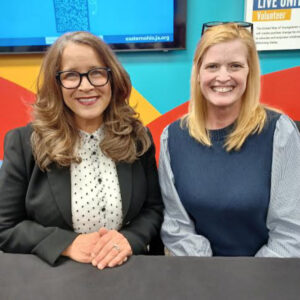
The evening's presentation, "From Classroom to Career: Bridging Education and Workforce Readiness through Real-World Application," featured insights from Michele Merkel, president of Junior Achievement of Eastern Ohio and Traci Hostetler, superintendent of the Educational Service Center of Eastern Ohio.
Together, the speakers painted a clear picture: preparing students for the future takes more than textbooks -- it requires meaningful, hands-on experiences and strong partnerships between schools, businesses and community organizations.
LEARNING BY DOING
Merkel emphasized that one of the biggest challenges facing education today is not what students are learning, but how often they can apply that knowledge in real-life situations.
"Bridging the gap means moving beyond theory," she said. "Students need the chance to experience how learning connects to real life."
Programs through Junior Achievement are designed to do just that. At the Junior Achievement Discovery Center, students step into realistic simulations that mirror everyday financial and workplace decisions. In JA BizTown, elementary students operate a mock city -- running businesses, earning paychecks and managing budgets. In JA Finance Park, middle school students take on adult financial responsibilities, from balancing expenses to making long-term financial choices.
"These are immersive experiences," Merkel said. "Students see the consequences of their decisions in real time, which makes learning both meaningful and memorable."
She added that these opportunities are especially important in helping students understand the wide range of career paths available locally -- from advanced manufacturing and health care to logistics and entrepreneurship.
SKILLS THAT MATTER
Both Merkel and Hostetler highlighted a consistent message from employers: while academic knowledge is important, success in today's workforce depends heavily on soft skills.
"Across industries, we hear the same priorities -- communication, teamwork, critical thinking and reliability," Merkel said.
Hostetler echoed that sentiment, pointing out that work ethic, punctuality and problem-solving are among the most sought-after qualities in new employees.
"These are skills that never go out of style," she said.
A key takeaway from the discussion was the importance of introducing career readiness at a young age. Programs now begin as early as elementary school, where students are introduced to basic concepts like earning, saving and teamwork. By middle school, that foundation grows into exploration and decision-making, helping students connect their interests to potential career paths.
"Career readiness is not just for high school," Merkel said. "It benefits every student, no matter what path they choose."
TECHNOLOGY MEETS CAREER EXPLORATION
At the Educational Service Center, career counselors are working directly with students across 30 school districts in five counties, helping guide them toward future success.
Hostetler described how innovative tools, including virtual reality, are transforming career exploration.
Using VR technology such as Transfr, students can experience simulations of real workplaces -- from hospital operating rooms to skilled trades environments -- giving them a clearer understanding of potential careers.
"It allows students to see what a job is really like before they commit to a path," Hostetler explained. "That leads to better decisions and greater success down the road."
Despite the progress, challenges remain. Both speakers pointed to gaps in access and funding as ongoing barriers. Not all students have equal opportunities for career exploration, particularly in rural or under-resourced communities.
Hostetler noted that while schools are increasingly expected to provide career guidance, funding for such programs is often limited.
"Schools are doing everything they can," she said, "but these initiatives require continued support."
THE ROLE OF COMMUNITY PARTNERSHIPS
One of the strongest themes of the evening was the importance of collaboration. Local businesses play a critical role by offering mentorship, internships and insight into workforce needs. More than 50 businesses participate in advisory efforts with the Educational Service Center, helping shape programs that align with real-world demands.
"These partnerships make learning authentic," Merkel said. "When students interact with professionals from their own community, it helps them envision their future."
The impact of these collaborative efforts can already be seen in students like Brogun Nelson, a sophomore at United High School.
After meeting with a career counselor, Brogun was introduced to the Information Technology Pre-Apprenticeship program at Youngstown State University. Despite being the youngest participant, he excelled in the program and quickly found his passion for IT.
Since then, Brogun has completed more than 400 hours of work-based learning alongside his school's IT coordinator, gaining valuable hands-on experience. He is set to begin a summer internship with Astoria, further expanding his skills.
By the end of the school year, Brogun will earn his CompTIA IT Fundamentals certification and plans to continue his education at the Columbiana County Career and Technical Center.
His story, Hostetler said, is a powerful example of what can happen when students are given the right tools and opportunities.
As the workforce continues to evolve, both speakers agreed that education must focus on adaptability and lifelong learning. While technology and industries may change, foundational skills -- communication, integrity and critical thinking -- will remain essential.
"It's not just about preparing students for their first job," Merkel said. "It's about preparing them for a lifetime of change."