
Rockin’ out of the red: Covelli, amp log record summer surplus
Trending
YOUNGSTOWN -- The city-owned Youngstown Foundation Amphitheatre and Covelli Centre had a record-breaking third quarter, largely because of several successful outdoor concerts that drew crowds after Ohio eliminated COVID-19 pandemic restrictions.
The facilities generated a $128,294 operating surplus between July and September -- a quarter that has traditionally been the worst.
Also, the surplus was generated without having to use any of a federal Shuttered Venue Operators Grant that JAC Management Group, which operates the facilities for the city, received.
Until this year, the facilities lost money in 12 of the 15 third quarters since the Covelli Centre opened.
The city opened the amphitheatre in June 2019 in an effort to reverse that trend.
Summer is traditionally the worst for indoor entertainment facilities such as the center, said Eric Ryan, JAC president.
"This has typically been our worst quarter, but this year we had the best third quarter ever," he said. "If you had asked me in March if we'd be able to make $128,000 in the third quarter, I would have thought you were crazy. But once the restrictions were lifted in June, we booked acts and it was a huge success."
Gov. Mike DeWine lifted attendance capacity restrictions June 2 at entertainment facilities.
The amphitheater and center also generated $21,011 for the city from a 5.5 percent admission tax on tickets in the third quarter, according to city Finance Director Kyle Miasek. Because the payments lag by about five or six weeks, the city received $73,373 in October and this month for ticket tax from events in August and September, respectively, and will show up in the fourth quarter numbers, he said.
During the first six months of the year, the city collected $10,122 from the tax.
TRUE SNAPSHOT
This was the first third quarter in which Ryan could book a full summer concert series at the amphitheater.
The facility opened later than scheduled in 2019 so it was a challenge to book acts that summer, and was closed last year because of the COVID-19 pandemic, Ryan said.
"This is the first true snapshot of what we can do in the third quarter," he said.
Miasek said: "The objective of city council and the prior and current administrations was to use the amphitheater as a conduit to sustain the Covelli Centre during those summer months when performers typically choose outdoor arenas. The fact we achieved record numbers post-COVID shows the grand plan is meeting our expectations."
Before this year, the best third quarter for the city was a $35,320 operating surplus in 2011. The only two other years with operating surpluses in the third quarter were small amounts: $3,658 in 2015 and $4,040 in 2016.
The amphitheater had 15 events in this third quarter, including eight national concerts. Those eight included Alice Cooper, Nelly, Brett Young and Train, which all sold at least 3,500 tickets, Ryan said.
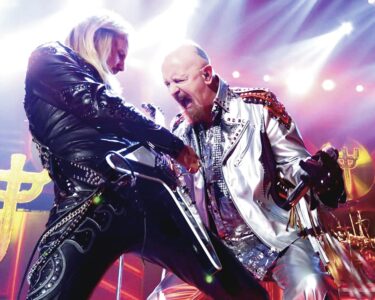
Also, the Covelli Centre had two concerts by Judas Priest and Breaking Benjamin and a show by comedian Jim Gaffigan that Ryan said sold well.
"A majority of the shows were well attended," he said. "It was indicative of people wanting to come be entertained during the summer after the pandemic restrictions."
The amphitheater had to cancel three shows in the third quarter because of COVID-19 cases among crew members for Counting Crows, Little Big Town and I Love the 90s as well as Foreigner in October, Ryan said.
"Although the pandemic continues to affect our booking and the event industry as a whole, especially indoors, we are pleased with what we have been able to accomplish this season, and we will continue to navigate through these trying times," Ryan said.
VENUE HELP
The center and amphitheater lost $22,130 during the first six months of this year. That would have been significantly worse if not for JAC using $419,878 from the federal Shuttered Venue Operators Grant it received to cover operating expenses.
Overall, JAC, which manages other facilities, received about $1.6 million from SVOG, Ryan said.
Because the third quarter was so strong, there was no need to use any SVOG money for the city-owned facilities, he said.
Through the first nine months of the year, the amphitheater and center had a $106,164 operating surplus. Because of the unknowns from the pandemic and uncertainty about a federal grant, the city had budgeted the facilities to have a $356,347 deficit for the first nine months.
The fourth quarter is projected to have a surplus of about $15,000.
"The fourth quarter should be close to that," Ryan said. "We had a couple of acts move from the fourth quarter to next year's first and second quarters. We'll end the year with a surplus."
The facilities have had annual operating profits since JAC took over management of the Covelli Centre in 2008. The center opened in October 2005, and the amphitheater opened in June 2019.
The city borrowed $11.9 million in 2005 to pay its portion of building the $45 million center. Most of the funding came from a federal allocation.
Youngstown paid $1.46 million in principal in July toward the loan it took out in 2005 to pay its portion of the center. It is the largest amount ever paid by the city toward the principal with the previous largest amount being $900,000 in 2019 and 2020.
The city now owes $5.1 million.
Youngstown could pay the rest of the principal owed on the center in three to four years.
The city paid nothing in principal until 2011 -- only interest during those years.
The interest rate was high in those early years such as in 2007 when it was 6.88 percent. The city paid $818,720 in interest that year.
In comparison, it paid 1 percent interest last month and last year.
Youngstown also borrowed $4 million in 2018 from the U.S. Department of Housing and Urban Development to pay for the $8 million amphitheater. The rest of the money came from naming-rights deals.
The city is repaying that loan over 20 years, starting last year. With interest, those annual payments are $205,180.
dskolnick@vindy.com