Symptoms are main drivers for a phlebotomy
DEAR DR. ROACH: My husband was diagnosed with secondary polycythemia in 2011. His hematocrit test (HCT) was 57%. He was referred to a hematologist. The hematologist would order a phlebotomy when his HCT was high. My husband decided to go to a Veterans Affairs health care center for his care to save money.
He saw a nurse practitioner at the VA. She said the new guidelines for treating secondary polycythemia that is not genetic is to go by symptoms, not numbers. She refused to order phlebotomies unless he was having dizzy spells or headaches. His HCT was 54.3%. He never had dizziness or headaches when his HCT was high.
He returned to his hematologist, who ordered him to have phlebotomies. His blood kept clotting during the phlebotomy. Are there new guidelines to go by the symptoms and not the numbers? Can this be dangerous?
• P.G.
ANSWER: Primary polycythemia, also called polycythemia vera or polycythemia rubra vera, is a type of blood cancer that causes the bone marrow to make too many red blood cells. Secondary polycythemia means that it isn’t a blood cancer that’s causing too many red cells; instead it’s some other identifiable cause. Low blood oxygen is the most common one I see by far, which can be due to lung disease, sleep apnea, or high altitudes among other less-common causes.
Secondary polycythemia can also be caused by tumors that produce the growth factor erythropoietin. There are a handful of other causes like rare genetic mutations, endocrine tumors, and abnormal blood vessels in the brain. When the cause can be identified, it is treated as much as possible. Aspirin is often recommended to reduce the risk of blood clotting.
The nurse practitioner at the VA was correct that a phlebotomy (literally bloodletting; the removal of about half a unit of blood, up to a full unit) has not been shown to help people who do not have symptoms with secondary polycythemia.
Furthermore, if the HCT (the proportion of blood that is comprised of red blood cells) goes below 55%, many people with secondary polycythemia will get the sensation of shortness of breath or fatigue. For this reason, symptoms (which can also include itching all over especially after a bath or a shower, vision changes, and feeling full too early) are the main drivers for a phlebotomy.
Since the main risk at these high levels of HCT is abnormal blood clots (in the deep veins of the legs and pelvis or the veins to the lungs, for example), aspirin is a more important intervention than bloodletting.
ToYourGoodHealth@med.cornell.edu
Lifestyles
Use wipes to ease pain on dog paw
DEAR HELOISE: I noticed that my dog was constantly licking his feet; I’m not certain, but it could be due to ...
Bridge by Steve Becker
Some of the most sophisticated plays in bridge are forced upon declarer by the set of circumstances he encounters. ...

Health advice is all over social media. Here’s how to vet claims
HINTS FROM HELOISE: Use wipes to ease pain on dog paw
DEAR HELOISE: I noticed that my dog was constantly licking his feet; I’m not certain, but it could be due to ...
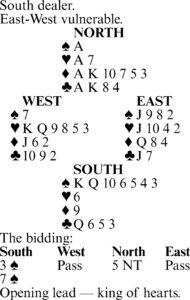
Bridge by Steve Becker