

Will the FDA’s crackdown make drug commercials disappear?
We have been complaining about direct-to-consumer (DTC) prescription drug advertising for decades. Far too often, the commercials make it seem as if their products are magical. People are seen laughing, dancing, swimming and having a wonderful time.
While these distracting images capture the viewers’ attention, an announcer recites a list of potential side effects as quickly as possible. Drug companies spend billions on these commercials.
Who benefits? Big Pharma does not waste money. Some analysts have estimated that the return on investment is 5 to 1. That is to say, for every dollar spent on DTC ads, the company could make back $5.
Other players in this performance include actors, producers and advertising agencies. Let’s not forget media conglomerates. They make a lot of money running pharmaceutical commercials. The pharma industry spent more than $10 billion last year.
That all may come to a screeching halt if the Food and Drug Administration and the HHS (Department of Health and Human Services) are able to implement a new plan called “Full Safety Disclosures in Drug Ads.”
A lot of people were hoping that the FDA would ban drug ads outright. That almost assuredly would have failed. Pharmaceutical company lawyers were prepared to launch an all-out war against such an initiative. The argument would have been based on the First Amendment right to free speech. The courts have supported this strategy in the past, so it would likely have succeeded.
The lawyers at the FDA and HHS have come up with a different approach. It turns out that the FDA created a loophole in 1997 that opened the floodgates for drug ads.
Instead of listing all the safety information in detail, companies could simplify their cautionary statements.
It might seem as if the list of potential adverse reactions is long, but if you check the official prescribing information for many medications, you will discover a far more extensive catalog of bad things that could happen. There are boxed warnings for many medicines and lots of precautions and contraindications that are not currently included in most commercials.
Here is where the FDA strategy seems highly creative. By closing the 1997 loophole, companies will have to provide a far more comprehensive and intimidating list of potential hazards.
There is little doubt that lawyers for the pharmaceutical industry will oppose any effort to restrict direct-to-consumer advertising. Ad agencies and media companies are likely to join the fight to preserve their lucrative commercials.
But the regulators are ready. The FDA Commissioner, Dr. Marty Makary, stated that, “For far too long, the FDA has permitted misleading drug advertisements, distorting the doctor-patient relationship and creating increased demand for medications regardless of clinical appropriateness. Drug companies spend up to 25% of their budget on advertising. Those billions of dollars would be better spent on lowering drug prices for everyday Americans.”
Whether or not pharmaceutical firms like it, the FDA already has the legal authority to require them to present factual, uncontroversial statements about drug dangers. That could add so much additional information to commercials that they will no longer be practical or profitable.
In their column, Joe and Teresa Graedon answer letters from readers. Write to them in care of King Features, 300 W. 57th Street, 41st Floor, New York, NY 10019, or email them via their website: www.PeoplesPharmacy.com. Their newest book is “Top Screwups Doctors Make and How to Avoid Them.”
Lifestyles
Valley Grows Calendar
Here are upcoming gardening events through the Ohio State University Extension Office. For more information and a ...

‘Bring One, Take One’ plant exchange returns

Method leads to October veggies
Being needed isn’t the same as being valued
DEAR ANNIE: I am the person everyone in my family calls when they need something. I babysit, drive relatives to ...
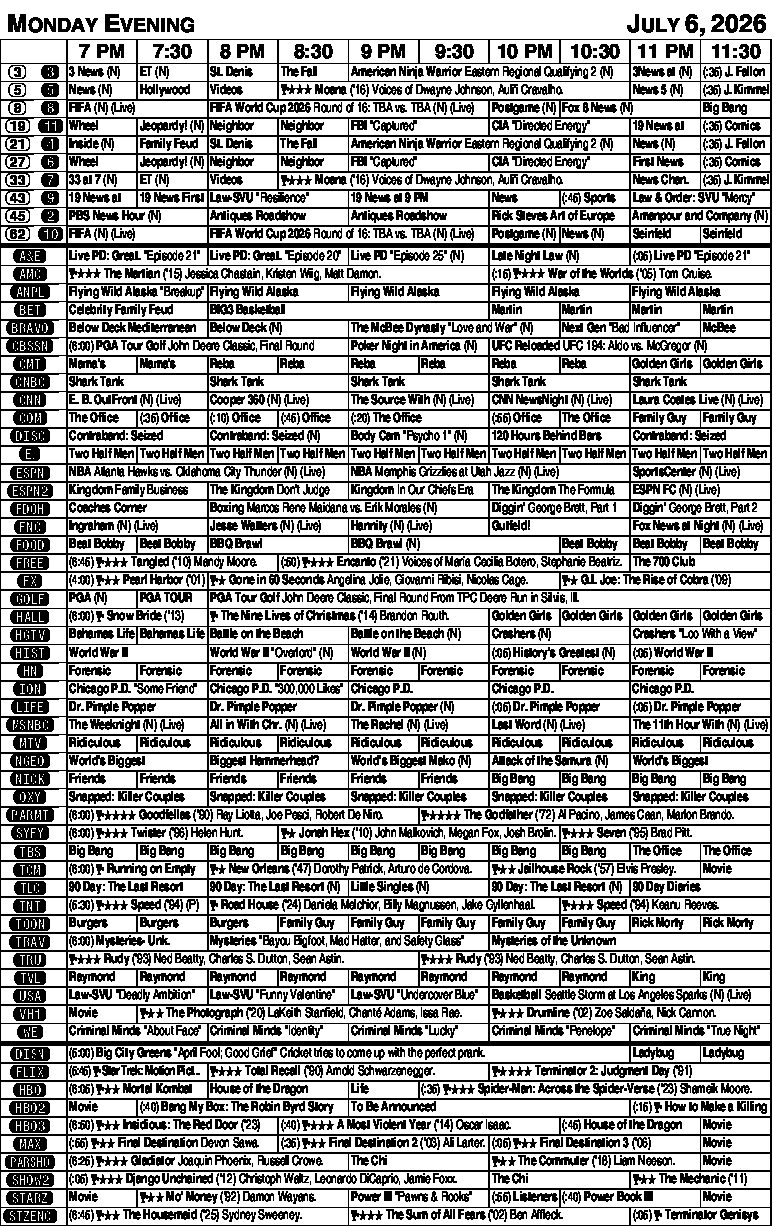
MONDAY EVENING TV LISTINGS
TO YOUR GOOD HEALTH: Complex problems require teamwork
DEAR DR. ROACH: I have a friend who had gallstones and ultimately had her gallbladder removed. When they went in, ...