

Valley Grows ! and A:Stop crabgrass from crawling throughout your yard
Q: I’m having a difficult time controlling what I think is crabgrass – help!
• Joe from Poland
A: We can help. We understand your frustration as crabgrass is a challenge for everyone from the novice gardener to the best golf course turf managers. Two types of crabgrass are common in Ohio: large crabgrass and smooth crabgrass. Both types are spread by seed and crabgrass is a prolific seed producer. It can produce up to 100,000 seeds per plant. No wonder it’s found everywhere!
The first option is to try managing the lawn. This can be difficult where you have bare areas, as that is where most crabgrass gains hold in the lawn. Healthy turf is an effective way to control crabgrass and other lawn weeds. Keep your lawn healthy by mowing high, a minimum of 2 1/2 inches. Cutting at 3 inches and just above once the hot weather arrives will really help your own lawn compete with the crabgrass. A higher cut will help the lawn grow stronger and denser, discouraging weeds. Mulch areas right up next to turf so crabgrass won’t grow there on bare soil.
Don’t fertilize the lawn in summer. Summer fertilizing feeds the crabgrass and other lawn weeds more than the turf grass. The best time to fertilize a lawn is in the fall. If your lawn needs watered, do so with deep watering that gets to the roots and avoid frequent, light watering.
As for herbicide controls, two types are available: pre- and post-emergent. Both types require correct timing to be effective.
A pre-emergent is used in the spring and must be applied before the seeds germinate. It has no effect if applied after germination, and if applied too early the chemical will not last for the entire season.
Crabgrass germination starts when the top part of the soil warms to 55 to 60 degrees.
How can you know when this happens? Watch the blooms on forsythia. They begin to fade when the soil reaches these temperatures. No forsythia nearby? Check our growing calendar at https://weather.cfaes.osu.edu/gdd.
For this year, we are well beyond the application date. Also, note that a crabgrass pre-emergent also prevents turfgrass seeds from developing. Do not reseed your lawn when using a pre-emergent.
Post-emergent herbicides work on plants. Crabgrass post-emergents work best when the plants are small. Usually, by mid-July the crabgrass is too large for effective control. Post-emergent control is not considered as effective as pre-emergent. If you use either one, read and follow the directions on the product label.
Crabgrass outcompetes turf grass in the hot part of summer, thus the higher mowing recommendation. Most turf grasses in Ohio lawns are cool-season grasses. They grow best when the temperature range is 60 to 75 degrees. Crabgrass is a warm-season plant, growing best when temperatures are 80 to 90 degrees. The reason has to do with the differences in how the plants photosynthesize.
It’s hard to have a completely crabgrass-free lawn. It’s all right to have some crabgrass in the lawn. When you see it growing, just pull it! And remember — Each pull removes 100,000 crabgrass seeds that could potentially land up elsewhere in your lawn.
For more information on crabgrass see: http://go.osu.edu/crabgrass
David Sprague is an OSU Extension Master Gardener Volunteer. The plant and pest clinic is open Mondays and Thursdays from 9 a.m. to noon at the OSU Extension Office in Canfield. Details are at http://go.osu.edu/mahoningclinic.
Lifestyles
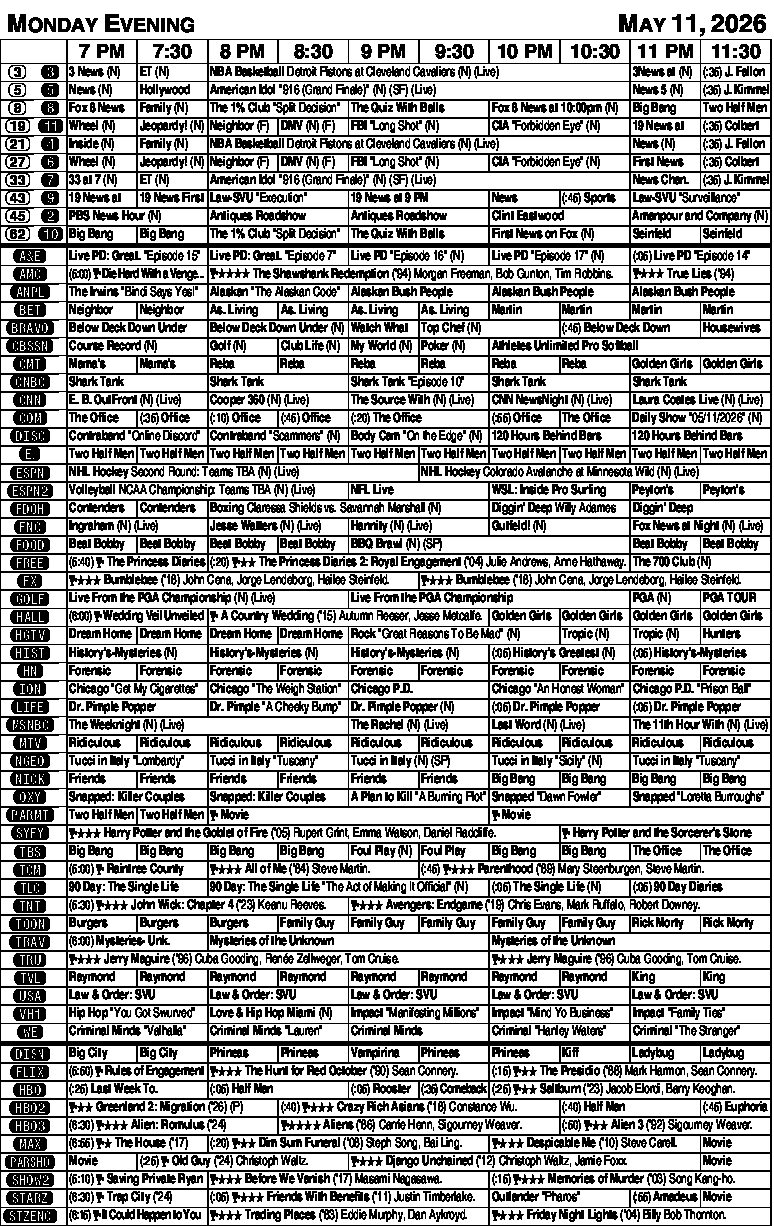
MONDAY EVENING TV LISTINGS
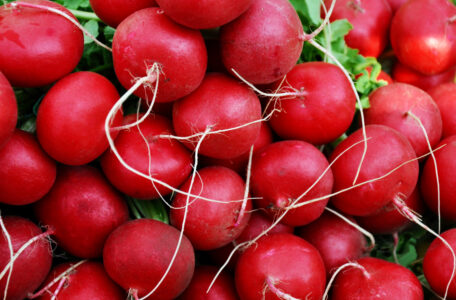
If you’re impatient, try growing radishes
Calendar
Here are upcoming gardening events through the Ohio State University Extension Office. For more information and a ...
TO YOUR GOOD HEALTH: Monitor levels of cortisol closely
DEAR DR. ROACH: I’ve been feeling just awful. My doctor put me through the normal tests, and all were good. A ...
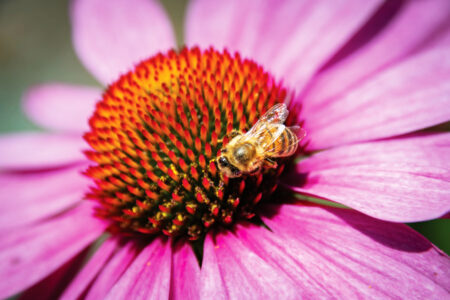
Creating a pollinator garden
HINTS FROM HELOISE: Make fresh flowers last much longer
DEAR HELOISE: I love getting fresh flowers, but they never seemed to last very long. So, I started putting ice ...