
Packard museum chronicles automaker’s finale in the ’50s
Trending
WARREN -- In the early 1950s, the Packard Motor Car Co. was in better financial shape than it had been in years.
By 1956, the final new Packard model rolled off the assembly line.
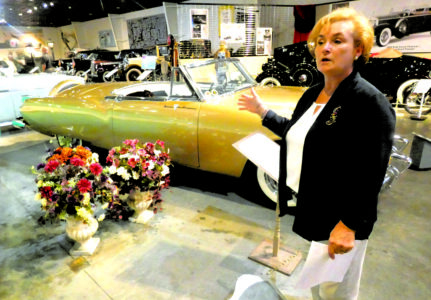
How the iconic brand ended is chronicled in "Packard's Fabulous Fifties," a new exhibition at the National Packard Museum that includes a dozen vehicles from its final decade.
"Many people ask, 'What happened to Packard? Why aren't they still running? What's the story?," museum Executive Director Mary Ann Porinchak said. "That is probably one of the primary questions we get from visitors, and there wasn't one easy answer."
Several factors -- including bad business decisions and other factors outside of the company's control -- all played a role.
The company was making money in the early ' 50s, but it primarily came from military contracts, not consumers buying automobiles, Porinchak said. Packard was late to making technological advances that companies like Cadillac introduced. When James Nance was named president of Packard in 1952, he replaced many of the company's veteran leaders with younger employees and tried to rebrand a company that had catered to a wealthy, elite clientele.
"The vehicles represented elegance and a life of luxury, so they showed that," Porinchak said. "Every one of their ads is in some exotic place or has some kind of wealthy look to it, and that's what they were trying to do to attract people."
Nance wanted to create a company that appealed to all buyers, and after introducing the more affordable Clipper line of vehicles, he looked to merge with Nash and Studebaker to create an automaker that could compete with the larger manufacturers. Nash would make less expensive, entry-level vehicles, Studebaker would be mid-tier, and Packard would cater to high-end buyers. But Nash dropped out of the deal, and Studebaker was less financially sound than Nance realized.
"Studebaker was not real forthcoming on what their financial situation was," Porinchak said. "It took most of Packard's resources to bail out Studebaker in order to do that merger, so they had nothing left for the new model. What they did is they tried to marry the two brands together and use up all the extra parts that they had. What they weren't counting on is Studebaker owners being very loyal to Studebaker, Packard owners being very loyal to Packard. So nobody wanted that Studebaker-Packard thing."
Nance bailed, leaving the Studebaker executive in charge, and he partnered with aircraft manufacturer Curtiss-Wright to keep the company afloat. Even though Packard was the stronger of the two financially when they merged, it was Studebaker that survived.
"The first thing Curtiss-Wright did was start to dismantle the Packard facilities," Porinchak said. "Within two years, they dropped the name of Packard. Studebaker was resurrected and built cars into 1963-64; Packard was gone in '56."
In addition to the internal struggles, Packard was looking for ways to adjust to the economic changes post World War II and how to cater to a previously ignored portion of the marketplace -- women drivers.
"They started fashioning their ads toward women," Porinchak said. "I have one that really cracks me up. This lady driving and hanging over the front seat is this bassinet with a baby in it. That's just not something that would be done today."
Informational displays provide the history, and the museum added other touches to reflect the decade. Standing next to one of the cars is a mannequin in a wedding dress. It's the dress Porinchak's mother wore when she was married in 1952.
"We want to tell what was happening in pop culture at that time as well, because if you don't tell some of that, some of this other stuff doesn't make sense," she said. "We want to tell the whole story."
But the stars are the cars, with a dozen vehicles ranging from a Packard-built ambulance to the 1955 Packard Caribbean bought by billionaire Howard Hughes for his future bride. Many have been displayed at the museum before, but not together and not in this context.
"When you look at all the '50s vehicles we have, we can really tell this story now, where a few years ago we couldn't have," Porinchak said.