
Brookfield man gives WWII bomber talk in Canfield
Trending
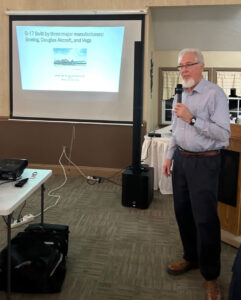
CANFIELD -- Despite a temperature in the single digits, nearly 50 people came out Monday evening for the monthly meeting of the World War II Heritage Society, where the featured speaker, Dave Walker of Brookfield, talked about the heavy bombers of World War II.
Dave Frank was a co-founder of the organization 24 years ago. He said he was always a Civil War buff.
"I would give my eye teeth to hear Civil War veterans speak, so why wouldn't we do this for World War II veterans while we have a chance," he said.
He said the focus was on the everyday lives of people who participated in the war.
"You didn't have to be a hero. We're just as interested in the stories of mechanics and drivers," Frank said.
Today there are few WWII veterans remain ing, but they can always find people able to teach new things, either about WWII or about experiences in more recent wars.
Dave Walker served for six years as an infantryman in the National Guard and became an elementary school teacher in Van Wert for 30 years. He obtained a master's degree in history from Wright State University. He now lives in Brookfield with his wife, Holly.
His presentation was about four specific planes used in the war: the B-17, B-24, Avro Lancaster and Petlyakov Pe-8. They were known as heavy bombers as they had four engines instead of two like the medium bombers and therefore carried a bigger bombload.
The B-17 was known as the "flying fortress." Almost all the planes had individual nicknames as well, such as the renowned "Memphis Belle," and usually there was a pretty girl painted on the side, "probably what was on their minds after they left home," Walker said. They had a crew of 10 men, and the average age was less than 25.
The B-24 was known as the "flying coffin" because the spaces were extremely tight so the plane could carry more gasoline and a bigger bombload. There was so little room to work that when Ford manufactured the planes, they hired people with dwarfism to help with assembly.
Walker also noted the important roles of women. Not only did Rosie the Riveter work in the factories, women pilots delivered the planes overseas.
The Avro Lancaster was a British bomber that Walker described as "very heavy, very effective and built for endurance," while the Petlyakov Pe-8 was a Soviet plane that was most famous for bombing Berlin.
Walker said the bombers often flew 100 at a time, so it was always likely that some would not return. Young men with as little as six to eight weeks of training would have to make instant life and death decisions.
"How many of you made your best decisions when you were under 25," he asked the audience.
Walker noted the men became very close, which made it even more traumatic when they would see the plane next to them go down. He believes this is the reason so many WWII veterans, including his father, did not want to talk about their experiences when they returned.
While there are many long-term participants of the World War II Heritage Society, Dave and Marybeth Grove of Poland were there for the first time. They both said they enjoyed the talk and learned a lot about the construction of the planes and the composition of the crews.
Jim Rowbotham of Cornersburg, who has attended about four times, encouraged the Groves to come. He said he enjoyed the presentation and liked that Walker "covered a lot of things you normally don't see on TV."
The World War II Heritage Society meets the third Monday of each month. Upcoming presentations include Ken David, Vietnam veteran and Medal of Honor winner, and YSU faculty member Joe Alessi, who will talk about the invasion of Sicily.
Each meeting starts with a buffet at 6 p.m. that costs $17 per person, followed by the lecture, which begins approximately at 7 p.m. Frank said anyone who does not want to purchase the dinner is still welcome to attend the presentation.