
Defense wants fire evidence suppressed in man’s murder trial
Trending
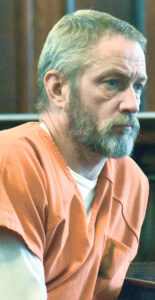
YOUNGSTOWN -- The defense in the Robert L. Moore aggravated murder case has asked Judge Maureen Sweeney of Mahoning County Common Pleas Court to exclude evidence from Moore's trial, scheduled for May 23.
Moore, 52, of Alliance, is charged with one count of aggravated murder and one count of murder in the disappearance and presumed killing of Glenna J. White, 16, of Smith Township in 2009, whose body was never found. Moore was indicted in December.
Attorney Jeffrey Haupt of Alliance filed a motion asking that there be no evidence presented in Moore's trial regarding a fire involving an automobile that took place June 11, 2009, that prosecutors have suggested could be related to the case.
Prosecutors have said the fire destroyed the vehicle of Deanna Shreve -- the same car Moore is alleged to have used when he left Shreve's home June 2, 2009, with White the night she disappeared.
Prosecutors allege that White, 16, was at Shreve's home on Alden Avenue in Alliance late June 2, 2009, and into the early hours of June 3, 2009, with her boyfriend, Charles Shreve; Charles Shreve's mother; Deanna Shreve; and Moore, who was Deanna Shreve's boyfriend.
Moore and White reportedlywere drinking. At some point, White woke up others in the home with the allegation that Moore had touched her inappropriately or tried to rape her, prosecutors have stated.
Moore then "demanded to take (White) home, left with her in Deanna Shreve's car, and was gone for over an hour, returning without her," the filing alleges.
'BAD ACTS'
When Moore returned, he was covered in blood and was muddy from the knees down on his pajama pants, according to a court filing.
On June 11, 2009, firefighters responded to the Alden address for a fire involving the vehicle Moore had driven when he left with White. It was in the driveway and was a "complete loss," prosecutors stated.
Haupt's filing states that the investigation by the Sebring Fire Department into the fire "yielded no conclusions of misconduct or any charges against Mr. Moore, and the cause of the ignition was found by the Sebring Fire Department to be unintentional and found no factors contributing to ignition."
Mahoning County prosecutors "now seek to introduce this as evidence of other bad acts committed by Mr. Moore with no underlying support or findings indicating whether any wrongdoing ever actually occurred or whom it was purportedly perpetrated by," the Haupt filing states.
Additionally, prosecutors seek to introduce "inadmissible hearsay testimony, alleging that Mr. Moore sexually assaulted the alleged victim in this matter as evidence of other bad acts committed by Mr. Moore, also with no underlying support or findings indicating whether any wrongdoings ever actually occurred," Haupt stated.
"The State bears the burden of demonstrating that any other acts, wrongs or uncharged misconduct are relevant to the material elements of the crime charged" for it to be admissible during trial, Haupt's filing states.
The filing argues that Sweeney should not allow the testimony because "there is no substantial proof that a bad act or crime occurred, let alone any proof that Mr. Moore committed them."
'FINGERPRINT'
The filing argues that presenting information on these allegations is "highly prejudicial, does not aid (prosecutors) in attempting to establish a behavioral fingerprint, and therefore cannot be admitted in the ... trial."
The "behavioral fingerprint" reference was mentioned in an earlier filing by Mike Yacovone, assistant county prosecutor, as a reason Yacovone wanted evidence regarding Moore's earlier conviction for killing another female admitted at trial. In that case, Moore was convicted of involuntary manslaughter in the 1993 killing of Virginia Lecorchick, 22, near Berlin Lake.
Yacovone argued that the evidence in the Lecorchick case was so similar to the evidence in the White case that it "provides a behavioral fingerprint, which, when compared to the behavioral fingerprints associated with the (White case), can be used to identify the defendant as the perpetrator."
Sweeney later ruled that she would allow testimony regarding the Lecorchick case to be admitted in Moore's current case.
erunyan@vindy.com