

Best practices for pollinators
There have been a few questions / notes from gardeners this year regarding pollinators.
Some are seeing lots of pollinators, others are seeing very few. Things are different each year, depending on many factors.
Some do not have an explanation, while others are just by chance. It may depend on what time you are out in the garden doing observations, or what specific plants are in bloom in your garden — or other plants blooming nearby.
Pollinator numbers depend on current weather conditions and even the flowers growing in the area during the previous growing season. Also, wild bee populations fluctuate from year to year and they might be higher in other areas than around your garden.
Start with observations. Get up early and take a walk around the garden. Usually, you’ll see lots of insect activity on your flowers.
Most of what you see pollinating your flowers, fruits and vegetable crops will be native bees, flies and other native pollinators. Many are very small — so be diligent in your observations!
Honey bees are a helpful species, but they are not a native bee. I see many in my neighborhood. Honey bees might fly a mile, but no further. There are some wild honey bees, due to a hive splitting or other activity. Most native bees nest in stumps, old rodent holes, tufts of grass, and other natural spots.
Here are some best practices for attracting native pollinators:
• Choose plants that will attract them.
• Plant native flowers and plants.
• Have at least one kind of plant blooming from spring through fall.
• Provide nesting sites (clump grasses, unpruned twigs, etc).
• Read the label if applying pesticides. Avoid spraying on blooming plants, apply after 3 p.m., choose bee-friendly products, and follow safety precautions.
You can get a list of plants and other details on this factsheet: http://go.osu.edu/attractive
You can stop by the OSU Extension office to take a look at our pollinator gardens. We have lots of species from milkweeds to asters, many that are native. Natives make up a majority of the plants in the pollinator gardens.
Additionally, we have cultivars that we are comparing to natives as part of a research project. One plant selection is ‘Fireworks’ Goldenrod, Solidago rugosa. This plant is not only beautiful with its striking fireworks-shaped spray, but it is also a pollinator magnet. It was selected from a coastal plan population. For the past two growing seasons, we have observed more pollinators on this plant compared to the native species.
You can learn about the best plants to put in your garden to attract native pollinators, be bee-smart when it comes to gardening, and learn about the status of bees in Ohio through our Ohio State Bee Lab. You can follow the blog and find more information at: http://go.osu.edu/pollination
Eric Barrett is an OSU Extension educator for agriculture and natural resources in Mahoning County. The plant and pest clinic is open Mondays and Thursdays from 9 a.m. to noon at the OSU Extension Office in Canfield. Details at http://go.osu.edu/mahoningclinic
Lifestyles
Senior News
Senior news RETIREES TO MEET: St. Joseph Warren Hospital Retirees will have their monthly meeting at an 11 a.m. ...
Did heartburn medicine cause weak bones?
When a health care provider prescribes a medicine to you, they are usually focused on just the one condition for ...
To Your Good Health: Mental illness, crime intersect
DEAR DR. ROACH: I’ve seen a number of stories lately about people who’ve been arrested for behavior that ...
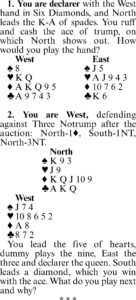
Bridge by Steve Becker

Over 60? These 4 financial moves might offer your best ‘return’ on investment
Hints from Heloise: Folding laundry differently
DEAR HELOISE: Regarding favorite/least-favorite chores, I used to dislike folding laundry until I started seeing ...