
Boxwood moth threat in Ohio
Trending
Boxwood shrubs are a mainstay for many formal gardens, landscapes and heritage sites. These shrubs can be topiaries, hedges or simply a specimen.
There is a serious threat that has entered Ohio that has the potential to decimate Ohio's boxwood population. It is the boxwood tree moth (BTM) -- Cydalima perspectalis -- that comes from Asia. The sightings were recorded in Hamilton and Clairmont counties from pheromone traps and other areas have been announced since then.
As quoted from the USDA APHIS 2022 New Pest Guidelines, "Boxwood shrubs in introduced areas where box tree moth has two generations per year, boxwood stands have declined over 95% in eight years or less."
This is a serious invasion compared to the emerald ash borer and ash trees. With boxwoods foundational to nursery trade in Ohio, the importance of this trade is valued at more than $200 million.
This moth can show up anywhere and knowing the appearance and symptoms to detect and get confirmation from approved sources is vital.
For that matter, any problem of boxwoods is significant. From early instar stages to adult, BMT must be reported. Other boxwood problems can look similar and with the help of the OSU Extension Office Pest and Plant Clinic, problems can be identified, and remedies can be utilized to help save these beautiful specimens.
A mature BTM lays five to 20 pale yellow eggs that are shingled together. These hatch in three days, and tiny instars with green, yellow / white, with black stripes and black spots begin to feed.
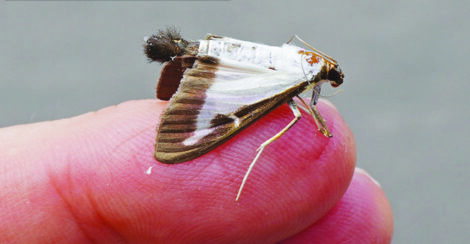
They need 14 days to mature, then pupate in webbing and damaged leaves. Adults live one month and are white or brown with distinctive commas on the wings. There are many variations, but each have two white commas on the wings. The white adults resemble the melon worm moths.
There can be one to five generations per year, with two in Ohio. The second through fifth instars can overwinter. They begin feeding in spring. As eggs hatch out they feed in late May to early June throughout thee summer.
As alluded before, there are many problems that can affect boxwoods, so it is important to dispose of all trimmed branches, leaf litter and any dead tissue in safe ways. Disinfect all tools used -- clippers, trimmers, rakes, etc., with alcohol.
For small identified and reported infestations, hand pick instars and place in soapy warm water. Contact the extension office for appropriate insecticide treatments. Be watchful!
For photos of this insect and damage to boxwood, go to http://go.osu.edu/boxtreemoth.
Hughes is an Ohio State University Extension Master Gardener Volunteer in Mahoning County. OSU Extension entomology expert Joe Boggs contributed to this article.