

Robins may stick around in winter
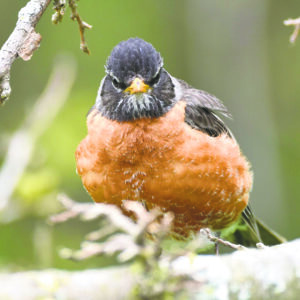
Q: I’ve witnessed an entire flock of robins in my crab trees today eating the crabapples. I’ve had a rogue robin in winter from time to time, but never a whole flock. Is something going on? — Mari Louise from Struthers
A: Everything is OK. Although many people think robins migrate south for the winter, that is not entirely true.
Many fruit eating birds flock to our yards in the winter looking for food. Some trees and shrubs hold their fruit for a long period and those feed wildlife in the winter when there are very few insects available.
Even though birds have an internal temperature of 104 degrees, they can survive below freezing temperatures. They fluff up their feathers. That’s how well their feathers insulate them — there can be a 100-degree difference between the outside air temperature and their body temperature.
We think of robins (Turdus migratorius) as migratory, but only those in the far north actually migrate. The robins you see in winter may be from farther north, but many are here year-round. While we may not see them regularly, if you listen you can hear them calling. Their behavior changes with the seasons.
Many birds form large, loose flocks in the fall and stay together all winter. Roosting as a group makes it more likely many more will survive the winter by keeping each other warm and keeping a lookout for predators. These flocks make it more likely that all members will eat regularly and survive the winter.
Robins will form these flocks where there are plentiful fruits on trees and shrubs, such as crabapples, hawthorns, holly, juniper and other fruits. Although earthworms account for about 15 percent of a robin’s diet, along with some insects and invertebrates, robins are primarily fruit and berry-eaters.
Robins do not eat seeds, so if you would like to feed them, put out cranberries, wireworms, blueberries and suet pellets. You can also soak raisins in warm water to soften them or put out grapes cut in half or apple slices.
Robins especially seem to enjoy a heated bird bath and you can purchase a heater for an existing bath. This will attract far more birds than just robins as water can be difficult to find in the winter. And if you do feed robins in winter, chances are extremely good that they’ll nest in your yard come spring.
You can also add shrubs and trees that produce fruit that will hold through winter. That way, the robins will flock to your yard to nest and stay the winter.
In spring, we start seeing robins returning to their diet of worms and insects. While it appears they have migrated back from their winter range, what we’re seeing is the seasonal switch from the large flocks and fruit diet to again defending their territory from others while getting ready for nesting and rearing young. To learn more about robins, go to http://go.osu.edu/robin.
Scudier is an Ohio Certified Volunteer Naturalist and OSU Extension Master Gardener Volunteer in Mahoning County. Call 330-533-5538 to submit questions to the Plant and Pest Clinic. During the off season, questions can be submitted at any time. Find details at go.osu.edu/mahoningclinic.