

Tackle upkeep while shut in
Many chores on my to-do list rank higher than pushing snow and chipping ice, but I won’t bore you with any of the 100 or so options ahead of shoveling. Instead, I will jump right to the top of the list: fiddling with my tackle.
Winter’s grip is firm and long-lasting, so for those of us who shy away from ice-fishing, our choices of outdoor recreation are pretty slim this weekend.
Just when cabin fever is about to claim me, however, I am able to stave it off by investing a few hours in cleaning, sorting and improving my lures, rods and reels.
Cleaning and sorting are easy to grasp. But improving? How do we improve our stuff?
Consider lures. If you’re like me, the lures you use the most during your days on the lake take a beating. They bounce off rocks and metal structures, grind along gravel river bottoms, and get stored wet so their hooks, blades and hardware rust.
Winter days serve up the perfect opportunity to fix the broken stuff, change to new hooks, touch up paint, tie fresh skirts and do any of the other maintenance work that will improve your lures for that day coming soon when you are back on Mosquito and Berlin.
During this time of the year, I also look for ways to not only freshen my lures, but also add tweaks that I believe might add a few extra strikes out on the lakes.
I have found that crankbaits with damaged lips can be restored with a small grinder and sandpaper. The original action might be gone, but the new wiggles add a bit of difference to which the bass and walleyes are not conditioned to judging as artificial.
The stock colors on most premium lures generally do well in teasing fish to strike, but I have found that splashes of bold colors can make a big difference when the bite is slow.
I will add orange to the bellies of plugs and slash their green sides with black bars to mimic a tempting yellow perch. I add orange and blue to cranks and vibrating jigs to trigger bass to believe they are bluegills.
A dab of bright colors will enhance my jigheads to gain the attention of gamefish such as smallmouth bass and walleyes. I keep bottles of red, orange and chartreuse paint handy to jazz up my jigs.
One cool thing about color is that even if the fish don’t care, we anglers almost invariably fish with more confidence if we believe our lures are top-shelf. Confident anglers are much more likely to score big than are those who reluctantly drag baits with little hope of success. If we believe our lures will work, then chances are better that they will.
Another performance-enhancing trick I employ is clearly marking every rod with the size and chemistry of the line spooled on their reels.
It is difficult to discern the difference in a 12-pound line from 14, or 17-pound from 20. It also is not readily obvious if the line is floating, stretchy nylon monofilament or sinking, super-sensitive fluorocarbon.
But a piece of tape marked with a Sharpie pen clearly indicates which rod to grab when I want 10F (10-pound fluorocarbon) for pitching a Ned rig around Ohio River pilings for smallies or 12M (12-pound mono) for twitching a popper for surface-feeding largemouths at Pymatuning.
The idle time afforded to anglers weathering winter’s shut-in days can be put to good use now. Make your own line-code labeling, juice up your lures with flashy colors or think up other tricks to improve your gear’s performance.
Be creative today and reap the rewards this spring. It beats shoveling snow any day.
Jack Wollitz writes weekly for readers of the Tribune Chronicle and Vindicator. His first book, The Common Angler, was published in 2022. His second, The Common Golfer, will be released in April. Contact him at jackbbaass@gmail.com.
Local Sports
Tackle upkeep while shut in
Many chores on my to-do list rank higher than pushing snow and chipping ice, but I won’t bore you with any of the ...
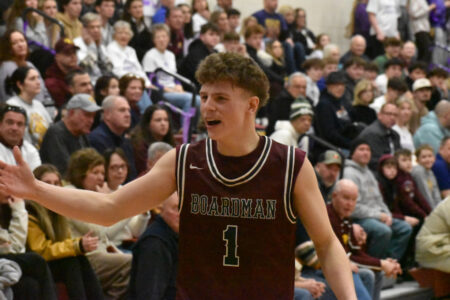
Boardman battles back to top South Range

Davis unable to attend First Pitch Breakfast
Capsules
Bucs’ Brown to speak at Curbstone Pittsburgh Pirates radio broadcaster Greg Brown will be the guest speaker at ...
High School Sports Roundup from Jan. 30
BOYS BASKETBALL Southeast 67, Newton Falls 61 — Cohen Richardson knocked down four 3-pointers en route to a 25 ...
Coyle’s three-goal game leads Blue Jackets to a win over the Blackhawks
CHICAGO — Charlie Coyle had his second career hat trick, Mathieu Olivier added a goal and an assist and the ...