

Digital learning centers moving into neighborhoods
Nonprofit looks to expand outreach
YOUNGSTOWN — Oak Hill Collaborative, the Youngstown-based nonprofit that helps Mahoning Valley residents close the digital gap, plans to establish neighborhood outpost centers to help achieve the goal through its Digital Advantage Initiative.
At minimum, the plan is to launch two Neighborhood Digital Learning Centers — one in Mahoning County and one in Trumbull County sometime in the first quarter of 2024 — to help people with information on a range of topics, from connectivity to hardware to software, said Steve Kristan, broadband coordinator with Eastgate Regional Council of Governments, which provided $50,000 in seed money for the project.
Meanwhile, Youngstown City Council next week is expected to consider paying $50,000 — $25,000 annually for 2024 and 2025 — in American Rescue Plan funds to the Oak Hill Collaborative for it to establish neighborhood community centers in the city specifically for city residents.
Helpers at the centers called “digital navigators” will address the digital inclusion process, which includes digital skills, devices and home connectivity with residents, Kristan said.
“This learning can be delivered via workshop or one-on-one, or even virtual from the center,” Kristan said. “The locations and hours of the center will be set based upon the needs of the local neighborhoods. The plan calls for smaller locations in neighborhoods for easy access, rather than one central location where people need to travel far distances to attend.”
Expansion for additional centers will be based on additional funding received, he said. The funding from Eastgate is enough to fund two centers for two years.
Said Pat Kerrigan, executive director, Oak Hill Collaborative, the “ideal client” for the learning centers “is someone who has an interest in learning and needs help and encouragement, and wants to remain in their neighborhood.”
The concept of a digital learning center, Kristan said, is an outgrowth from a study commissioned by Eastgate done by Youngstown State, Cleveland State and Kent State universities that recommended the outpost centers.
Building on that recommendation, Eastgate believes implementing the digital learning centers will “be successful because of the experience of the Oak Hill Collaborative, plus the reliance on collaboration and cooperation where talents, opportunities, and resources are shared by partners with a common goal – all at the neighborhood level,” Jim Kinnick, Eastgate executive director, said.
The $50,000 startup money from Eastgate, which Kristan said “will likely be a catalyst for additional funders to decide to participate,” is from the General Motors Community Reinvestment Fund.
It’s part of the money — $12 million — the Detroit automaker committed to invest in the Mahoning Valley on education and training, community programs and / or infrastructure in 2020. GM agreed to do so as part of a deal with the state for breaking tax credit agreements received in 2008 by closing the former GM Lordstown assembly plant in 2019.
Already, the Digital Advantage Initiative is housed at Oak Hill Collaborative’s building on Oak Hill Avenue on the South Side and at Trumbull Community Action Program (TCAP) on Palmyra Road SW in Warren.
Also, the organization has piloted digital learning workshops at various locations, feedback from which will help it roll out the digital learning centers, Kristan said.
Topics and services will be added as needed. For example, Kristan said, for this holiday season, a workshop on setting up a smart TV will be available, and there are plans to offer others on telehealth early next year.
On Wednesday, Youngstown council could vote to authorize the board of control to pay $50,000 in ARP funds to the Oak Hill Collaborative to set up a program to provide computer support services to city residents through the organization’s Bridging the Digital Divide Program. The money would be used in 2024 and 2025, under the proposed legislation.
A proposal from Kerrigan asks the city to invest in the program “by improving broadband affordability and availability, providing free computer education and training, and getting residents access to affordable computer equipment.”
Kerrigan proposed establishing “neighborhood community computer centers in established venues” such as the Eugenia Atkinson Recreation Center, the McGuffey Centre, the Organizacion Civica y Cultural Hispana Americana Inc. (OCCHA) facility, churches, senior centers and “other appropriate sites in the city, relying on our experience and expertise to make” the project’s goals and objective “available to all residents at convenient times and places.”
The $25,000 annual budget for two years would pay $20,000 to a part-time digital navigator, who would work 20 hours a week at $20 an hour, with $3,000 for equipment and $2,000 for promotion and printed materials.
Local News
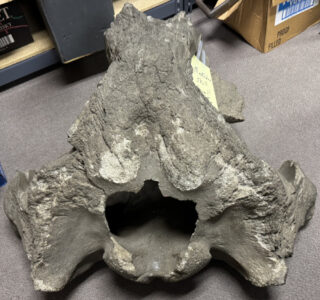
Mastodon fossil to be displayed in Canfield
Aggravated robbery, abduction are among Mahoning indictments
YOUNGSTOWN — The following people were indicted last week by a Mahoning County grand jury: • Marquis J. ...
Boardman daughter saves parents from scam
BOARDMAN — A local woman is credited with saving her parents from a telephone scam that got a little too close to ...
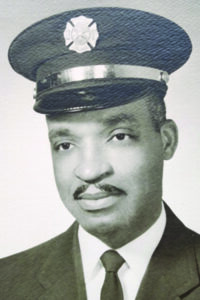
City’s 1st black firefighter dies at 96
Woman refuses medical attention after being stabbed on head at home
YOUNGSTOWN — A woman refused medical attention after calling 911, saying a juvenile boy in her home stabbed her ...
City Council approves spending up to $295K on postponed projects
YOUNGSTOWN — City council authorized the board of control to spend up to $295,000 to move ahead with projects on ...