

Animal tranquilizer enters Ohio’s illegal drug stream
State order classifies xylazine as Schedule III controlled substance
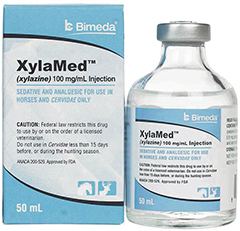
Gov. Mike DeWine signed an executive order March 29 classifying xylazine, also known by its street name Tranq, as a Schedule III controlled substance.
An animal tranquilizer being abused by drug users could make the ongoing drug epidemic even worse.
Gov. Mike DeWine signed an executive order March 29 classifying xylazine, also known by its street name Tranq, as a Schedule III controlled substance. Ohio is one of the first states in the country to do this. Currently, no federal designation exists.
Xylazine is a central nervous system depressant used in veterinary medicine as a sedative, anesthetic and muscle relaxant. The substance, which is not approved for human consumption, increasingly has been found in Ohio’s illicit drug supply, frequently mixed with heroin, fentanyl or new synthetic opioids.
DeWine signed the order directing the state board of pharmacy to classify xylazine as Schedule III. The new classification means it is an illicit substance, although veterinarians will be able to have it for their practice.
“This lethal drug has dangerous side effects which can’t be reversed by naloxone, so there is no way to reverse its impact on people,” DeWine said. “The rate of overdose deaths involving a mixture of xylazine and other drugs is increasing at an alarming rate, which is exactly why we need to take action now.”
According to the Ohio Department of Health, overdose deaths involving xylazine have increased each year in Ohio since 2019, with 15 overdose deaths in 2019, 45 in 2020, and 75 in 2021. Statewide 2022 data is not available, but in Mahoning County, 4 percent of deadly overdoses involved xylazine in 2022. The drug did not appear in any Trumbull County toxicology reports after fatal overdoses last year.
HEADING
TO VALLEY
Dr. John Sorboro, head addiction medicine services physician at Mercy Health Youngstown / Warren, said the first documented cases of xylazine abuse were in Puerto Rico just after 2000. In the past six months, he said he has learned more about the drug as it became more apparent it is making its way into the Mahoning Valley.
Now, Sorboro said xylazine has been found to be abused in about 35 states and Washington, D.C. He said studies show it is in about 10 to 20 percent of street drugs, while one study in Philadelphia showed it to be in around 90 percent of the drug supply.
Brenda Heidinger, associate director of the Mahoning County Mental Health and Recovery Board, said all of the fatal overdoses where xylazine was found to be present all occurred in the second half of last year.
Heidinger and Sorboro said new drugs typically start in large coastal cities, then make their way into smaller areas inland.
“Right now, we are learning from our peers on the coasts and preparing for what might be coming our way,” Heidinger said.
Capt. Michael Yannucci, commander of the TAG Drug Task Force, said he is not aware of any instances in which TAG has dealt with xylazine.
“As of now, we don’t believe we have come across xylazine yet, but the state labs (Ohio Bureau of Criminal Investigation) take about six months to get results back to us,” Yannucci said.
He said he does not have his officers test any substance, because the risk is just too high. Very few labs have the ability to test for xylazine because it is so new on the street. There are no test strips, as there are for fentanyl — another drug commonly mixed with others.
Yannucci said the danger of any street drug, including xylazine, is that dealers are mixing drugs, so people often get something different than what they believe. He also noted that even if a person knows the mix of drugs, they can’t know how much of each is in their supply.
DANGEROUS AFTERMATH
Sorboro said dealers will mix in things they think will create a better high, but he has not come across any patients in his work who are seeking out xylazine. He said this is likely because of the dangerous aftermath of using the drug.
Xylazine has been found to create skin lesions at the site of injection, or around the nose and mouth if it is snorted. These wounds can grow to be large with pus, decaying tissue and bacterial infections. DeWine’s executive order states this can lead to amputation at higher rates than those who inject other drugs.
Naloxone, commonly referred to by the brand name Narcan, helps to reverse the effects of an overdose by attaching to opioid receptors. Xylazine is not an opioid, so naloxone does not have the same effect.
Heidinger said naloxone seems to help with breathing, but xylazine is a tranquilizer, so it relaxes a person so much that they don’t really wake up. Sorboro said those who overdose when xylazine is involved experience prolonged sedation and a slow heart rate.
“It’s extra critical that people call 911 after an overdose if xylazine is involved, even after Narcan is used,” Heidinger said.
Last year, Trumbull County had 125 fatal overdoses and 633 nonfatal overdoses, while Mahoning County had 152 fatal overdoses and 747 nonfatal overdoses. Heidinger said the number of nonfatal overdoses likely is much higher, because although people are supposed to go to the hospital after they are given Narcan at home, they don’t always do so.
The reported number of nonfatal overdoses includes only those who overdosed, received Narcan and then were transported to the hospital. It does not include those who do not go to the hospital or those who refuse ambulance transport if one already had arrived.
Heidinger said that while in the Mahoning Valley drug users may not be seeking xylazine, in other parts of the country they are. She said she did a training with peers in New Jersey and they are seeing people seek out xylazine for regular use.
MORE
REGULATIONS
Heidinger and Sorboro said it is too early to know exactly how the drug is making its way into the Mahoning Valley, although its use for the animal community means it is not hard to get online or through veterinarians. Heidinger said the new classification means that veterinarians likely will have to go through more regulations.
She said it is comparable to when misuse of, and overdoses from, prescription opioids began to skyrocket. Doctors had to go through more regulation to be able to prescribe these.
Sorboro said that while it is good the new classification is drawing attention to xylazine, he is not confident it will prevent the tranquilizer from making its way into street drugs. He noted it is often mixed with other illicit drugs, like fentanyl, so this new classification will not deter people — just like it doesn’t deter them from using other street drugs.
“Because the drug is not meant to be used in human beings and it makes its way into the drug supply via veterinary sources, it makes it harder to track,” Sorboro said. “Professionals haven’t been looking out for it.”
He said drug suppliers are always ahead of testing, so one obstacle is few labs have the ability to test for xylazine. Sorboro said new testing technology and methods will have to be created to catch up.
“I think it’s important that people have the information and understand the dangers of this drug,” Sorboro said.
Those who administer naloxone have to know about its effect on xylazine, Sorboro said. Nothing seems to have the same effect on xylazine as naloxone does on opioids. He said this makes it even more important to never use alone or without naloxone kits present.
Local News
Mastodon fossil to be displayed in Canfield
Aggravated robbery, abduction are among Mahoning indictments
YOUNGSTOWN — The following people were indicted last week by a Mahoning County grand jury: • Marquis J. ...
Boardman daughter saves parents from scam
BOARDMAN — A local woman is credited with saving her parents from a telephone scam that got a little too close to ...
City’s 1st black firefighter dies at 96
Woman refuses medical attention after being stabbed on head at home
YOUNGSTOWN — A woman refused medical attention after calling 911, saying a juvenile boy in her home stabbed her ...
City Council approves spending up to $295K on postponed projects
YOUNGSTOWN — City council authorized the board of control to spend up to $295,000 to move ahead with projects on ...