

City students end trip on somber note
WASHINGTON — As they made their way through the National Museum of African American History and Culture, Makayla Gibson-Daniels and Kathryn Carter felt similar waves of sadness.
That’s because one of the stopping points for the two East High School juniors was the solemn Emmett Till exhibit in a dark, low-slung concourse.
“He was really young,” Gibson-Daniels observed. “What got me was the baby picture of him, and it makes me think he never finished high school or his childhood, or played tag with his friends.”
The museum, on the National Mall, opened Sept. 24, 2016, with a dedication that President Barack Obama attended. The Till exhibit also was perhaps the most somber stop for the two girls on the final day of their three-day field trip to the nation’s capital as part of the Classroom 2 Capitol traveling American history project.
An estimated 90 Youngstown City Schools students from Chaney, East and Rayen Early College high schools took part.
Till was 14 when he took a train from his Chicago home to visit relatives in August 1955 near Money, Miss. He and several cousins stopped at Bryant’s Grocery & Meat Market, which had many black customers in the area, where Till supposedly wolf-whistled at Carolyn Bryant, one of the white owners.
A few days later, her husband, Roy Bryant, and his half-brother, J.W. Milam, kidnapped Till in the middle of the night from his uncle Mose Wright’s home, then brutally murdered him before a fisherman found the bloated body that had been strapped with a 75-pound cotton gin in the Tallahatchie River. Till was identified by his father’s ring on his finger.
Many historians and others say his killing — coupled with Bryant and Milam’s acquittal by an all-white male jury — galvanized the modern civil rights movement of the 1950s and 1960s.
“He was gone when he was 14. It had me in tears,” added Carter, who also saw the casket that held Till’s mangled body.
His family donated the artifact to the museum before Till’s remains were exhumed and reinterred in 2005 in Chicago.
Another somber stopping point for Gibson-Daniels was the Trayvon Martin exhibit, which displays the shoes he was wearing, the can of Arizona tea he was drinking and the pack of Skittles candy he was eating when he was shot to death Feb. 26, 2012, in Sanford, Fla. He was 17.
“It hit me that it was reality,” she said about Martin, who was unarmed when he was killed by George Zimmerman, a 28-year-old neighborhood watch coordinator who had called police during a confrontation between them.
Zimmerman was acquitted on murder charges after having claimed self-defense under Florida’s stand your ground law.
Like Till, Martin had been visiting relatives when he was killed.
His death was largely responsible for the birth of the Black Lives Matter movement, many say.
Carter added that she is angered by what she sees as numerous injustices today, such as the killing of George Floyd in May 2020 in Minneapolis mainly because of his skin color.
“We need to make changes” to help curb such violence, she observed.
Many of the students also took in the portions on the museum’s lower levels that depicted the brutality of the Transatlantic Slave Trade in which between 10 million and 12 million enslaved African men, women and children were transported to the Americas beginning in the 16th century.
They also learned more about the Domestic Slave Trade in which about 835,000 slaves, many from Maryland and Virginia, were relocated to the South between 1790 and 1860. It became most significant after 1808, when the importation of slaves became illegal.
In both cases, slaves were viewed as property and used to build canals, railroads and other infrastructure to bolster the American economy.
During their final stop before returning home Thursday, the group visited the 1.5 million-square-foot Smithsonian National Museum of Natural History, which debuted in 1910.
The museum has more than 145 million specimens that include fossils, animals, plants, human remains, minerals, rocks and cultural artifacts.
Local News
‘Price Is Right Live’ returns to Packard
Folks can c’mon down to Packard Music Hall for a chance to play “The Price Is Right.” “The Price Is Right ...
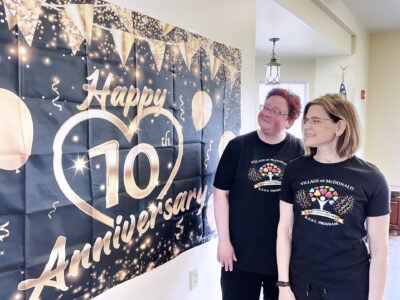
McDonald program marks 10 years
On the record Trumbull County
On the record Trumbull County WHAT: Commissioners meeting Wednesday PRESENT: Tony Bernard, Rick Hernandez and ...
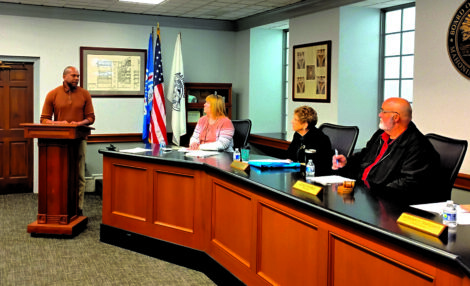
Mayor, church leader offer help in elections dispute
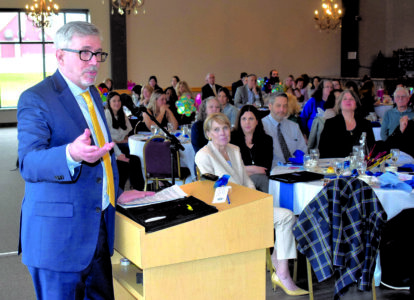
Connecting for kids
Grant to be used to improve safety downtown
YOUNGSTOWN — The Youngstown Police Department announced Thursday afternoon that it has been awarded an Ohio ...