Let’s take another look at mayapples
Creative Commons
In another article on ephemerals, I mentioned mayapples as spring flowers. I needed to get some for a forest area in my yard, so I began to research.
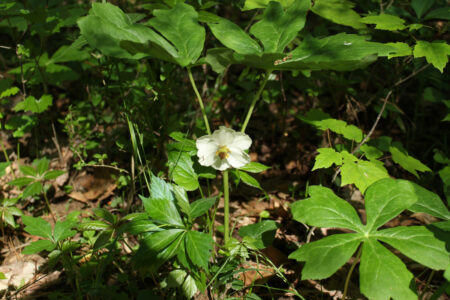
Mayapples, Podophyllum peltatum, grow as colonies in shady forests. They come up in early spring and bloom between April and May. Everyone recognizes the umbrella-shaped, segmented leaves growing about 1.5 feet high and 1 foot wide. Where two leaves are on a stem, a white fragrant flower with yellow stamens emerges from the axil or fork. These colonies of perennials form from rhizomes (underground stems) and can get quite large. As mayapples are pollinated by early bees and flies, the apple forms. It ripens by late summer and is eaten by forest animals.
Mayapples are highly toxic and should be handled with care and gloves. There are homeopathic and medicinal uses for this plant that will not be discussed here. They can grow under black walnuts (many other plants cannot), and mayapples prefer a rich, moist, well-drained soil, with organic matter.
As I researched further, I found there are many cultivars for the garden. Here are a few I found to be amazing and beautiful:
• Peltatum — large glossy leaves.
• “Red Panda” — large glossy red leaves.
• “Spotty Dotty” — large green leaves with deep green chocolate mottling.
• “Chinese mayapple” — huge, shiny green 14-inch leaves with magenta bloom.
• Delavayi — thick, hairy, lotus like, divided, mottled with deep purple hues.
• “Kaleidoscope” — deep green with bright green mottling.
Well, I do know that I want mayapples in my forest garden, but after all my studying, I am conflicted. These beauties are very enticing with the allure of colors, but the price tags on some make me hesitate. All I can say is I love the woods — always have and always will.
Hughes is an Ohio State University Extension Master Gardener Volunteer in Mahoning County.
Lifestyles
Religion news
102 YEARS: The 102nd anniversary of New Bethel Baptist Church, 1507 Hillman St., Youngstown, where the Rev. Kenneth ...
Diocese receives national Catholic Media awards
The Catholic Diocese of Youngstown and The Catholic Echo Magazine earned 10 awards at the 2026 Catholic Media ...

The necessary components of an estate plan
DEAR ANNIE: Running out of reassurances for worried mom
DEAR ANNIE: I am an adult now with grown siblings, but it seems my mother’s anxiety is growing right along with ...
FRIDAY EVENING TV LISTINGS