

TO YOUR GOOD HEALTH: Weighing too little just as bad as obesity
DEAR DR. ROACH: I have a sister who is in her mid-60s and has a very low weight. She cooks a lot but doesn’t eat much. Is there something to suggest to make her gain some weight? She weighs 80 pounds and is 5 feet, 2 inches tall. By contrast, I’m 5 feet, 4 inches tall and weigh 150 pounds. I am worried that if she gets sick, she will not have anything to live off of.
•P.L.W.
ANSWER: With all the recent press about GLP-1 medicines helping people to lose weight, there has been much discussion about the health risks of being obese. However, there are health risks of being underweight as well. In fact, the health risk of being as underweight as your sister is (a BMI level of 14) is about the same as the overall health risk of a person with a BMI of 50. (For her, this would equate to about 300 pounds.)
I don’t know why she isn’t gaining weight, but there are many possibilities. Weight loss due to psychiatric diseases like major depression and anorexia nervosa is common and underdiagnosed. Some diseases keep people from absorbing nutrients, especially celiac or Crohn’s disease. People can lose calories through their urine (such as diabetics), while others use up their calories too fast (due to high thyroid levels, advanced cancer, etc.). There are many other less-common possibilities.
One critically important issue is to be sure of how much your sister is eating. It sounds like she isn’t eating much, which makes some issues more likely than others. While there are appetite stimulants, I don’t use these unless I feel like I understand what is causing the problem. A careful evaluation by a general physician is called for.
DEAR DR. ROACH: Can you say more about potassium and chronic kidney disease (CKD)? I have stage 3 CKD with a glomerular filtration rate (GFR) in the mid-40s. I like to have a banana for breakfast; is it bad for me?
• S.B.
ANSWER: CKD is separated into different stages depending on the estimated GFR, which signifies the overall function of the kidney. A normal GFR is considered to be 90 or higher, and people with kidney disease and a normal GFR are considered to be in stage 1. Stage 2 CKD is having a GFR between 60-89; stage 3a is 45-59; stage 3b is 30-44; stage 4 is 15-29; and stage 5 is 15 or less.
Most people with stage 3a CKD don’t have trouble with the modest potassium load from a banana, but high levels of blood potassium become much more problematic when a person has a GFR that is below 45.
North America Syndicate Inc.
Lifestyles
Valley Grows calendar
Here are upcoming gardening events through the Ohio State University Extension Office. For more information and a ...
TO YOUR GOOD HEALTH: Weighing too little just as bad as obesity
DEAR DR. ROACH: I have a sister who is in her mid-60s and has a very low weight. She cooks a lot but doesn’t eat ...

OSU Extension offers Spring Garden Workshop April 25

Growing your own herbs has numerous benefits
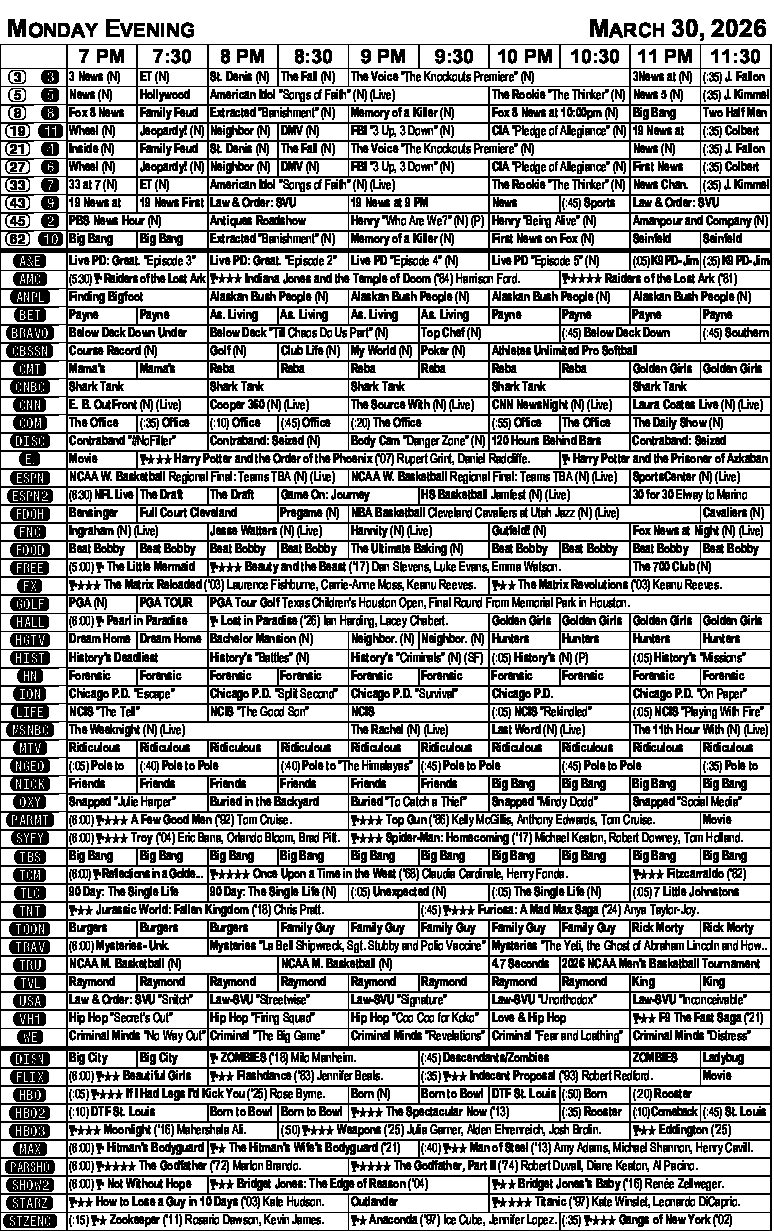
MONDAY EVENING TV LISTINGS
HINTS FROM HELOISE: How to get lipstick stains out of clothes
DEAR HELOISE: How do I get lipstick out of my favorite T-shirt? — Kay E., in Frankfort, Kentucky Kay, rub ...