

Start your seeds inside
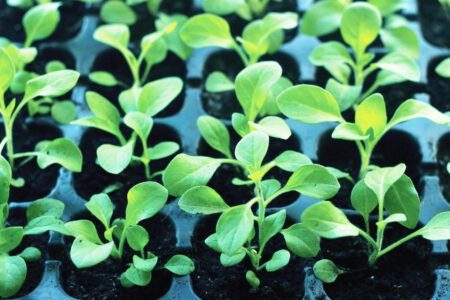
Submitted photo Luminaria seedlings are ready to go.
With the snow finally melting and temperatures creeping upward, my thoughts naturally shift to spring and the promise of new plants.
I find myself eagerly flipping through seed catalogs, imagining all the possibilities for this year’s garden. That is why this year, I have decided to try something different, starting my seeds indoors to give them the best start.
Why start seeds indoors? While buying nursery plants is convenient, starting from seed offers the advantage of a wider selection, lower cost per plant, stronger root systems and control over growing practices.
When starting seeds indoors there are a few basic things to consider. With the right setup and a little attention to detail, you can be ready to raise your own seedlings at home.
When to start? Here, timing is critical. Check the seed packets. Most of them recommend starting seeds 6-10 weeks before the last expected frost date.
Choosing the right seeds is very important. Always check seeds for recommended planting time, light and temperature requirements, and days to germination. It’s also important to note that high quality seeds increase the chances of successful growth.
Next you will need the following equipment:
• Seed trays, cell packs or small pots.
• Seed-starting mix (not garden soil).
• Seeds.
• Spray bottle.
• Labels and a marker.
• Very bright window or grow lights.
A sterile seed-starting mix is important because it drains well and prevents disease.
Planting the seeds:
• Moisten the mix before filling containers. It should feel like a wrung-out sponge.
• Fill containers and lightly firm the surface.
• Plant the seeds at the proper depth. Very small seeds should be pressed into the surface without covering.
• Mist gently to avoid displacing the seeds.
• Label with plant name and date.
• Cover the trays with a dome or plastic wrap to help maintain moisture until germination. Remove it as soon as seedlings emerge.
Insufficient light is the most common cause of weak, leggy plants. Although a sunny window may work, grow lights placed 2 to 3 inches above seedlings provide consistent, strong light. Keep lights on for 14 to 16 hours per day. Adjust them upward as plants grow.
Seedlings need consistent moisture, but should never stand in water. Bottom watering encourages strong root growth and reduces risk of disease. When multiple seeds sprout in one cell, thin them to the strongest seedling by snipping extras at soil level.
Common seed starting problems to look for:
• Damping-off — Fungal disease that causes seedlings to collapse. Prevent with good airflow and sterile mix.
• Leggy seedlings — Usually caused by insufficient light.
• Poor germination — Incorrect temperature or old seeds.
• Overwatering — Leads to root tot and fungus gnats.
With proper timing, lighting and moisture, you can produce healthy seedlings ready to thrive in your garden this spring.
Lifestyles
HINTS FROM HELOISE: Cut tissues in half so box will last
DEAR HELOISE: I find that most of the time, I only use a very small portion of a tissue. I’ve found that I can ...

Monday evening TV listings
Start your seeds inside
Bridge by Steve Becker
This deal occurred in the final of the 1992 U.S Bridge Championship. The declarer was Michael Rosenberg, who ...

How evergreens manage to stay green in winter
TO YOUR GOOD HEALTH: Avoiding dialysis can prove harmful
DEAR DR. ROACH: A loved one of mine has had kidney problems for his whole life. He’s now on the transplant list, ...