

Exciting to see spring flowers
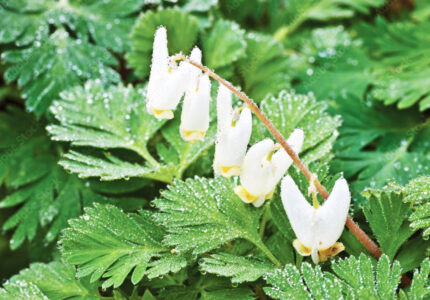
Submitted photo Shooting Star, Dodecatheon meadia, has delicate nodding blooms that seem to fly upward and away from the pointed red and yellow flower center, resembling a shooting star.
After the winter we have had, (snow, cold, ice, etc.) it is so exciting to look for the spring ephemerals — those little flowers that spring up one day and show off beautiful flowers.
In Ohio, there are several native species that grow as the ground warms up, blooming from a few days to a couple of weeks. They provide much needed pollen for the first insects coming out of hibernation; as well as fruits for invertebrates, reptiles and mammals.
They produce in a short margin of time as the ground warms up and the sun shines, but before the tree canopy shades them. These “wild flowers” survive by timing; short times to bloom, pollinate and set seed.
These plants can be raised in a garden, flower beds or just about anywhere if you provide the right conditions for their growth. I have Jack-in-the-pulpit, bloodroot, Virginia blue bells, Solomon Seals, lamium, spring beauties, along with primroses, daffodils, crocuses, tulips and grape hyacinth. I hope to enlarge my ephemeral garden this year. Ephemerals have a unique growth and timeline. As soon as the sun warms the soil and the days grow longer, before the leaves on the forest canopy, the first pop up. These geophytes have underground storage structures for food. As they grow, bloom and make chlorophyll from the underground chloroplasts, they treat insects, amphibians, reptiles, birds and other invertebrates to the first food sources of the year.
After blooming, the plants store food in the roots, modified as tubers, bulbs, corms or rhizomes. Then later in summer, they rejuvenate these chloroplasts to make buds, stems and leaves for the next spring. In winter, the plants’ underground structures lie dormant, storing energy until spring, when the cycle begins again.
Here is a list of the most familiar plants: May apple, Celandine poppy, trout lily Spring beauty, rue anemone, bloodroot, large-flowered trillium, large-flowered bellworth, Jack-in-the-pulpit, Dutchmen’s britches, Solomon’s Seals, wild hyacinth, shooting star, Harbinger-of-spring, cut leaf toothwort, white trout lily, yellow trout lily, snow trillium and prairie trillium. Here are some companion plants: wild ginger, wild geranium, great blue lobelia, rosy sedge and cinnamon fern.
This list is in no way all the spring ephemerals, but it is a good start. If you find an area with shade from the summer sun, and you can keep it moist, that sounds like a candidate. I put mushroom compost, an old log and moss in the area with a young dogwood.
All my spring plants seem happy. I love having my own woods close by to enjoy and I believe you might as well.
Lifestyles
Exciting to see spring flowers
A success story: My heirloom tomato plants

MONDAY EVENING TV LISTINGS
Valley Grows calendar
Here are upcoming gardening events through the Ohio State University Extension Office. For more information and a ...
HINTS FROM HELOISE: Crock pot makes for easy prep
DEAR HELOISE: For years, I hosted Thanksgiving for my husband’s family, which usually consisted of around 15-20 ...
TO YOUR GOOD HEALTH: Reality of cancer returning hits hard
DEAR DR. ROACH: I read your column every day. In a recent column. you wrote: “Since age is the major risk factor ...