

Meet the mildews
Gardening can be a very rewarding hobby but at times very frustrating.
Having lived in and gardened at the home we have known for 33 years, I have had my share of successes and failures. As they will over time, trees on our property have turned a once thriving cutting garden into an increasingly shady location. Where sunflowers once grew easily, I now battle downy mildew on some varieties.
Downy mildew is a water mold that requires a living host to survive, according to Cornell University. The name “downy” refers to the fuzzy lesions the spores present on the back of infected leaves. At the same time, the surface of the leaf may show a mosaic pattern of chlorosis (yellow) cells and dead cells. In our vegetable gardens, it can affect cucumbers, melons, squash, and pumpkins.
As it needs a living host to survive, it does not overwinter in Ohio but is transported here on wind currents, sometimes from hundreds of miles away. Mild temperatures, rain and overcast skies favor its transport, reports The Ohio State University. A first wave within a week of July 4 affects cucumbers and melons, and a later summer wave affects all cucurbits.
The University of Maryland offers tips to reduce plant susceptibility:
• Select disease-resistant varieties. Read the plant tags.
• Avoid planting in poorly drained soil.
• Cover bare ground with newspaper and straw.
• Provide adequate light, water and nutrients.
• Prune for good air circulation and remove infected leaves.
• Use drip irrigation or water at the base of plants.
• Control weeds and pests.
The University of Wisconsin defines powdery mildews as diseases that occur on the above-ground parts of vegetables, ornamentals, trees and shrubs.
The infected parts will look as if they have been dusted with flour. On some plants, powdery mildew is only cosmetic; on others it can cause extreme leaf loss. There are many species of fungus that cause it and they are host specific.
Powdery mildew spores do not need water to form and grow. High humidity is necessary as are mild temperatures. However, spore spread is more likely at lower humidity, and Purdue University suggests that spraying leaves during daytime periods of low humidity can even inhibit infection and protect plants. This should be avoided if other leaf diseases are an issue. Summer heat also seems to reduce infections.
Unlike downy mildew, this fungus can survive winter in garden debris. A thorough fall cleanup and proper disposal of debris (composting not recommended) is important.
Following the above-mentioned guidelines for downy mildew will also reduce the chance of infection.
For identification of and information on this and other plant issues, contact the Mahoning County Extension Office.
Lifestyles
TO YOUR GOOD HEALTH: Diabetic ulcers can be healed
DEAR DR. ROACH: I have a diabetic nonhealing ulcer on my right heel. I was told that the blood circulation in my ...
Meet the mildews
Gardening can be a very rewarding hobby but at times very frustrating. Having lived in and gardened at the home ...
Valley Grows calendar
Here are upcoming gardening events through the Ohio State University Extension Office. For more information and a ...
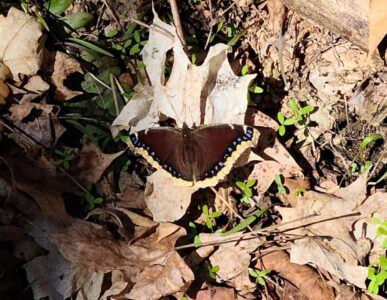
Seeking mourning cloak butterflies
HINTS FROM HELOISE: Readers weigh in on early arrivals for doctor
DEAR HELOISE: Regarding Mr. Kupstas’ comment that was published in a recent column, I expect medical office staff ...
DEAR ANNIE: This Presidents Day, be the change you seek
DEAR READERS: Presidents Day isn’t the flashiest holiday. There are no fireworks, no heart-shaped chocolates, no ...