

Catnip vs. Catmint: How to tell the difference
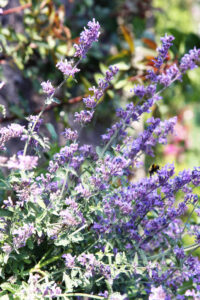
Submitted photo Catnip, shown above, is good for attracting bees and butterflies to your garden.
Not too long ago, I got my first cat, and it made me realize how much I still need to learn about cat care. I already grow catmint, but I wanted to understand more about catnip as l learned that most cats love it, so I decided to grow some of it as well.
Many people seem to confuse catmint and catnip, which makes sense as both plants belong to the mint family and have the familiar square stems. They are also spread easily by seed and rhizomes. Because of that fact, I plan to grow my catnip in a container.
Catnip is a short-lived perennial (two to five years). It is not eye catching like catmint. I think of it to be weedy looking. It does have little white, pink or purplish flowers.
Some say it has a “skunky” aroma. Why would a cat love that? The leaves and stems are square, hairy and a greenish gray in color. It grows 2-3 feet tall. Blooming time is late spring until early summer.
Catnip is filled with nectar, so it attracts bees and butterflies. It is not favored by deer. It grows best in sun, with well-drained soil, but can flourish in semi-shaded poor soil. It is fairly drought resistant and regular pruning is recommended.
It turns out catnip can have different reactions on different cats. Some will find it works as a sedative, while to other cats it may be too stimulating. Do not use too often. Speaking to a veterinarian and doing some research would be a good idea before use.
Catmint is one of my favorite perennials. Catmint is a mounding pollinator favorite, often used as a border and has very few issues with disease or pests. This plant thrives in any well-drained soil, blooms from late spring through early summer and benefits from mid-season pruning, which should happen after the first bloom shows signs of fading. Cut off flowerheads just above the first leaf.
Catmint does not usually need fertilizer. This plant is one to be known to attract beneficial insects into the garden.
Catmint prefers to be cut back in early spring. The foliage helps maintain the root crown during winter months.
With lavender blue small flowers, the “low walkers” variety is seen most often in our area. There are varieties that have pink blooms and white blooms.
I like the wispy feel of the foliage. At the OSU extension office, we have catmint paired with small yellow roses. It looks beautiful.
Lifestyles
Readers sound off on cursive
DEAR HELOISE: I just have to comment about the lack of needing to teach cursive writing in the letter as described ...
Valley Grows calendar
Here are upcoming gardening events through the Ohio State University Extension Office. For more information and a ...

TV listing: Monday, Jan. 26, 2026
Friend is struggling with gambling addiction
DEAR ANNIE: My best friend and I have been close since college. He is the person who helped me move into my first ...

Grow nutrition all winter long with microgreens
Low-risk estradiol treatment comes with warning
DEAR DR. ROACH: I’m a 70-year-old woman who has suffered with vaginal dryness ever since I went through ...