

Food trips where the destination is the dish
In 2026, some of the most memorable food trips no longer revolve around white tablecloths or hard-to-get reservations. Instead, they unfold outdoors, in fields, forests, rivers and village kitchens, where travelers get involved in the process of how meals come together. The draw is not just what lands on the plate, but the feel of gathering ingredients, cooking alongside locals and eating where the food actually comes from.
That shift is changing what earns bucket-list status. These experiences happen in short windows, require patience and reward curiosity. They invite travelers to slow down, get their hands dirty and accept that weather, geography and tradition shape the best meals. As food becomes the reason to travel rather than an afterthought, destinations around the world are offering deeper, more participatory ways to eat.
Costa Mujeres, Mexico: Resort dining that travels the world
In Costa Mujeres, food travel stays close to home base. Purpose-built resorts appeal to food-focused travelers by offering a wide range of restaurants on property, making it easy to move from Italian to Mediterranean to sushi without leaving the grounds. The appeal is variety without friction, with each venue designed to deliver a distinct experience.
Yucatan ingredients and Caribbean seafood appear throughout modern Mexican cuisine, including at Maria Dolores by Edgar Nunez at ATELIER Playa Mujeres, which is a Michelin Guide-recommended restaurant. For those willing to venture a bit farther, nearby Cancun offers a contrast with family-run spots like La Casa de las Mayoras, also Michelin recommended, where handmade tortillas and traditional dishes offer a quieter, more personal experience.
Bhutan: Cooking with the land at Gangtey Lodge
At Gangtey Lodge, guests can join village families for activities such as buckwheat sowing or harvest and potato digging, then carry those ingredients back to the lodge kitchen. Cooking follows naturally, guided by what has been gathered rather than a fixed menu.
Hands-on experiences include making “puta,” or traditional buckwheat noodles, along with cooking sessions at the lodge. Foraging for wild ingredients, herbal tea gatherings paired with local snacks and the lodge’s multisensory tasting rituals deepen the connection, using food to tell the story of land, labor and daily life.
Italy: Truffle hunting from forest to table in Piedmont
At Casa di Langa in Piedmont, truffle hunting stays active and hands-on. Guests head into the surrounding woods with local “trifolao,” or truffle hunters, and their trained Lagotto Romagnolo dogs, learning how scent, soil and timing guide the search for white and black truffles in season.
The experience continues well after the hunt ends. Casa di Langa’s truffle concierge helps guests clean, preserve and ship their finds, while offering guidance on local markets and festivals. The day concludes in the kitchen, where freshly unearthed truffles are prepared, with dining at Faula Ristorante serving as the natural endpoint.
Asia: InsideAsia culinary travel in Japan and South Korea
InsideAsia designs its food-focused journeys through Japan and South Korea around structure and context rather than restaurant lists. Its 14-night A Taste of Japan and South Korea itinerary takes travelers through both countries with food shaping each stop along the way.
In Japan, that includes an izakaya night in Tokyo, a hands-on cooking class in Kanazawa and a temple stay on Mount Koya with traditional shojin-style meals. In South Korea, the focus shifts to street-level and regional food. Highlights include pocha tent dining in Seoul, time in Jeonju, a UNESCO City of Gastronomy, and visits to coastal cities such as Busan and Yeosu. InsideAsia also offers a standalone Culinary Korea itinerary, along with tailored trips through Japan.
Las Vegas: Michelin’s return signals a new food moment
Las Vegas is stepping back into the global food spotlight with the return of the Michelin Guide as part of a new Southwest edition covering Arizona, Nevada, New Mexico and Utah. The last Las Vegas guide appeared in 2009, when 17 local restaurants earned Michelin stars.
Inspectors are already in the field ahead of the 2026 ceremony, reflecting how much the city’s dining scene has changed. Growth now extends beyond casino dining rooms, as new neighborhoods and approaches shape what visitors encounter. For food-focused travelers, Las Vegas offers a front-row seat to a city redefining itself under renewed attention.
The last course
Taken together, these trips suggest a quiet recalibration of what makes travel feel worthwhile. The appeal lies less in spectacle and more in access, in being invited into kitchens, fields and forests where food takes form long before it is served. As food tourism continues to evolve, the meals that linger may be the ones that ask travelers to slow down, participate and accept that the most memorable experiences are often earned, not presented.
Lifestyles
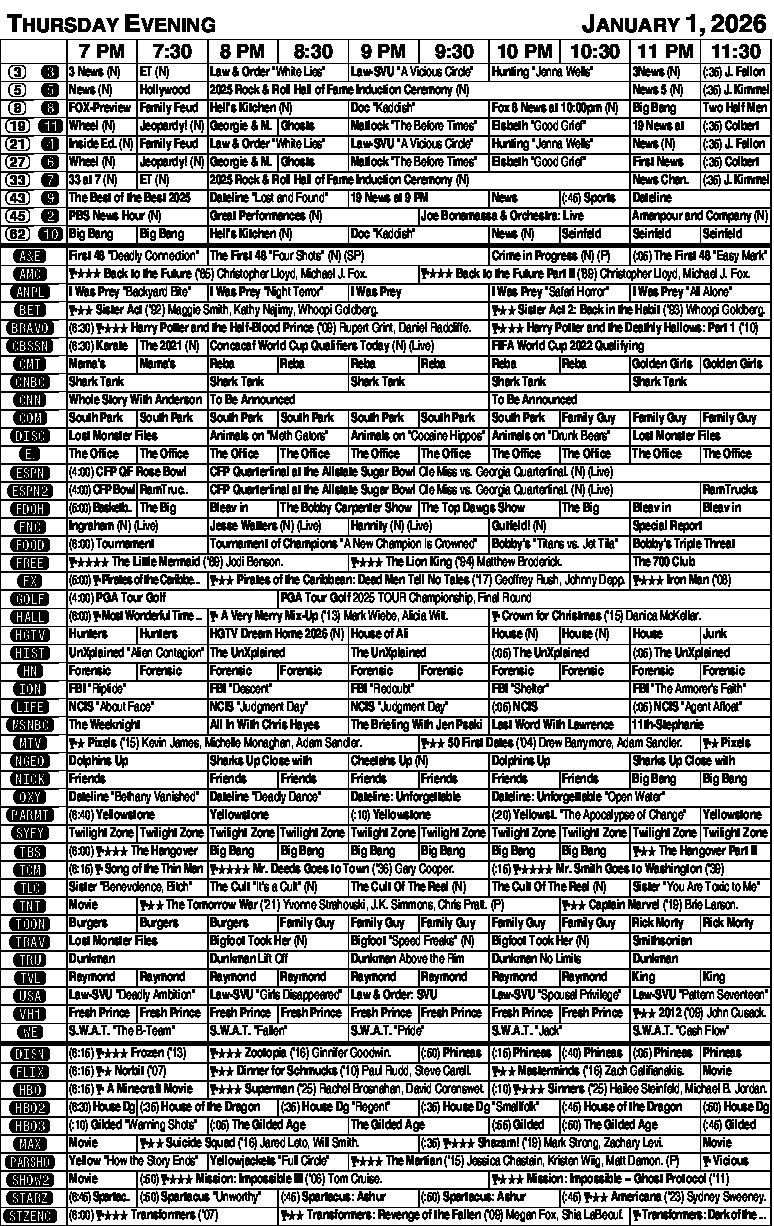
Thursday TV listings
Carbon monoxide safety tips
DEAR HELOISE: The letter about preventing carbon monoxide poisoning by getting a monitor for your home is a must ...
Defining ‘healthy’ person
DEAR DR. ROACH: I read your column daily in my local newspaper. The people who write in often describe themselves ...
Coping with an empty nest at the holidays
DEAR ANNIE: I’ve read plenty about empty-nest depression and how to cope with it, and I managed that stage just ...
Food trips where the destination is the dish
In 2026, some of the most memorable food trips no longer revolve around white tablecloths or hard-to-get ...
Senior news
To be included or to submit items for the weekly Senior News list, email information to tmunnell@tribtoday.com or ...