

Elder-abuse safeguards vary by state
Elder abuse is a complex and concerning issue that affects vulnerable older Americans in various ways and cost us more than $2.3 billion last year. It is important that we take action to address this issue and ensure that older Americans are protected and their dignity is preserved, especially as the older population grows.
The U.S. Census Bureau predicts that the population aged 65 and older will almost double from 57.8 million in 2022 to 106.3 million in 2100. By taking action now, we can pave the way for a brighter and safer future for our older generations.
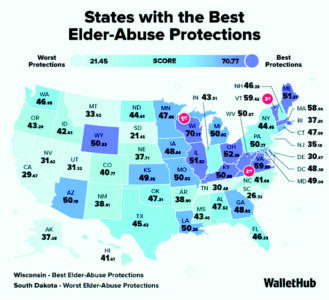
WalletHub is raising awareness of this critical issue by comparing the 50 states and the District of Columbia based on 16 key indicators of elder abuse protection in three overall categories. Our data set ranges from the share of elder abuse, gross neglect and exploitation complaints to financial elder-abuse laws.
In the survey, Ohio ranks fifth best in the nation for protections for its older residents. Here is a deeper look at the best three states for elder abuse protections.
WISCONSIN
Wisconsin ranks as the top state for elder-abuse protections, and it’s one of only 22 states that have elder-abuse shelters, giving mistreated elderly residents resources for escaping their abusive situations. It
also has the third-most elder care organizations per capita.
In addition, Wisconsin makes sure that misconduct in nursing homes is minimized. It requires assisted living facilities to have two inspections per year, the most in the country, and it also has elder justice task forces, which bring together federal, state and local prosecutors, law enforcement and agencies that coordinate and enhance efforts to pursue nursing homes that provide grossly substandard care to their residents.
To top things off, Wisconsin has the second-highest spending on legal assistance per resident ages 65 and over, and it spends the third-most on elder abuse prevention. One way this has paid off is that the state has the eighth-lowest percentage of elderly residents falling victim to fraud and the eighth-lowest average loss to fraud.
VIRGINIA
Virginia has the second-best elder-abuse protections in the country, including the fourth-highest spending on elder abuse prevention per elderly resident. The state also has the fourth-highest share of nursing homes rated four or five stars, and it provides shelters for residents who have been victims of elder abuse.
The Old Dominion requires assisted living facilities to undergo annual inspections and allows surveillance cameras in the rooms of nursing home residents to detect misconduct by employees or visitors.
On top of that, Virginia has elder justice task forces and elder abuse forensic centers — specialized, multidisciplinary teams designed to respond to complex cases of elder abuse. The state’s older population also benefits from legislation targeting financial crimes committed against them.
VERMONT
Vermont has the third-best elder-abuse protections, with the second-highest number of certified volunteer ombudsmen per capita, along with the third-most ombudsman funding per elderly resident. Vermont also has the second-most elder care organizations and services per capita, so residents have a lot of resources to help them if they are being taken advantage of.
Finally, Vermont has the ninth-fewest elder abuse complaints per capita in nursing homes, and 19th-fewest in board and care homes. The state requires annual inspections of nursing home facilities, too. For context, only 26 states require inspections either yearly or more than once per year.
TIPS FOR SPOTTING ELDER FINANCIAL ABUSE
● Look Out For Unusual Bank or Credit Card Activity: Be vigilant for any unexpected or abrupt alterations in the financial circumstances of an elderly individual, like substantial withdrawals, transfers or expenditures. Be mindful of any irregular ATM usage or unfamiliar purchases.
● Be Cautious of New or Unfamiliar “Friends”: If an elderly person has recently befriended someone who shows an unusual interest in their finances or property, it is important to be cautious. This behavior could indicate that the new acquaintance has malicious intentions. Some scammers take advantage of the elderly’s person’s kind nature and willingness to make new friends to gain their trust, which they can then use as a means to exploit them financially.
● Monitor social media and internet use: It is wise to keep a close watch on an older adult’s social media and internet use as these platforms can make them vulnerable to fraudsters. One should regularly check an older adult’s social media profile for any suspicious connections or posts that may reveal personal information to others. Additionally, monitoring their email accounts can help identify any potential security concerns.
● Watch For Changes in Legal Documents: It is important to be alert to any modifications made to legal documents, such as wills, trusts, powers of attorney or other documents that may appear to benefit someone other than the elderly person. These changes could be made due to coercion or manipulation by family members, caregivers or others who may be pressuring the older adult to make financial decisions against their will.
● Take Note of Changes in Behavior: Be aware of any changes in behavior displayed by older individuals, such as sudden fearfulness, anxiety or secretiveness regarding their finances. Perpetrators of financial fraud often employ tactics that isolate vulnerable individuals from their social support networks, allowing them to maintain control over their victims. If an older adult seems to be avoiding family and friends or is hesitant to discuss their financial situation, it may be indicative of elder financial abuse.
● Be Mindful of Any Decline in Personal Care Conditions: You should monitor personal care conditions carefully. If an older person is living in poor conditions, not receiving necessary medical care or not getting proper nutrition, it could be a sign that their financial resources are not being used for their well-being. If someone has the means to afford food, medication or necessary care, but they are seemingly being denied access, it could be an indication of financial exploitation.
Lifestyles
Bridge by Steve Becker
Elder-abuse safeguards vary by state
Hints from Heloise: Tracking down your animals
DEAR HELOISE: I would like to share an idea I came up with recently — using ID dog tags on horse bridles. It ...
Jury still out on chelation for heart health
Here in Northeast Ohio, ’tis the season for snow, wind, ice, shorter days, longer nights and all the other ...
Dear Annie: When healthy habits turn into critiques
DEAR ANNIE: When my boyfriend decided to get serious about his health earlier this year — cleaner eating, regular ...
To Your Good Health: Reporting vaccine side effects
DEAR DR. ROACH: You recently posted a couple of articles about the respiratory syncytial virus (RSV) vaccine and ...