

Blending is the artistic side of winemaking
American wine buyers frequently look for wines on retail shelves labeled with a specific varietal: Riesling, Chardonnay, Cabernet, etc. And in restaurants, most domestic wine lists are categorized by varietals too.
However, European wine lovers focus more on geographic names. They have always enjoyed wines blended from a number of finished wines grown in and named for the geographic region where the grapes are grown: Bordeaux, Burgundy, Champagne, Chianti, Rioja and hundreds of other large and famous or small and more obscure places on an European map.
As American vintners have learned more about the fruit that enters their cellars, blending has become more important for us too. However, rather than relying on geographic names, our industry leans toward proprietary blends, creating fanciful names, often ones with an interesting story behind the label on the bottle.
What is the rationale behind blending?
Reasons for blending are many: to create a wine both more complex and interesting than as a single varietal; to establish consistency from one growing season to the next; to better balance flavors, acids, tannins and sweetness of each original wine; to improve a wine’s color; to raise or lower acid, alcohol and/or pH levels; to enhance body, mouthfeel and/or to improve aroma; and sometimes even to create a blend to honor a person, often a family member.
Winemakers can use different criteria for blending. They may mix different grape juices or finished wines, juice from a variety of vineyards, grapes from a number of different vintages (growing years), or wines finished in a different combination of tanks and barrels — including barrels from different types of oak: American, Limousin, Nevers and Hungarian, among others.
Timing is also a consideration. Blending does not usually occur during the harvest, but is done either shortly after the end of fermentation — or when a group of wines is individually finished.
As the winemaker moves through the blending process, he takes careful notes regarding varietals and quantities in each tank; he tastes frequently to assess progress, making note of similarities and differences each time; and he often uses a blind panel to reinforce any decisions made along the way. The goal is always to create a finished wine that is better than each of the individual parts used to create it.
Sometimes a winemaker will produce a blended wine whose grape varieties must follow a formula and may use only specific varieties. One example is from the Meritage Association, which awards an official license and requires that any bottle with the designated Meritage name be blended from traditional Bordeaux grapes. Reds must include Cabernet Sauvignon, Cabernet Franc, Malbec, Merlot and/or Petit Verdot, and/or and the rarer St. Macaire, Gros Verdot and Carmenere. White Meritage must include Sauvignon Blanc, Semillon or Muscadelle du Bordelais. For red and wine Meritages, no one variety may constitute more than 90% of the final blend. However, most frequently, the vintner is just trying to produce an exceptional, interesting bottle of wine.
Winemaking surely relies on science. A serious winemaker’s laboratory is a room often visited throughout a wine’s life in the cellar. However, blending a great finished wine allows a vintner to show off his most creative side.
For additional information, email Donniella at dwinchell@ohiowines.org
Lifestyles
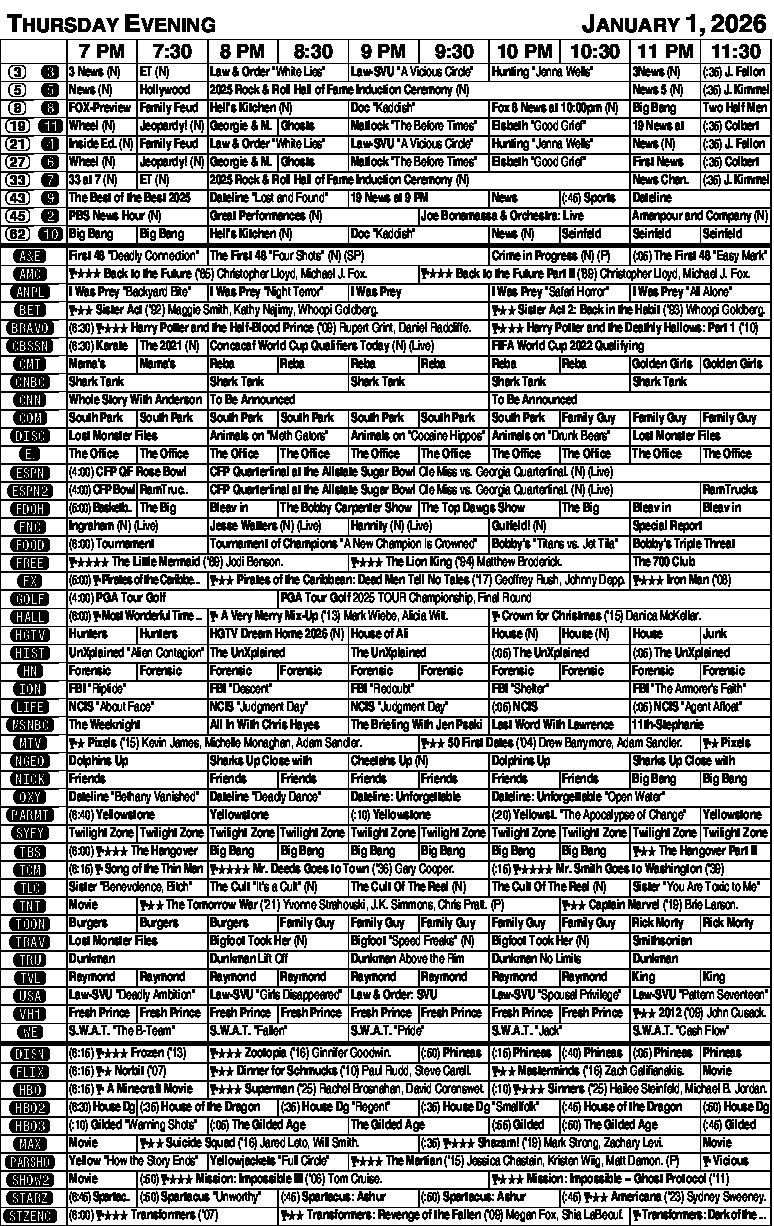
Thursday TV listings
Carbon monoxide safety tips
DEAR HELOISE: The letter about preventing carbon monoxide poisoning by getting a monitor for your home is a must ...
Defining ‘healthy’ person
DEAR DR. ROACH: I read your column daily in my local newspaper. The people who write in often describe themselves ...
Coping with an empty nest at the holidays
DEAR ANNIE: I’ve read plenty about empty-nest depression and how to cope with it, and I managed that stage just ...
Food trips where the destination is the dish
In 2026, some of the most memorable food trips no longer revolve around white tablecloths or hard-to-get ...
Senior news
To be included or to submit items for the weekly Senior News list, email information to tmunnell@tribtoday.com or ...