

Fascinating abilities of barn owls
One of the most elusive and mysterious owls of Ohio is the barn owl (Tyto alba). This very large predator, measuring 16 inches long with a wingspan of 3 ½ feet, has a heart-shaped face, large dark eyes, a white body with tawny brown back and long legs. This beautiful bird is a natural hunter. Its enormous eyes see in near and complete darkness.
They are placed forward in the head, as a predator, for binocular vision. The head turns 270 degrees, with 14 vertebrae for flexibility, to see all the way around. Earholes embedded under the feathers on the sides of the head are asymmetrical to help focus in on sounds. Feather circles around the eyes work as dishes to collect sound and carry it instantaneously (in 30 millionths of a second!) to the earholes to locate sound.
This amazing creature has comblike leading extensions on the flight feathers (called fimbriatae) to fly silently. The bill is hooked and sharp to tear, crush and shred prey. Lastly the feet have sharp, strong talons with three facing forward and one facing back. Muscles connected to the talons lock onto prey without spending energy to contract. The legs and feet have feathers to fight off cold and to sense the captured prey.
Barn owls hunt in open cultivated farmland with woodland edges, hedges and grasslands. They hunt for mice, voles, shrews, rats and small mammals. Their steep decline in population was caused by reduced forest habitats, nest sites, harsh winters and poisoning intended for prey species (rats, mice, etc.) They prefer to nest in tree cavities, chimneys, barns and steeples, but will nest in nest boxes. Ohio has seen a small increase in barn owl numbers with the introduction of nest boxes, and the Ohio Department of Natural Resources is monitoring these numbers.
Barn owl sounds are long harsh screams and what is called the purring call. They also snap their bills, as well as make hissing sounds. They do not make other owl sounds.
Owls eat their prey whole. In their gizzard, similar to the stomach, digestive fluid, sand and gravel grind and dissolve soft tissue. Bone, teeth, hair and feathers are packed together to form a compact pellet to be regurgitated. This takes about 10 hours. When owls build a nest (whether in a tree, barn or nest box) they use about 1 cup of shredded owl pellets and pulled feathers. They lay clutches of 2-11 eggs that take up to 37 days to hatch. Chicks mature to young adults from 63-70 days, as they learn to fly and hunt. It is reputed they mate for life.
Barn owls are the most widespread owl species in the world.
Hughes is an Ohio State University Extension Master Gardener Volunteer in Mahoning County.
Lifestyles
HINTS FROM HELOISE: Cut tissues in half so box will last
DEAR HELOISE: I find that most of the time, I only use a very small portion of a tissue. I’ve found that I can ...
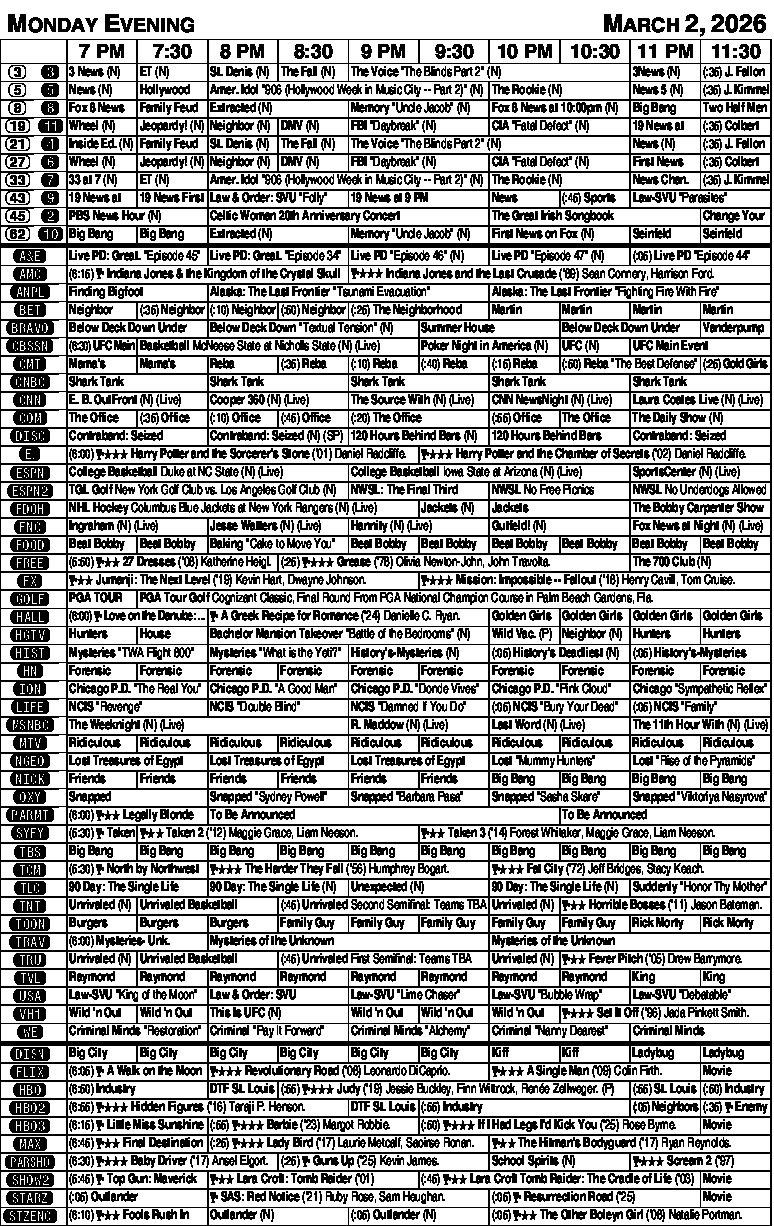
Monday evening TV listings

Start your seeds inside
Bridge by Steve Becker
This deal occurred in the final of the 1992 U.S Bridge Championship. The declarer was Michael Rosenberg, who ...
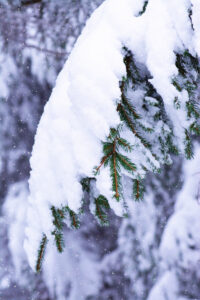
How evergreens manage to stay green in winter
TO YOUR GOOD HEALTH: Avoiding dialysis can prove harmful
DEAR DR. ROACH: A loved one of mine has had kidney problems for his whole life. He’s now on the transplant list, ...