

Be a citizen scientist, join FeederWatch
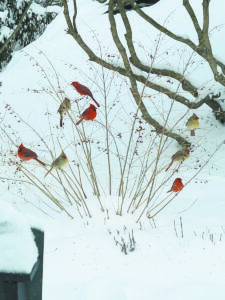
For many years, I have enjoyed observing the visitors that frequent my bird feeders. It was a pastime enjoyed by my parents, so it only seemed fitting that I should continue the practice.
Three years ago, I became a citizen scientist when I began to collect and submit data gathered from my feeders.
I participate in Cornell University’s FeederWatch program along with approximately 20,000 other citizen scientists in the United States and Canada.
The concept for FeederWatch began in Ontario, Canada, in the mid-1970s when 500 people collected data over a 10-year period.
The problem with a Canadian project is that birds don’t recognize boundaries, and many species move between the United States and Canada throughout the seasons. In the mid-1980s, the Cornell Lab of Ornithology was contacted when the conclusion was reached that an accurate survey needed to be on a continental basis.
The fee to participate is $15 — $12 if one is a member of the Lab. Sign up through their website (below) or by mail. The fee covers, among other expenses, mailed materials that include a poster depicting birds an observer might see at their feeder. For a beginner birdwatcher, this is a valuable tool to help with identification.
The count begins Nov. 1 and finishes April 30, but counting the entire six months is not a requirement. I usually begin after Christmas and rarely make it to the end of April. That’s gardening season!
The count is done during two consecutive days, leaving at least five days before the next one. The amount of time spent counting is up to the observer, but you will be asked whether it is a.m. or p.m. and how long you watched when data is submitted.
To avoid counting the same bird more than once, the greatest number seen at one time is what goes on the tally sheet. Male and female birds, for example, cardinals, are not counted separately, only the total number of cardinals observed at once.
Birds that just happen to fly overhead are not counted, only those in a predetermined observation area. You will be asked to describe your site when data submission begins.
I keep my count on a paper tally sheet, but it can also be done on the mobile app downloaded from their website. I submit my tally online from my sheet. If your count includes house finches or goldfinches, be observant for avian conjunctivitis, an eye infection that is easily transmitted. You will be asked for this information.
FeederWatch is not without surprises. Those brown birds under the feeder may be one of many species. Be watching for the quick flash of a Cooper’s hawk as it grabs an easy meal, all part of the food web. Some winters produce an irruption, birds that visit from Canada because their native food is in short supply.
Bird watching is a perfect family hobby. Join FeederWatch and become a citizen scientist. For more information or to join the winter fun, go to feederwatch.org.
For details on birdwatching and bird identification, go to http://go.osu.edu/birdid.
Lifestyles
Lovina helps family prepare for church service
It is a dreary April morning with no sun in sight. We had a thunderstorm during the night with lots of strong wind ...
Lessons from California
Every great wine region has garnered respect for its vintages by growing quality fruit and developing winemakers ...
The quiche that made Michael Anthony love leeks
TO YOUR GOOD HEALTH: Endometrial cancer and its treatments
DEAR DR. ROACH: Can you comment on endometrial cancer? I have stage IV, and I’m in my 50s. I remain concerned ...
Bridge by Steve Becker
No declarer worth his salt should deliberately jeopardize making a game in order to try for a 30-point overtrick. ...
DEAR ANNIE: Later-in-life baby only needs family’s love
DEAR ANNIE: My husband and I are raising a surprise baby at a stage in life when we thought our child-rearing years ...