

Staghorn ferns: Stunning and easy to grow
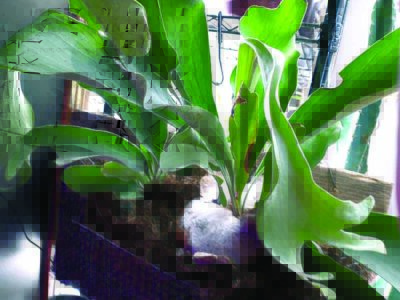
Staghorn ferns hang from trees or rocks and glean nutrients and moisture from the air. At home, they can be mounted on wood or fit into wire baskets with wet sphagnum. (Submitted photo)
One of my best babies in my collection of houseplants is my staghorn fern (Platycerium spp.). My husband, Bill, cut me a nice piece of wood to mount it and it is growing very well. It is relatively easy to grow and is a stunning plant.
Staghorns are an epiphyte, hanging from a tree or on rocks and gleaning nutrients and moisture from the air.
The staghorn has two types of fronds (the fern version of leaves), that is the sterile basal, that makes a shield that covers the rootlets that anchor the fern to the tree or rock. It also captures some of the moisture and nutrients that plant needs.
The other frond is foliar, the eye-catching upright fronds that resemble moose antlers and give the fern its name. These fronds will get brown reproductive structures called sporangia on their undersides. These spores developed in sori are a form of reproduction. The mature fern can also make new shields, and thus new plantlets (called pups) as well.
I planted mine from a pot from a store. Here’s how I grew it to be the beautiful plant it is today:
I took the board and mounted a “basket” of 1/2-inch wire (squares) by stapling it at a half moon shape with a pocket. Bill drilled a hole for a heavy wire mount.
I lined the pocket with wet sphagnum (not peat moss, but true sphagnum or orchid medium.) I took the fern out of the pot, shaped it to fit into the pocket, then I gently packed in more wet sphagnum. This holds water for the plant and protects the rootlets.
You can also use the metal wire baskets that have coco mats in them, but I like the wood look. In the winter, I have a big tote that I set my fern in and pour rainwater over the whole thing — roots, shield, and the foliage. After 24 hours, I set it in my shower to drain. Then I hang it back up for the rest of the week.
So far, this baby is happy. I spray it periodically as we heat with wood and have low humidity.
In the summer, I set it out in the shade to acclimate. After a couple of weeks, I move it to an east-facing exposure, but still located in the shade. I spray it every other day (I have well water, not city water). I am a firm believer in rainwater — it’s more like Mother Nature than our city water system.
There are many varieties that grow out, downward, and some even grow up. Some are bright green, some blue. Some have short fronds, some up to 15 feet long! Some form nests that the foliage comes out from. All are these beautiful and fun to grow.
To learn more about these plants and how to grow your own, go to http://go.osu.edu/staghornfern.
Hughes is an Ohio State University Mahoning County Extension Master Gardener Volunteer.
Lifestyles
Valley Grows Calendar
Here are upcoming gardening events through the Ohio State University Extension Office. For more information and a ...
‘Bring One, Take One’ plant exchange returns

Method leads to October veggies
Being needed isn’t the same as being valued
DEAR ANNIE: I am the person everyone in my family calls when they need something. I babysit, drive relatives to ...

MONDAY EVENING TV LISTINGS
TO YOUR GOOD HEALTH: Complex problems require teamwork
DEAR DR. ROACH: I have a friend who had gallstones and ultimately had her gallbladder removed. When they went in, ...