
Hubbard Army veteran fought, taught over 3 decades
Trending
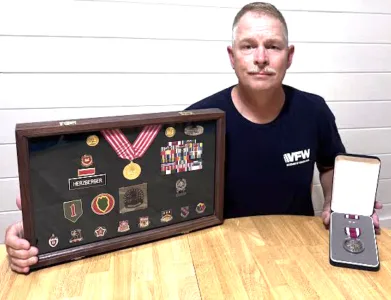
For more than three decades, Brent Herzberger answered the call to serve, building a military career that took him from the deserts of Kuwait and Iraq to leadership positions training soldiers and supporting military operations across Ohio.
Along the way, the Brookfield High School graduate gained lifelong friendships, valuable lessons and a deep appreciation for those who have worn the nation’s uniform.
Born in Sharon, Pa., and raised in Masury, Herzberger graduated from Brookfield High School in 1989. The oldest of three children and the only son, he spent much of his youth outdoors, participating in Boy Scouts and exploring the woods with friends.
"I spent a lot of summers playing Army," Herzberger recalled. "As I entered high school, my mind was definitely focused toward military service."
That desire to serve was shaped by family members who served in previous wars. His grandfathers were World War II veterans, and an uncle retired from the U.S. Air Force. Listening to their stories instilled a strong sense of patriotism and duty.
After moving to Florida following graduation, Herzberger voluntarily enlisted in the Army in December 1989.
His military career began as a combat engineer and ribbon bridge crew member before transitioning into construction engineering specialties. As he advanced through the ranks, his responsibilities grew. He helped establish three new engineer units under the 112th Engineer Battalion at Camp James A. Garfield and later served as a Regional Training Institute course manager, overseeing leadership training for newly promoted sergeants. His final assignment was as a Range Operations noncommissioned officer at Camp James A. Garfield, where he managed personnel and training operations at the 21,000-acre military training center.
Like many veterans, he remembers basic training as an adjustment.
"It was a culture shock going from your schedule to their schedule," he said. "But eventually you got into a rhythm."
His first deployment came during Operation Desert Storm in 1990. While there were long periods of waiting before the ground war began, life quickly changed once operations started.
"We were living out of our vehicles, always on the move," Herzberger said. "No tents, latrines or mess halls."
His second deployment, with Charlie Company, 216th Engineer Battalion of Austintown during Operation Iraqi Freedom in 2004, was markedly different. Engineers conducted hundreds of combat patrols, logged thousands of equipment hours and completed major force-protection projects to support troops throughout Iraq.
One of the lasting effects of deployment, he said, is the heightened awareness many veterans carry home with them.
"You find yourself scanning the road when traveling, identifying exits when you enter a room and observing everything and everyone coming into your space," he said. "Stay alert to stay alive."
Among his most vivid memories are the soldiers his battalion lost during the 2004-05 deployment.
"They will never be forgotten," he said.
Despite the hardships, Herzberger says the friendships formed during military service remain one of the greatest rewards of his career.
"These are some of the best people I’ve had the honor of serving with," he said. "The military family is real."
Looking back, he credits the Army with giving him discipline, purpose and direction. During his years of service, he earned a bachelor’s degree and graduated summa cum laude. He also credits the military mindset with helping him raise successful children and achieve personal and professional goals.
After serving 33½ years -- 10 in the National Guard and the remainder on active duty -- Herzberger retired from the Army in June 2023. Military service continues to be a family tradition; his son is currently serving in the Air Force.
Today, he remains active in the veteran community as senior vice commander of Hubbard VFW Post 3767, helping fellow veterans connect with resources and maintain the bonds forged through military service.
Retirement has also allowed him more time with family and a new passion: participating in a World War II living history and reenactment group.
"We can’t let that piece of history fade away," he said. "We must become the stewards of their stories and keep their service and sacrifices alive."
For Herzberger, preserving the legacy of those who served before him is simply another way of continuing a lifetime of service.