
Baseball’s rule changes a great step forward
Trending
You certainly could have described me as skeptical when Major League Baseball announced it would implement a pitch clock, among other rule changes, heading into this 2023 season.
Right up until Opening Day, I was curious -- if not unconvinced -- about the effects it would have on making games more "watchable" to the average viewer and to fans of all kinds. But after watching it on television most nights, and now after seeing it in person over the weekend in Cleveland, count me on board.
There is a noticeable uptick in pace.
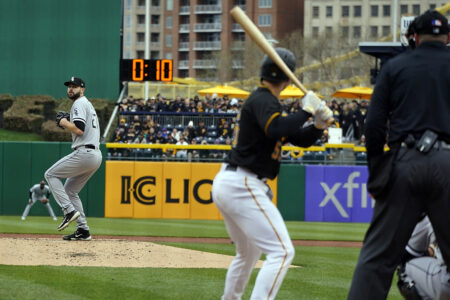
Whether it's at home or in the ballpark, the biggest difference you'll find is between pitches and batters.
Pitchers get 15 seconds between pitches if there's nobody on base, 20 seconds if there's traffic on the base paths. The pitcher must begin his motion to deliver a pitch before the pitch clock expires, or he is assessed a ball.
Meanwhile, batters have to be in the box and alert to the pitcher -- or ready to bat -- by the 8-second mark lest they be charged an automatic strike.
The clock goes up to 30 seconds between batters. And just to make sure there's fairness, umpires may provide extra time if warranted before starting the clock.
All that alone has sped things along, but there are a few other wrinkles. Pitchers only get two disengagements -- pickoff attempts or step-offs -- per plate appearance, though the limit resets if runners advance during the appearance. If a third pickoff attempt is made and is unsuccessful, the runner automatically advances. These disengagements do reset the pitch clock.
Also, mound visits, injury timeouts and timeouts by the batter do not count as disengagements.
Long gone are the days where a pitcher attempts three or four fruitless pickoff attempts in a row. Gone, too, are the days where a pitcher or batter operates so slowly between pitches it seems like you'd have time to head to the concessions.
No, this version of baseball moves right along at a healthy pace.
The Associated Press found that the average game time is down 31 minutes to 2:38 from last year's 3:09 through the first 11 days of the season.
There have, of course, been some hiccups. The AP counted 125 pitch clock violations through the 141 games played, about 0.89 per game. Of those, 85 violations were assessed to pitchers, 32 to batters and four to catchers, so pitchers make up more than 2/3 of the violations.
It's made for some entertaining moments.
Cleveland's James Karinchak was dinged for a violation on Opening Day in Seattle, and the Mariners crowd immediately came to a roar and stayed on him the rest of his appearance, loudly counting down with the clock.
Then, in the Mariners' return trip to Cleveland, I heard several pockets of Guardians fans trying to fool their opponents by intentionally counting down too early.
On Sunday, Seattle's AJ Pollock got hit with a violation during an at-bat, and later it led to some disagreements from Seattle's dugout when -- you guessed it -- Karinchak was on the mound and the clock neared expiration.
In close games -- like the ones Seattle and Cleveland battled through the last couple weeks -- it adds a nice extra flavor of drama.
The changes don't end there, either. The dreaded infield shifts from yesteryear were banned this offseason, and now defenses are forced to have all four infielders actually in the infield (in shifts, you'd frequently see a middle infielder in shallow right or left field) with two on each side of second base. They can move as the ball leaves the pitcher's hand.
This one hasn't seen a violation yet, but should one be assessed, a team can decide to accept one ball being added to the batter's count, or decline it and let a previous play stand.
It certainly has played a role in MLB's increased batting average. The AP notes that the league-wide batting average is .249 right now, up from the 2.33 during the same stretch of last season. What I personally noticed was an increase in singles that would have been outs in seasons prior.
Bases are also up to 18 inches from the previous 15-inch size, due in part to safety and in part to encouraging more active base running. Stolen bases are up to 1.3 per game, a slight uptick from the 1.0 at this time a year ago, according to The AP. The success rate is at 79.6 percent, and sat at 74 percent in 2022.
If all these changes seem like a lot, don't fret. They're subtle, yet still effective.
And if you haven't gotten a chance to watch them in action, take the time to do so. These new rules are a home run for the game.
jwhetzel@tribtoday.com