

Natural beauty is returning to the Mahoning River
Slowly but surely, our Mahoning River is reverting to the time when it flowed freely through a hardwood valley unencumbered by modern times.
Our valley’s lifeblood river hasn’t always had a happy existence. In the 19th century, as Youngstown and her sister cities grew along the banks of the Mahoning, citizens sought to tame the river. The generations that moved to Warren and Youngstown in the 1800s soon established businesses, including iron- and then steel-making, that required water to cool furnaces, but not so much that flooding might quench their fires.
Industry shaped the Mahoning’s mission for more than 150 years. Too little water was not good and too much was worse. Dams were built and the river served, but not without paying a steep price.
The river changed. No longer free-flowing, the water warmed and sediment settled. Municipal effluent and industrial discharges changed the nutrient and chemical load. Native fish were displaced by rough species. The banks where Native Americans left footprints no longer attracted people. Few sought recreation either on the shoreline or the water.
Then, after more than 100 years of our citizenry dismissing the Mahoning River as a gone-forever cesspool, a few people started to whisper about the potential to remove dams and dredge the Mahoning of sediment laden with lead, nickel, cadmium and PCBs. Rumors circulated about secretive anglers catching smallmouth bass and walleyes. A hardy corps hauled canoes and kayaks to the river in Niles, Warren, Girard, Youngstown, Struthers, Campbell and Lowellville.
While most who grew up with visions of a Mahoning River so polluted that even the rats dared not drink there, the 20th century “pioneers” started talking about what many labeled nonsense. The Mahoning, they said, could become a Mahoning Valley recreational gem, a tourist attraction even.
I recall Bill DeCicco, then director of the CASTLO business development agency, was one of the early advocates for applying for federal money to remove dams and dredge the river. He had support from EDATA. Studies were conducted and plans were formulated. Still, people doubted.
In the meantime, recreationists yearned for riverside parks. Kayakers including Chuck Miller lobbied tirelessly for the removal of dams and for money. City and county officials joined the call for funds and permits to build boat ramps where anglers and paddlers might launch kayaks and canoes to enjoy lazy afternoons drifting peacefully under green canopies, while deer sipped from the stream, foxes hunted for rodents and eagles scanned the water for evidence of a fish for their chicks.
Last year was a year of progress. The Summit Street dam in Warren was removed. Plans were finalized for breaching the Leavittsburg dam. Slowly but surely, the river was returning to the pace and volume that defined the Mahoning for centuries before we made steel here.
Spring is coming, bringing again the promise of good times and great fun in the Mahoning Valley. Spring will push residents to the river banks for sightseeing and recreation. Spring will inspire anglers to rig up their fishing gear for bass, walleyes and perhaps an amazing encounter with the muskellunge that are the T-Rex predators of our hometown valley.
Fresh new access areas await those who wish to give the Mahoning River the second chance about which many have rallied for so many years. It’s good to see that the perseverance of a few has delivered benefits for all who make their home in our valley.
Jack Wollitz is the author of a new book, The Common Golfer, to be released by Tucker DS Press April 7. Contact him at jackbbaass@gmail.com.
Local Sports

No. 21 Miami (Ohio) rallies past Western Michigan to stay unbeaten
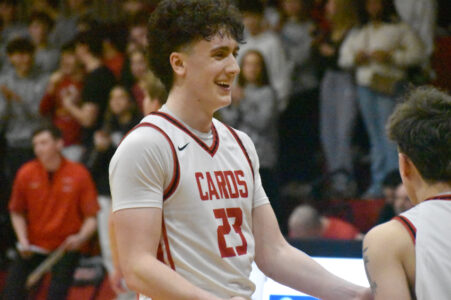
Canfield overpowers Struthers in Division IV sectional final win
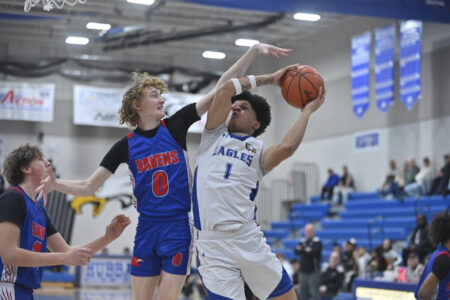
Eagles win bird battle with Ravens
Natural beauty is returning to the Mahoning River
Slowly but surely, our Mahoning River is reverting to the time when it flowed freely through a hardwood valley ...
Capsules
Gotkin to speak at Curbstone Youngstown Phantoms associate head coach Brandon Gotkin will be the guest speaker at ...
High School Sports Roundup from Jan. 27
BOYS BASKETBALL TOURNAMENT SECTIONAL FINALS DIVISION III Northeast 1 Howland 64, Painesville Harvey 52 ...