Youngstown must build new identity, not reclaim old one
Words matter — especially when they are chosen as the guiding slogan of a new administration as newly elected Mayor Derrick McDowell has done.
“Reclaiming Our Identity” may sound reassuring at first glance. It suggests pride, roots and a return to something once whole. But when applied to Youngstown, the phrase collapses under scrutiny. It is not forward-looking, not transformational and ultimately misunderstands both our past and our present.
Youngstown does not need to “reclaim” its identity — because our identity has never been lost.
Our history is not missing. It is documented, studied, archived and remembered. From organized crime influence to the painful distinction of being labeled the murder capital of the world, to industrial collapse and entrenched political corruption, this city’s past is neither erased nor forgotten. It lives in the collective memory of families who stayed, families who left and generations who inherited instability they did not create.
So the question must be asked: “What exactly are we being asked to reclaim?”
Reclamation is a term best suited for materials, not mindsets. We reclaim barn wood. We salvage historic architecture. We preserve relics in museums so mistakes are not repeated. We do not reclaim failure, corruption, or systemic dysfunction and reframe them as civic pride.
If the goal of new leadership in the city is genuine change, progress, or renewal, then the language used must reflect that ambition. Reclamation implies retrieval — a backward motion toward something lost. Youngstown does not need to go backward. We have already paid dearly for that.
What this city needs is reinvention, repair and reinvestment.
For decades, Youngstown has been defined by what happened to it rather than what it has chosen to become. Steel disappeared. Jobs vanished. Trust eroded. Entire neighborhoods were hollowed out. Entire generations grew up with normalized instability, skepticism toward institutions and a survival mindset that still shapes civic engagement today.
That is not an identity crisis. That is generational trauma.
And trauma is not reclaimed. It is addressed.
There is a meaningful distinction between honoring history and being anchored by it. We can acknowledge the grit and resilience of Youngstown without romanticizing the conditions that required such resilience in the first place. Pride does not require nostalgia, and progress does not require denial.
In fact, Youngstown’s emerging identity is already visible — though it often goes unamplified. It exists in small business owners reopening downtown storefronts. In artists activating vacant buildings. In residents choosing to stay, invest and build rather than leave. In community leaders doing the unglamorous work of repair without slogans, consultants or campaign banners.
That is not reclamation.
That is creation.
If leadership seeks to inspire confidence and participation, the message must be clear: We are not returning to anything — we are moving forward. We are not polishing old narratives — we are writing new ones. We are not asking residents to embrace the past — we are inviting them to help shape the future.
Language frames policy. Messaging signals priorities. And slogans, whether intended or not, reveal a world view.
So here is the question that deserves a direct answer:
Do we want change — or comfort?
Progress — or nostalgia?
A new civic life — or a rebranded version of the last hundred years of dysfunction?
Youngstown deserves better than recycled language. It deserves vision that acknowledges where we have been without anchoring us there.
We are not reclaiming an identity.
We are building one.
Melanie Clarke-Penella is a Youngstown-based small-business owner, downtown stakeholder, film producer, and long-time civic, arts, and cultural organizer.
Editorials
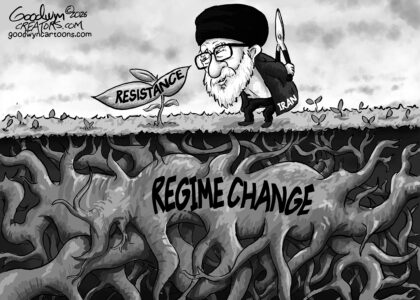
TUESDAY Jan. 13 editorial cartoon
Guess who’s afraid of getting impeached again?
President Donald Trump is afraid of getting impeached again. He said as much earlier this week. “You got to ...
Resolve to assist Red Cross in ’26
If your New Year’s resolutions included finding small ways to do good more frequently, the American Red Cross has ...
Youngstown must build new identity, not reclaim old one
Words matter — especially when they are chosen as the guiding slogan of a new administration as newly elected ...
Bad decisions made by Good forced ICE to take lethal action
Renee Good died on Wednesday in Minneapolis. She had been attempting to block Immigration and Customs Enforcement ...