

Filmmaker, Oscar winner Wiseman dies
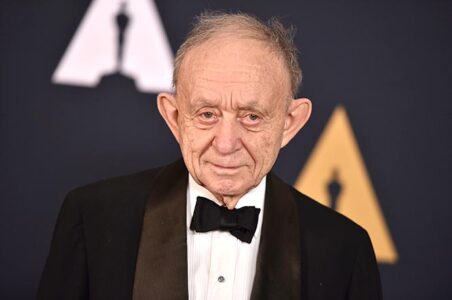
FILE - Frederick Wiseman arrives at the 2016 Governors Awards, Nov. 12, 2016, in Los Angeles. (Photo by Jordan Strauss/Invision/AP, File)
NEW YORK (AP) — Frederick Wiseman, the celebrated director of “Titicut Follies” and dozens of other documentaries whose in-depth, unadorned movies comprised a unique and revelatory history of American institutions, died Monday at age 96.
The death was announced in a joint statement from his family and from his production company, Zipporah Films. Additional details were not immediately available.
“He will be deeply missed by his family, friends, colleagues, and the countless filmmakers and audiences around the world whose lives and perspectives were shaped by his unique vision,” the statement said.
Among the world’s most admired and influential filmmakers, Wiseman won an honorary Academy Award in 2016 and completed more than 35 documentaries, some several hours long. With subjects ranging from a suburban high school to a horse race track, his work was aired on public television, screened at retrospectives, spotlighted in festivals, praised by critics and fellow directors and preserved by the Library of Congress.
Wiseman was in his mid-30s before he made his first full-length movie, but was soon ranked with — and sometimes above — such notable peers as D.A. Pennebaker and Robert Drew for helping to establish the modern documentary as a vital and surprising art form.
Starting with “High School” and the scandalous “Titicut Follies,” he patented a seamless, affecting style, using a crew so tiny that Wiseman served as his own sound engineer. The results led to acclaim, amusement, head-shaking, finger-pointing and — with “Titicut Follies” — prolonged legal action.
“I don’t set out to be confrontational, but I think sometimes the content of the movie runs against people’s expectations and fantasies about the subject matter,” Wiseman told Gawker in 2013.
Wiseman’s vision was to make “as many films as possible about different aspects of American life,” and he often gave his documentaries self-explanatory titles: “Hospital,” “Public Housing,” “Basic Training,” “Boxing Gym.” But he also dramatized how people functioned within those settings: an elderly welfare applicant begging for assistance, a military trainee complaining of harassment, a doctor trying to coax coherent answers out of a dazed heroin addict, sales clerks at Neiman Marcus rehearsing their smiles.
“The institution is also just an excuse to observe human behavior in somewhat defined conditions,” Wiseman told The Associated Press in 2020. “The films are as much about that as they are about institutions.”
Wiseman made movies without narration, prerecorded soundtracks and title cards. But he disputed, forcefully, that he was part of the “cinema verite” movement of the 1960s and ’70s, calling it a “pompous French term that has absolutely no meaning.”
He also differed with how others interpreted his viewpoint. While Oscar-winner Errol Morris dubbed him “the undisputed king of misanthropic cinema,” Wiseman insisted that he was not a muckraker out to correct injustice. He saw himself as a subjective, but fair-minded and engaged observer who discovered through the work itself how he felt about a given project, combing through hundreds of hours of footage and unearthing a story — sometimes despairing, sometimes hopeful.
“I think it’s as important to document kindness, civility and generosity of spirit as it is to show cruelty, banality and indifference,” Wiseman said when he accepted his honorary Oscar.