
Trending
YOUNGSTOWN - Saying the administration needs to do more to cut costs, city council refused to approve 14% annual sewer rate increases for the next five years to pay for $404 million in federal mandated wastewater projects.
Council members on Tuesday questioned why administration officials failed to come up with options to lessen the proposed rate hikes and urged them to work with council to figure out ways to make cuts.
Because of that, council kept the proposed sewer rate increase along with four other pieces of legislation - about $100 million for the second and third phases of a wet weather facility project - in its finance committee for further discussions.
Also, council declined to vote Tuesday on 4% raises for the city's 199 nonunion employees, which includes department heads, nonmanagement workers and those in the clerk of courts and court bailiff's office. That proposal was also kept in the finance committee.
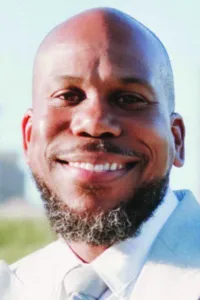
Mayor Derrick McDowell said the sewer rate increase is "concerning" and "a challenge to digest."
But when a rate study done by Arcadis, an international firm that specializes in water and sewer analysis, states at least 14% increases are needed for the next five years or the federally mandated improvements cannot proceed, there is no other choice but to raise rates, McDowell said.
The city is talking with officials from Mahoning and Trumbull counties to change contracts Youngstown has with them to take their sewage to pay more, but McDowell said that will take time.
McDowell said of requested reductions in city expenses: "These cuts that we're talking about don't translate to $404 million with a consent decree. That doesn't mean we are not looking at how to run each and every department efficiently every single day while still providing the quality of service that our community deserves."
McDowell added: "I look forward to working with members of council to see what recommendations they have to make sure we're working as efficiently with every department. But $404 million, we don't get to cut our way to those dollars. We get to go out and look at bringing economic development to the city of Youngstown. We go out and have conversations about making sure everybody's paying their fair share when it comes to the sewer rates and the improvements that we have to make."
McDowell said he wants to again open up negotiations with the U.S. Environmental Protection Agency to review the consent decree and ask for "principle forgiveness if we stay on track with these loans. But as we falter here, those arguments lead me in a position where I can't have a conversation with the EPA."
The rate increases need to be implemented in order for work to continue and if it is at a standstill, the city won't get state loans to fund the required work, McDowell said.
Councilman Mike Ray, D-4th Ward, said: "We need to be working on where we're coming up with operations, how we can operate leaner and there's always something that can be done differently."
Councilman Julius Oliver, D-1st Ward, complained that the administration isn't working to make cuts and isn't providing an explanation to council about the required work that is leading to the sewer rate increases.
Oliver said: "There's been a real lack of effort to really thoroughly explain things to people, to really let them know what's going on."
Andy Resnick, the city's public relations consultant, said the city is sending text messages and emails, posting on social media, communicating through the news media and creating talking points to inform residents about what is happening.
The request for the sewer rate increase comes after McDowell and Water Commissioner Harry L. Johnson III determined rates for Youngstown water customers - which includes the city, Austintown, parts of Boardman, Canfield and Liberty townships - will see a 15.5% increase Jan. 1 and then a 9.5% hike in 2028.
That was caused by increases passed along to the city by the Mahoning Valley Sanitary District, which sells bulk water to Youngstown, as well as various water improvement projects that are finished or ongoing, Johnson said.
The average monthly water bill for a city customer will go from $37.24 to $43.01 on Jan. 1 and to $47.10 on Jan. 1, 2028. Those who get city water and live outside Youngstown have a 40% surcharge added to their bills. Those average monthly water bills are currently $52.14 and will increase to $60.22 on Jan. 1 and then to $65.94 in 2028.
The proposed 14% annual sewer rate is for city residents only unless Youngstown can successfully renegotiate contracts in Mahoning and Trumbull counties.
A 2024 study by Arcadis called for 5% annual rates for four years, starting in 2025. But the latest study states there should be an additional 9% added to 2027 and 2028, bringing the total increase to 14% for both years. It also proposes new 14% annual increases for 2029, 2030 and 2031 or else the city will be unable to pay the annual debt service for the wastewater projects.
The city's current annual debt for the first phase of the project - $74 million in improvements done to its wastewater treatment plant - is $5 million a year.
With two much more expensive projects, one that started last year and another that will begin early next year, that annual debt service increases to $27 million a year in 2032 and will be that amount for 20 years.
In addition to not agreeing Tuesday to the rate increase, city council declined to support $100 million in projects that are required as part of the federal consent decree.
Charles Shasho, deputy director of public works, said the city is up against a deadline to approve the projects and seek state loans for the work.
Council also decided to keep a request for 4% annual pay raises for nonunion employees in the finance committee for further discussion.
The 4% is what unionized workers are receiving in 2027 from the city. The city works to give every employee the same salary increase percentages.
The city wants to negotiate 2.5% raises for its workforce for 2028.
Finance Director Kyle Miasek said Tuesday that the city is negotiating with the firefighters union. The union wants a raise that exceeds 4%, he said.