
Youngstown may use speed camera revenue for Flock costs
Trending
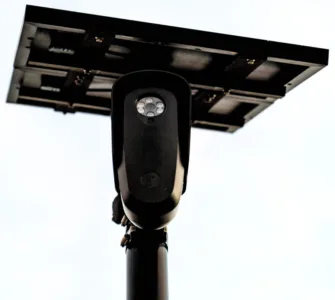
YOUNGSTOWN - The Mayor Derrick McDowell administration is asking city council to allow revenue collected from those caught by unstaffed cameras speeding in school zones to pay for half of the Flock Safety's annual bill.
The city's entire $168,000 bill to Flock Safety in the final year of a three-year deal is paid out of the police budget.
The proposal in front of city council at its Wednesday meeting requests $84,000 of that cost come out of the speed camera revenue fund.
That would be retroactive to Sept. 1, the start of the final year of the current Flock Safety contract.
Finance Director Kyle Miasek said: "We're asking council to consider paying half out of the speed camera money. The law department says it applies because half of the (Flock) cameras are in school zones. This will start the conversation."
The city has 56 Flock cameras.
Flock Safety automatic license plate reader cameras have come under considerable national scrutiny with reports about police officers, including in Ohio, improperly using the data for personal reasons or sharing with federal agencies for immigration enforcement.
Critics also point to privacy issues, mass tracking of citizens, and the lack of transparency and public accountability.
Law enforcement officials say they are a vital tool in fighting crime and finding abducted children.
Nationally, more than 120,000 Flock Safety cameras are installed in about 7,000 communities and take photos of about 20 billion vehicles each month.
About 400 entities in Ohio use cameras, including several in the Mahoning Valley.
Flock doesn't just sell the cameras to law enforcement. It also sells them to school districts, universities, homeowner associations, parking lot/deck operators, apartment complexes, companies and stores.
SPEED CAMERA MONEY
Miasek acknowledges the city has struggled to spend the money it's collected from those paying citations for speeding in school zones and caught by the cameras.
That is because of state restrictions on how it can be spent with requirements that it be used in school zones.
The city collected $2,676,735 as of August from those cited for speeding in school zones by the unstaffed cameras since they were installed in 2023.
To date, the city has spent $261,397 from the speed camera fund - less than 10% of what it's collected. Most of that money, $184,384, paid for two annual maintenance agreements with SpotShotter, a company whose technology is able to detect and locate gunfire in real time. The law department in December 2024 determined that was a permissible use for the speed camera funds.
At council's Oct. 7 meeting, it agreed to appropriate $1.5 million from the speed camera fund for planning and construction engineering services as well as going out for bids for safety improvements to various school zones.
The scope of the work is undetermined.
But Charles Shasho, the city's deputy director of public works, said the focus would be around school zones to improve the safety of pedestrians and students through sidewalk repairs, handicapped ramps and pavement markings.
At that same Oct. 7 meeting, council agreed to sign a contract for up to $58,000 of speed camera money to buy 15 portable radios to be loans to the Youngstown City Schools for resource officers to have the ability to communicate directly with the city police department.
Cameras are used school days from the time students head to class until 6 p.m. They aren't used on weekends, during the summer and on days when class is not in session.
During the two hours in the morning that kids go to school, and the two hours when they leave, the speed limit in those zones is 20 mph. In between and after school ends, the speed limit is 25 mph and 35 mph depending on the location.
Motorists caught going at least 11 mph over the speed limit and up to 14 mph over it face a civil penalty of $100. Those going 15 mph to 20 mph over the limit face a $125 penalty and those traveling faster than 20 mph over the limit face a $150 penalty. They do not get points on their driving record for the citations.
There is nothing the city can do to force people to pay the fees. Blue Line Solutions, which runs the speed camera program for Youngstown and keeps 35% of the money collected, could turn over the unpaid citations to a collection agency, but that is highly unlikely.
The collection rate has been low - around 35% - for those issued citations.