
County help sought for abused animals
Trending
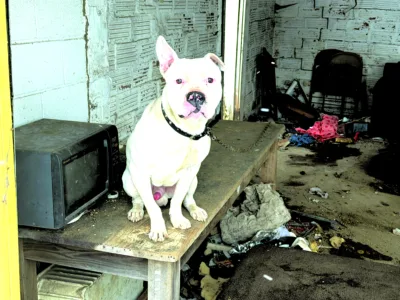
BOARDMAN -- Regular services have effectively ceased at Animal Charity of Ohio, and that will remain the case until additional funding is secured.
On Thursday, leaders of the nonprofit agency again petitioned Mahoning County commissioners to provide support it needs to get back on its feet. Animal Charity leaders said Ohio law obligates the county to offer some support.
Rachel Hammond, secretary of the Animal Charity of Ohio Board of Directors, said Ohio Revised Code, section 1717.06, does obligate the county to provide salary support for a humane agent that has been appointed by the county's probate judge. Hammond said other Ohio counties pay anywhere from $15,000 to $35,000 per year to humane agents who work exclusively for that agency, and those who are supported by the county dog warden receive lesser support.
Hammond said the average salary is about $44,000 for its humane agents. Up until it ceased operations, Animal Charity had three humane agents.
"From a workload perspective, even with three agents, the number of phone calls we receive and the number of investigations we conduct, even three for this county is not enough," she told The Vindicator. "Just having one would be totally burdensome."
Hammond said she and her colleagues are unsure why Mahoning County stopped providing the support specified in ORC in 2011.
Another section of law -- ORC 2931.18 -- also obligates the county to pay for a humane society's prosecuting attorney and assistants, subject to commissioners setting a "just and reasonable amount."
Commissioners Geno DiFabio and Anthony Traficanti asked whether the $44,000 for the humane agent would make the difference the agency needs.
Hammond said it will not solve all the agency's problems but will allow Animal Charity to refocus other funds to cover other costs.
For now, she said, without Animal Charity on the job to respond to humane and animal control cases, local police are tasked with the responsibility.
One local officer said most departments just are not set up to deal with it.
"It's not really affected Campbell yet, but we've been doing animal cases ourselves for the last eight or 10 years," said Campbell Patrol Officer Jim Conroy. "But in any response that's more than a few animals, it'll definitely be an issue. Police departments generally are not equipped to handle it. For us, it's come about through trial and error over the years. But if you remove an animal, you have to have somewhere for it to go. They're responsible now, and they have nowhere to take them. No one has space, everyone is overloaded. If they do get an opening it's filled in less than a day."
Animal Charity Board President and Executive Director Jenny Falvey said the problem is about more than keeping a humane agent on the streets.
"It certainly would help, but we have ongoing costs that happen every single day, and unfortunately fundraising and donors simply can't sustain doing it that way because we don't know what comes in every day," she said. "So our goal is to achieve some type of contracted funding to provide services to the county so that we can rely on some sustainable funding to subsidize our operational costs."
In June, Falvey gave a presentation to commissioners explaining what her agency does, its operating costs and why it incurs those costs. At that time, Animal Charity already had suspended its animal-control program because of its financial crisis. Falvey asked the commissioners for $350,000 in county funding -- about 18% of the agency's $1.9-million budget for 2026 -- to stabilize Animal Charity's operations and allow it to restore services. Falvey suggested the agency would contract with Mahoning County to provide the services, and continue supporting itself with additional fundraising and donations.
In June, she emphasized the major financial burden comes from animal care and animal-control costs, particularly veterinary care, surgeries, staffing, housing and general operating expenses. A month with an unusually large intake of animals needing medical treatment could burn through available cash very quickly, she said.
Animal-control cases alone cost more than $156,000 from Jan. 1 through June 1, involving 254 animals. Those expenses had been covered through donations, grants and fundraising rather than a government contract.
The average animal stays about 94 days, and Animal Charity estimates its basic daily care cost at $23.14 per animal -- roughly $2,175 per animal for an average stay, before unusual medical expenses or other complications.
Falvey said Animal Charity is still caring for 215 animals in its shelter.
Commissioners have asked Animal Charity to provide hard numbers about its expenses, such as daily care, payroll, vehicle, maintenance, fuel and other costs. Falevy said they asked for the information Wednesday so it was not ready for Thursday's meeting.
"They're requesting it to go back several years, so it's going to take me a little bit," Falvey said.
Hammond said that perhaps some of the responsibility for the agency's dire situation is its own for not being more clear about it two months ago.
"I just want to be on record that this is something that we came to you guys with," she told commissioners. "It was a very urgent need, and I don't know that that was understood or maybe relayed from us very well, but it was an urgent need."
Commissioners on Thursday noted the county has provided support for the agency in the form of $252,000 for a humane agent for three years, from 2022 to 2025.
The county also gave the agency $250,000 for capital improvements to its Boardman shelter in 2023, also from American Rescue Plan funds.
Commissioners say they understand the need for the agency and the county, but the decision cannot be hastily made.
"We want to sit down and resolve what we can to see if we can in fact help," Traficanti said. "We understand the urgency that they have."
"We certainly want to help, and we certainly see the problem, and it is urgent, but we can't promise something immediately, because of the position we're in and what we have to look at. So we are doing our due diligence," DiFabio said. "Just be assured we're not sitting on our hands. We are looking at it. We recognize the problem. We're working to do what we can."
MORE THAN ANIMALS
Falvey said the problem is not just about animal welfare.
"As a whole, animal welfare is connected to human welfare," she said. "When we have animal abuse and cruelty in our neighborhoods, these are directly correlated to human crimes, and so when we address those animal crimes, we are, in fact, helping to address human crimes and getting ahead of that. So ... I am hoping that everyone can somewhat change their mindset, that we aren't always talking just about the animals. We are, in fact, talking about the people in our community as well and helping us as a whole, as a community."
Falvey said the agency's absence makes law enforcement's job harder.
"We're unable to help so local law enforcement are having to figure out what to do with these animals. They have to figure out ways to handle these situations and they have enough on their plate already. This will impact their workload without question," she said.
Falvey noted that the Mahoning County dog warden is only tasked with handling dogs, specifically strays, bites and licensing.
Animal Charity handles all species, dealing with animals whose owners are displaced, investigating animal cruelty, clearing out houses where hoarding and other neglect or abuse has occurred, and many other responsibilities.
Conroy said the problems humane agents see are many and varied, that they are uniquely trained to deal with them, and the agency has resources police departments usually do not.
Conroy has become the de facto humane officer for Campbell. Two years ago, he stepped into the spotlight when his four-year-long investigation of a Union County humane officer and dog-rescue nonprofit operator ended with the man receiving the longest sentence for animal cruelty in Ohio history. Steffen Baldwin was sentenced to 15½ years after being convicted on more than 32 criminal counts, many of them felonies. The case landed in Conroy's lap after Baldwin deceived a Campbell couple about their dog, Remi, whom Baldwin wrongly euthanized and then lied to them for several months about it. Remi was not his only victim.
Conroy handles most or all of the animal cruelty cases in the city, and often works with Animal Charity.
Conroy praises the agency for meeting the burdens of what he calls a quiet state and national epidemic. As Falvey noted, many animal cases come to authorities' attention when they are connected to mental health cases -- including hoarding complaints, humans being incarcerated for other crimes where animals are discovered at their homes, and other common societal ills.
"Animals are intertwined with all of it, and nobody takes care of the animals except the humane society," Conroy said. "Humane agencies are the only ones equipped to intervene and resolve these horrific, long-standing conditions of systemic abuse, deep neglect and long-term suffering."
Hammond notes that Animal Charity's humane agents never know what they will encounter, and they carry no weapons.
"Sometimes they walk in with the police, but sometimes they're the ones who have to call the police," she said.
Conroy notes that Animal Charity remediates homes where hoarding and abuse have occurred, a cost that the city or county does not have to incur, in addition to managing the animals and assisting with the human component of the cases.
"What does Animal Charity get for that? Nothing. They take in an abused animal or go to a hoarding house, they put it on Facebook and hope they get donations," he said. "It's not going away. It's only going to get worse."
Conroy said communities and counties can reduce the burden over time by empowering police to act, educating authorities on the laws that are on the books and passing meaningful new ones to eliminate common animal abuse problems.
"There's a way to fix the process of attacking this problem, but you have to have agencies and governments willing to work together. It will take time, but it can be done," he said.
Conroy said that in Campbell it took the outrage of the mayor and city council, on top of his own, to get laws passed that minimized animal neglect in the city.
Campbell passed laws against tethering and also required that if animals are housed in outdoor enclosures, they must meet certain standards, be approved, and owners must obtain a permit. He said since then, the number of dogs leashed outdoors has plummeted.
There's only one he knows of now, and it is being handled.