
Blighted Sebring factory razed
Trending
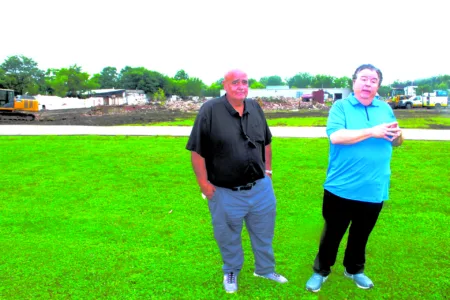
SEBRING -- The Mahoning County Land Bank, Mahoning County Commissioners, Ohio Department of Development and the village of Sebring partnered to demolish an old manufacturing building and clean up the site at 221 W. Georgia Ave. to free up 4.5 acres of land for development.
The pottery building was constructed in 1912 and was used by the Strong Manufacturing Co., also known as Strong Enamel Works, to produce enameled cooking utensils, light reflectors, stove parts and military mess gear until the 1950s, according to information provided by the land bank. During the 1950s and 1960s, Pressweld Inc. occupied the building and used it to produce vintage motorized youth vehicles such as the Jack Rabbit, Track Rabbit and Bunny Rabbit quarter midgets and go-carts.
The property has a long history in Sebring of pottery making and manufacturing, but has sat idle, falling into itself, for a long time. It has become a problem for Sebring, Debora Flora, executive director of the Mahoning County Land Bank, said during a news conference at the site Friday.
Village officials purchased the building in July to repurpose the property and attract new businesses.
Sebring Mayor David Wright said the project is important for the village because the building has been there for many decades unoccupied and dilapidated. On behalf of the village and residents, he thanked Flora and Roger Smith, director of planning, acquisition and disposition for the Mahoning County Land Bank, for their efforts in finding the funding and lining up the contractors. He also thanked Mahoning County commissioners for putting in the funds to help meet the local match, as well as Sebring Village Council.
"Our goal at the end of the day is that we can redevelop this into potential jobs," Wright said. "We do have a company that has reached out about some potential there."
Wright said he believes the property, once cleaned up, has the potential to be a good location for a manufacturing facility, medical office or any number of business types. He is looking for a business that can fill the property and bring in tax dollars and new jobs.
The $640,000 needed to pay for the asbestos abatement, demolition and site restoration came from two funding sources. Nearly $600,000 came from the ODD's Building Demolition and Site Revitalization Program funds, and $105,000 needed for local matching funds came from the Mahoning County commissioners with the funds being administered by the Mahoning County Land Bank.
Flora said this funding is available with local matching dollars to deal with these types of properties that cannot be rebuilt or refurbished, whether they are residential or commercial, that are not brownfield buildings with no underground environmental contamination. She said this funding allows these vacant, dilapidated buildings to be cleared for something new.
Flora noted the land bank had money allotted for residential demolitions and they did spend quite a bit of that money, but there were projects that didn't happen. By working with the ODD, the money left from the residential demolitions was allowed to be reallocated with local matching funds applied to demolish the former factory building.
Mahoning County Commissioner Anthony Traficanti said this project would move the village forward and that commissioners were happy to put in money, along with the village, to have this project come to fruition. He noted that the Sebring community is very aggressive when it comes to remediating these problems and said that Sebring is a beautiful community, and they are proud to be a part of it.
Flora, Wright, Traficanti and Mahoning County Commissioner Geno DiFabio all noted that collaboration was key in making the demolition happen.
DiFabio said that collaboration with all the different entities is exactly what is needed to see a project through and that collaboration is the only way to get these things done.
Seigal Excavating began the demolition of the building last Thursday and has been moving quickly on getting it torn down so they can move on to the clean-up phase.
The demolition, according to the land bank, will "remove a significant barrier to future investment, support Sebring's economic-development efforts, return underutilized property to productive use."
Flora said this solves a problem while creating an opportunity for Sebring and advised everyone to keep their eyes on this project because something great is ahead.