
Riverfest celebrates rebirth of Mahoning
Patrons also mark dedication of $4.3M in park improvements
Trending
LOWELLVILLE -- It's probably easy to take for granted or overlook the return of several bird species to a given location, though such a move holds significant importance to Felicia Armstrong when you factor in the time and place.
"We're improving, but we need the momentum; we need to keep going," Armstrong, a Youngstown State University environmental sciences professor, said.
The place to which she was referring was the Mahoning River, and the time was decades after heavy pollutants from the steel industry created a toxic environment for many birds and types of wildlife to thrive.
Today, the river is far cleaner, more nature-friendly and more poised for a variety of recreational opportunities, Armstrong, an original member of Friends of the Mahoning River, added.
The Friends organization was among those who made their presence felt during the 15th annual Riverfest gathering Saturday afternoon at and near the newly renovated Waterfront Park off West Water Street.
Riverfest also is the Friends of the Mahoning River's signature community outreach effort.
The five-hour event's primary thrusts were to celebrate yearslong progress in cleaning and improving the river, along with ushering in the newly revitalized, 15-acre park, a project estimated at nearly $4.3 million.
In addition to birds increasingly nesting along the 113-mile Mahoning River, many types of fish are able to call the body of water home, which also is a source of macroinvertebrates on which they feed, Armstrong noted.
Even though the steel industry's demise began nearly 49 years ago, the river still faces certain challenges, such as what Armstrong referred to as nonpoint source pollution, which often occurs when rain or snow melt picks up pollutants and deposits them into rivers, lakes, groundwater and coastal waterways. Those toxins include runoff water from golf courses, fields or stormwater mixed with pesticides and fertilizers, so it's important to refrain from using those products shortly before it rains, Armstrong explained.
Another key way to reduce pollution is to further educate people on other healthful environmental practices, including installing pollinating plants, she added.
An additional strategy is to spread the word about the river's vitality, accessibility and potential for numerous recreational opportunities, Gavin Switzer, Friends of the Mahoning River's board chairman, said.
"You'd be surprised to know how many people who live in Youngstown don't even know the river is there," he said, adding that river improvements have entailed dredging to remove pollutants and strategically removing dams that allow pollutants and unwanted sediment to accumulate and pool.
Both strategies have worked to allow the Mahoning River "to clean itself," Switzer said, adding that efforts need to continue to take out more dams.
One such impediment was the Old Steel Mill Dam, which was built around 1915 and removed in October 2020 to improve water quality and make navigation for recreational purposes easier. On the other side of the Mahoning River from Waterfront Park was Sharon Steel Corp.'s Lowellville Works, which operated from 1917 to 1961.
The nonprofit Friends of the Mahoning River, founded in 2012, lists as part of its mission statement supporting enhancements and environmental sustainability along the river corridor through education, recreation and partnerships while promoting greater respect for the body of water.
WATERFRONT PARK IMPROVEMENTS
The family-friendly gathering also included a ribbon-cutting ceremony to usher in and celebrate the revitalized park. The village's investment in the $4.3 million project was about $268,000, or 6.2% of the cost, Mayor James Iudiciani Sr. said in his remarks. He added that the seeds for the work were planted in 2010.
Kathy M. Zook, the Eastgate Regional Council of Governments' Appalachian Regional Commission program manager, noted that an estimated $936,000 was from the $500 million Appalachian Community Grant Program, which provides development and planning monies for communities in the state's 32-county Appalachian region.
Specifically, the grant was used at Waterfront Park to build playground equipment, install a pickleball court, picnic tables, lighting and restrooms, and make other infrastructure improvements, Zook said.
"It's really highlighting the features of Lowellville," she added.
The overall benefits of the work will be "transformational efforts," with partnerships, toward improving the quality of life for residents and visitors, as well as being a key piece of downtown development, Zook explained.
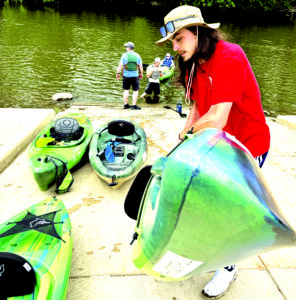
Among the agencies and organizations represented at Saturday's Riverfest 2026 were the Sierra Club, Mill Creek MetroParks, All Aboard Ohio, Our Lady of the Holy Rosary Church, the Lowellville Community Improvement Corp., Wild You, the Ohio Environmental Protection Agency, the Citizens Climate Lobby, Campus Rec and the Youngstown Rotary Club, many members of which kayaked along the river.
The next Friends of the Mahoning River cleanup is set for 8 a.m. June 14 from Thomas Swift Park to Canoe City in Leavittsburg.
For more information about the Friends organization, go to www.mahoningriverwatershed.org.
Saturday's festivities and offerings also included face painting, live music, yoga with drum accompaniment, a drum solo contest, food and other vendors, a kayak raffle and a pop-up library, courtesy of the Public Library of Youngstown and Mahoning County.