
Osprey egg, chick removed from nest
Will be taken to Birds in Flight sanctuary in Canfield
Trending
Staff report
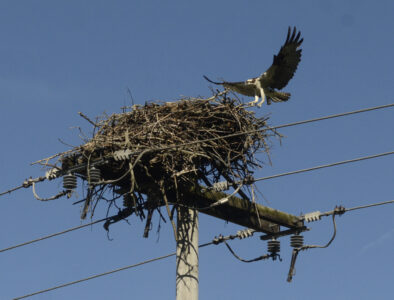
BAZETTA -- FirstEnergy Corp. and its Ohio Edison electric company partnered with state and federal wildlife officials Monday morning to remove and relocate a baby osprey and egg from a nest in the 2500 block of Elm Road in the township.
FirstEnergy communications representative Brooke Conlan said the nest will be relocated later. The baby chick and egg were taken by Heather Merritt, owner of Birds in Flight Sanctuary in Canfield.
The osprey nest is located on a utility pole near energized electrical equipment, posing a risk to both the birds and electric service reliability. While environmental regulations typically prohibit disturbing active nests containing eggs, Ohio Edison has received approval from appropriate state and federal wildlife agencies to safely and proactively relocate the nest because of the potential hazards, Conlan stated in a news release.
Ospreys can construct large nests made of branches, leaves, grass and other materials in as little as two days, often beginning egg-laying shortly thereafter. These nests can create dangerous conditions when built on utility infrastructure because wet materials can conduct electricity, potentially sparking fires. Such fires can endanger the birds and their eggs or young and may also cause power outages for customers, the release states.
The goal of this relocation effort is to protect the osprey and her eggs while maintaining the safety and reliability of the electric system.
FirstEnergy has a strong track record of protecting birds while maintaining electric service reliability. The company's initiatives include:
• Installing dozens of nesting platforms atop utility poles to provide safer alternatives for birds.
• Using drones to inspect nests in hard-to-reach locations.
• Deploying a mobile app that enables field personnel to report avian issues in real time.
These ongoing efforts help reduce wildlife-related outages while supporting environmental stewardship, the release states.