Final decision nears on rehabbing Poland library or relocating it
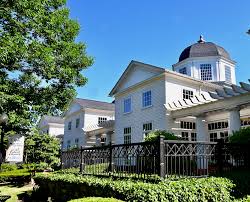
POLAND — No formal decision has been made about the Poland branch of the Public Library of Youngstown and Mahoning County, but one appears imminent.
The troubles facing the branch — structural problems, design flaws, starkly rising maintenance costs, safety and accessibility concerns — have brought the library to a crossroads with the building.
This week, library executives revealed the details of a monthslong study and the options they are exploring, complete with estimates from engineering, architecture and consulting firms.
On Thursday the library’s Building and Sites Committee met at the Newport branch to hear that information and discuss Poland’s fate. But the committee ultimately declined to choose between renovating the 25-year-old building or relocating the library branch to a new building.
The full library board of trustees will hear all the same information at a special April 29 meeting and could make a decision then.
“We wanted to consider all the information that we had asked staff for several months ago to evaluate both options, and we wanted to make sure that, for it being the first time we have seen these numbers, we evaluate them properly,” said Committee Chair Ron Strollo. “There was an understanding that we are all members of the full board and that we are all going to have an opportunity to share our thoughts at that special board meeting, and that also avoids any undue pressure on the rest of the board by us making a recommendation.”
The numbers seem to favor relocating the branch, and library executives said on Thursday that they have already reviewed possible sites within Poland Village and Poland Township and even have surveyed a preferred location. They also provided prospective plans for a new building.
Local residents fighting to keep the library where it is have spoken passionately about the current building’s importance, but library officials say the costs of operating it have become excessive. Following a conversation with library staff, The Vindicator on March 7 outlined some of the problems at Poland.
For example, pavers outside the entrance tend to heave as cold weather leaves the ground beneath uneven. On Thursday, Director and Chief Executive Officer Amy Fifarek noted that the book drop near that entrance is often inaccessible for multiple months of the year because of ice. This is one of the major renovations the branch would require if it remains in the building. The pavers also represent tripping hazards and make the entryway noncompliant with Americans with Disabilities Act standards. The pergola over the entryway also takes on water damage and likely would be replaced during renovations.
One of the major problems with Poland, though, is the basement floor. Design flaws at the Poland and Austintown branches have been attributed to the Youngstown-based architecture firm, 4M Company. Chief Stakeholder Relations Officer Zak Kozberg and Shaver particularly criticized the firm for using open-hearth slag as backfill.
When open hearth slag comes into contact with water, it expands heavily, and the library’s very close proximity to Yellow Creek — along with the regular downpour of water and snow throughout the year — means the ground beneath the library is damp enough to cause the slag to swell and create floor problems.
While Shaver said the building’s stability is not at stake, the library is struggling to find an engineering firm that can give them a solid price on what it will cost to find the veins of slag, follow them and remediate the issue.
“You’re going to dig where you see the heaving and keep following it, and if you don’t get it all out, you’re still going to have mole holes in your slab floor afterwards,” Shaver said.
The elevator also would need to be overhauled. While it cannot be completely replaced because of the structural challenges that would create, the technology that operates the elevator is so outdated — Shaver said there are only two like it remaining in the United States — that parts are difficult to come by, and the library knows of only two tech companies that still provide service for it.
A 2024 estimate from Kone Inc. informed the library that it would cost approximately $175,000 to complete the upgrades and the elevator would be down for at least a month.
The stone wall by the creek has already been rebuilt twice, Fifarek said, and is due for another overhaul, which would best be completed during renovation.
The exhaust system also poses issues. Most notably, Fifarek said the exhaust for the cafe runs through the adjoining Poland Union Seminary Dormitory, an attached building bearing a historic designation, dating to 1846.
The current property also does not provide much in the way of green space or programmable outdoor space and offers no room for expansion, Fifarek said.
Kozberg and others have noted that while Poland bears unique architectural features — it is, as advocates like to point out, one of only two libraries from Ohio featured in a nationally published book about great libraries across America — the roughly 35,000-square-foot building only has about 16,000 square feet of programmable space, the rest of it serving little more than an aesthetic function. An updated Poland branch, Fifarek said, would require interior upgrades to the youth space as well as the addition of functional spaces like study rooms.
A report from the Bialosky Architects in Cleveland outlines about $1.1 million worth of the necessary improvements to the building, including $152,000 to repave and restripe the parking lot, $220,000 to replace damaged exterior doors and ensure the grade slopes away from the building to mitigate water and icing issues, and $110,000 to upgrade the remaining pneumatic HVAC controls to digital.
Fifarek told the committee that the other great concern with renovating the building — which would cost at least $7.3 million, not including design costs and permitting fees, according to quotes from Bialosky Architects in Cleveland, BSHM Architects in Youngstown [$6.6 million] and Kone — is that the building would be out of commission and under construction for two to three years. This would pose a considerable nuisance and eyesore to the community and especially the immediate neighborhood.
The library also would incur the costs of finding a temporary site; making it amenable to library operations, including IT upgrades; moving everything necessary from the current building to the temporary site; obtaining offsite storage for the remaining materials; and then moving everything back to the renovated building.
The summary of maintenance costs provided by MS Consultants notes the following:
“The existing library currently requires approximately $150,000 per year for maintenance [The library’s numbers provided to The Vindicator show that maintenance costs for Poland were just over $193,000 in 2024 and about $211,000 in 2025]. These costs are expected to continue increasing as the facility ages and major building systems approach or exceed the end of their useful life.”
Using a 30-year planning model, MS Consultants noted that annual maintenance costs, assuming “a conservative” 4% annual escalation, would come to $8.4 million over that time. By comparison, MS proposes that a new building with modern infrastructure would incur only about $70,000 in annual maintenance costs and, at a 3% annual escalation rate, would result in only $3.6 million over the same period — a roughly $5 million savings.
A NEW HOME
At Thursday’s meeting the committee also heard about what a new Poland branch might look like. It would be considerably different from the building many local residents have come to adore and defend so vociferously.
While Fifarek said staff considered four different locations for a new branch, three in the township and one in the village. The preferred location is a 4.25-acre plot of land that sits 1.1 miles away in Poland Township and would cost the library $360,000 to purchase.
The report from Thursday shows that the site already has electrical and water service but would require a connection to a nearby sewer line.
Site preparation costs would be about $1.57 million, and the estimated cost of building the new branch would be between $4.8 million and $8.8 million, putting the total estimated cost for the new library at between $6.3 million and $9.6 million.
Fifarek said the construction estimate does not include design costs; new furniture, shelving and materials collection; actual relocation costs; or permitting fees.
A different 9.9-acre property would cost $450,000, but that would be 2.1 miles away in a more rural part of the township. They also looked at a 2.19-acre parcel in the village, half a mile away from the current branch, but that location only has a single entry point off of a busy street. The final option reviewed was a 7.7-acre parcel in the township, a mile away from the existing branch, with a 30,000-square-foot building. The flaw there is that the building is already under lease and it is much closer than the other sites to an already existing library branch.
The new building would be roughly 16,000 square feet and Fifarek said it would meet all the branch’s current programming needs.
It would be divided into 5,500 square feet of general use and adult space, 3,000 square feet of youth space, 2,500 square feet for five study and meeting rooms, and 2,000 square feet for staff space. The remainder would be used for the lobby, restrooms and mechanicals. It would also come with 0.75 acre of programmable outdoor space with room to expand.
The branch would be a single-story building, eliminating elevator costs. It would allow for new, energy-efficient utility infrastructure, reducing utility and upkeep costs. The building would be built to meet current Americans with Disabilities Act accessibility standards.
Construction would take about two years, with minimal disruption to the neighborhood and little disruption to library services overall, except during the moving phase.
The MS Consultants rendering of the new library site shows two possible entry points, one each from intersecting roads. Between the library building and a gazebo and green space, there would be two stormwater ponds. With the space in front of the building and additional parking around the green space, the site would offer 92 parking spaces, six designated for handicap parking. A walking path around the ponds and gazebo area is also part of the plan.
If the library decides to relocate the branch to a new building, it most likely will sell the existing building. Shaver obtained appraisals from two separate firms, who gave starkly different estimates.
Sammartino, Stout & Lo Presti of Erie, Pa., valued the building at $900,000, while Tricomi and Associates of Niles gave a more generous opinion of $1,950,000. Shaver said he also reached out to Ventell Associates of Youngstown, C.P. Braman and Co. of Cleveland, and Sherman Valuation and Review of Willoughby Hills. Ventell declined to consult, and the other two did not respond.
Local News
Dems criticize Husted for statements on ‘navigating real world’
Women’s art show in Warren features works with ‘No Guarantees’
If you go ... WHAT: “No Guarantees: Women Artists Connected by Persistence, Patience and Creative ...

Flash mob opens at amphitheater
Mahoning Valley Thrive to initiate Immigration Law Clinic with benefit
McDonald places safety services levy on November ballot
McDONALD — Wanting to provide enough funds for the fire and police departments for operations, village council on ...