
BOOM TIME IN THE VALLEY: Have a blast, but be safe!
American Red Cross offers tips on swimming, picnicking, handling fireworks
Trending
Friday is the nation's 249th birthday and while 2026 will bring larger celebrations for the semiquincentennial, the Fourth of July falling on a Friday -- enabling many to enjoy a long weekend -- is reason to celebrate
The American Red Cross offers these tips to help keep you and your loved ones safe during the upcoming holiday.
FIREWORKS SAFETY
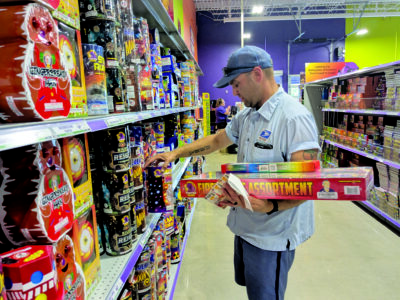
The safest way to enjoy fireworks is to attend a public fireworks show put on by professionals, so consider celebrating with glow sticks, noise makers or silly string instead. If you choose to set fireworks off at home, follow these safety steps:
• Never give fireworks to small children, and never throw or point a firework toward people, animals, vehicles, structures or flammable materials.
• Always follow the instructions on the packaging.
• Keep a supply of water close by.
• Make sure the person lighting fireworks always wears eye protection.
• Light only one firework at a time and never attempt to relight "a dud."
• Store fireworks in a cool, dry place away from children and pets.
• Never use fireworks around pets. Exposure to lit fireworks can potentially result in severe burns or trauma, and many pets are also fearful of loud noises and can become lost, scared or disoriented.
WATER SAFETY
If your holiday plans include fun in the water, make sure every member of your family has swimming skills and knows how to help others in an emergency. Here are some tips to keep both children and adults safe:
• Prevent unsupervised access to water. Always designate a "water watcher" to keep a close, constant eye on everyone in and around the water until the next water watcher takes over.
• Avoid distractions when supervising children. If a child is missing, check the water first. Drowning behavior is typically fast and silent. Unless rescued, a drowning person will last only 20 to 60 seconds before submerging.
• Reach or throw, don't go! In the event of an emergency, reach or throw an object out to the person in trouble and tell them to grab on. Don't go in. You could become a victim yourself.
• Without putting yourself in danger, rescue and remove the person from the water. Have someone call 911 if needed.
BEACH SAFETY
If your holiday plans include a trip to the beach, swimming in the ocean takes a different set of skills.
• Only swim at a lifeguard-protected beach within the designated area. Obey all instructions and orders from lifeguards.
• Stay informed about local weather conditions throughout the day.
• Stay alert, swim sober and never swim alone. Make sure you have enough energy to swim back to shore.
• Young children and weak swimmers should wear a properly fitted U.S. Coast Guard approved life jacket. Everyone should wear one when on a boat.
• Don't dive in headfirst -- protect your neck. Always enter feet first, unless the area is intended for diving.
• Pay close attention to children and older people at the beach. Even in shallow water, waves can cause you to lose your balance.
• Keep a lookout for aquatic life. Water plants and marine animals may be dangerous.
• Rip currents are responsible for deaths on our nation's beaches every year and for most of the rescues performed by lifeguards. If you are caught in a rip current, stay calm and don't fight it. Swim parallel to the shore until you are out of the current. Then, turn and swim to shore. If you can't swim to shore, float or tread water until you are free of the rip current and then head toward shore. Draw attention to yourself by waving and calling for help.
HEAT SAFETY
No matter where you live, there's a good chance you'll experience a hot 4th of July. The Weather Channel reports that this summer, parts of the U.S. could see record-setting heat. According to the Associated Press, the climate crisis is causing heat waves to happen 67% more often compared to 1979, and last longer with higher temperatures than we experienced 40 years ago.
• Slow down, stay hydrated and spend time indoors.
• Postpone or limit outdoor activities. If you must work outdoors, take frequent breaks and avoid the hottest part of the day.
• Never leave children or pets in your vehicle alone.
• Stay hydrated by drinking plenty of water and avoiding sugary, caffeinated and alcoholic drinks. Check that animals also have access to fresh water and shade.
• Spend time indoors in an air-conditioned place. If you don't have air conditioning, go to a public library, shopping mall or public cooling center. Check on loved ones and neighbors who may be at risk and don't have air conditioning.
PICNIC AND GRILLING SAFETY
• Don't leave food out in the hot sun. Keep perishable foods in a cooler with plenty of ice or freezer gel packs.
• Wash your hands before preparing the food.
• If you are going to grill, always supervise when in use. Don't add charcoal starter fluid when coals have already been ignited. Use the long-handled tools especially made for cooking on the grill to keep the chef safe.
• Never grill indoors. Keep the grill out in the open, away from the house, the deck, tree branches or anything that could catch fire.
• Make sure everyone, including pets, stays away from the grill.