
Valley group offers support to survivors of OD fatalities in family
Trending
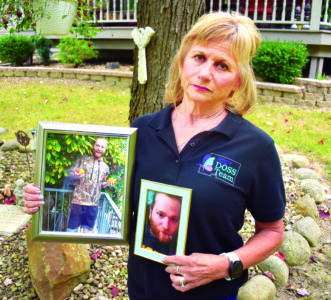
YOUNGSTOWN -- Andrea Briya of Canfield lost her son Cory in 2019 to fentanyl poisoning. It brought her incredible grief, as it did to her two other sons and other family members.
The family created a garden in the front yard of their home and planted a tree in the back yard to honor his memory.
But it's clear that one place where his memory lives the most is with Andrea.
"People think after a while the grief goes away. It does not, not when you lose a child. It's the rest of your life," she said from her home late last month.
So when she learned of a new program being started last year through the Mahoning County Mental Health and Recovery Board, she wanted to join.
The Drug Overdose Survivor's Support team would bring together family members of people who have died from a drug overdose, to help others experiencing the same thing.
"With the DOSS program, if I can help one person through this horrible journey and let them know that I am here, that they call me on their darkest days, when they don't want to get out of bed, that I am here, just a phone call away," she said. "You can talk to your family. You can talk to your friends, but nobody gets it unless they have lived through it."
ESSENTIAL INFORMATION
Lee DaVita, program coordinator for the Mahoning County Mental Health and Recovery Board, said the board provides people who have lost a loved one to overdose a packet of information on grief support groups available -- and also the steps taken at the coroner's office, and the preferred care providers family members can access for counseling or other services.
For example, a grandmother might have to take over the care of some children if their mother has died, including children with special needs.
"She might not know what services are out there, what to do with the kids as far as schooling, what type of help they need or counseling for the children," he said. "We had one family that said they might like for someone to go with them to the funeral home, and we're in the process of that right now. The families have been very open to talking. For the most part, it's been very well received."
Duane Piccirilli, Mahoning County Mental Health and Recovery Board executive director, said of the program: "I feel the volunteers of the DOSS team provide a service to someone who has lost a loved one to an overdose, that no one else could possibly understand the depth of the grief and loss -- except someone that has been there."
TRAINING
Briya and the other volunteers received training before they began their service.
"Even though we are survivors, there are still a lot of things that this training has really helped -- for us personally as well," she said. "We're going through this journey with someone else, and we are calling them."
She said the training reminds team members that the purpose of their call is to listen.
"We listen and let them speak and tell us all they have gone through. And that is what we are there for," she said.
She added talking to other people who have lost a loved one can "bring up our memories and our pain, but we are being taught on how to handle that."
Team members have someone they can call if they need it, as well as their fellow team members.
So far, team members have called 29 families in the days after they lost a loved one.
Briya said she's made close to a dozen of those calls in recent months. The families also are provided a packet of information that makes the family aware of counseling and the Help Network of Northeast Ohio help hotline at 988 or 211.
Team members call a family based on a referral from the Mahoning County Coroner's Office. The referral comes to team members when coroner's office staff members see a family or individual in need of help.
Briya and some of the other DOSS team members have known one another for a while because they have been part of a Mahoning County support group called Grief Recovery After a Substance Passing, or GRASP. Among them is Anna Howell, who is a Mental Health and Recovery Board member.
The DOSS team can make personal visits to a family' s home, but so far it has just made phone calls.
"I ask how how they are, if there is anything I can help them with, explain I am a survivor," Briya said.
NO BLAME
The GRASP website states that "anyone who has lost a loved one through substance abuse knows that society treats this loss differently than any other death from any other causes."
It adds, "There is the belief that the one who died must have somehow been a bad person. And for those of us left behind, that we too must have somehow been a bad person. We must have been a bad parent, a bad spouse, a bad partner, a bad sibling, a bad friend, or the person we love wouldn't have died."
The posting continues: "But we are not bad people. The one we lost was not a bad person. There is no blame here. For them or for you. They did their best. They struggled with their disease but, ultimately, this disease took their life. And however you tried to save them, you did your best. Because that's what love does."
Briya makes a distinction between a person who dies from a drug overdose and a person who dies from fentanyl poisoning. A person who dies from an overdose oftentimes gets clean, then relapses and dies because they didn't realize their body could not handle the amount they used before.
A person like her son, who died of fentanyl poisoning, is a person who "seeks out their drug of choice and does not know that fentanyl was put in it," she said.
She mentions the story of the two Ohio State University students who sought out Adderall in a pill form in 2022. It was actually fentanyl, and they died. CBS News reported that the university warned students after the incident to be on alert for fake Adderall pills. Adderall is used to treat attention deficit hyperactivity disorder.
Briya said her son started using marijuana first and progressed to harder drugs. Looking at his phone after his death and other information indicated that her son was not using fentanyl, she said.
Briya wishes the dealers who provide such drugs would be prosecuted more often. "It is the person who sold the fentanyl to my son they should have gone after," she said.
Briya said her son's addiction was hard on her family -- her, her husband and her sons.
"We tried to do everything we could to help him, but the drugs won in the end," she said. "People don't realize we've lost our child, but we also lost our future with our child. We've lost all the firsts, all the futures, things that they are no longer here for."
erunyan@vindy.com