
Trending
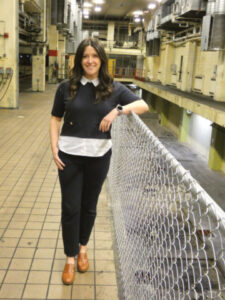
YOUNGSTOWN -- Construction is expected to start this summer on the first phase of the Youngstown Innovation Hub for Aerospace and Defense that will have $162 million in economic impact when finished.
"We're seeing generational investment here in the Valley, and that's one of the things this innovation hub program kick started," said Megan Malara, the hub's executive director since October. "Over the past decade, there's been a lot of rebirth and regrowth here and now we're seeing that investment come. Having that framework already laid and then putting real dollars and real momentum on that really allows us to catapult everything that's been fostered over the past decade."
Gov. Mike DeWine and other state officials on Feb. 27, 2025, announced the $62.2 million project, which includes $27.2 million in state funding.
The project, spearheaded by the Youngstown Business Incubator and America Makes -- National Additive Manufacturing Innovation Institute -- with several partners, received a $26 million allocation from the Ohio Innovation Hub Program. The Youngstown award is the final one from the $125 million program.
The hub project also received a $1.2 million grant from the Ohio Department of Natural Resources for the design and engineering of the new facility at the former Youngstown Vindicator building in downtown on the corner of West Front Street and Vindicator Square as well as for initial renovations.
There's a local match of $11 million, which includes $1.35 million from the city of Youngstown paid annually over four years as well as several other funding sources and in-kind contributions from foundations and corporations.
The federal government is providing $25 million for activities and projects related to product development and commercialization to take the aerospace and defense products to market using additive manufacturing, also known as 3D printing.
Additive manufacturing helps the production of military equipment through the creation of complex and customized parts.
Environmental studies, architectural renderings and plans for mechanical work are ongoing, Malara said. The first phase of construction should start in the summer, she said.
That phase will be to the building's mezzanine level filling in the space on the lower level where a printing press was located, Malara said, while still being able to utilize the space underneath it. The plans are to have space for businesses at the building in the first half of 2027, she said.
From there, work will be done to the dock floor in a second phase and then work to office space on the upper floor, Malara said.
"It's a big renovation and we're looking forward to what the building is going to become," she said.
The project is expected to be finished by 2029.
"Our innovation hub program funding from the state is through 2029," Malara said. "But we're having businesses move in and a lot of activity occur prior to 2029. But we hope to really be humming by 2029."
When the hub is fully operational, it will have 350 employees working at the building, Malara said. There will be 100 additional construction jobs for the project, she said.
"Our main activities with the innovation hub focus around infrastructure and on programming how to recruit businesses here and how to support the businesses already in the region," Malara said.
Another aspect is a comprehensive workforce development initiative to upskill the current workforce and ensure the region's future workforce has the skills and knowledge to work at the hub. Those efforts are expected to create 185 new STEM (science, technology, engineering and math) credential opportunities and 40 internship opportunities.
The former Vindicator building has about 75,000 square feet of manufacturing space and about 30,000 square feet of equipment, office and convening space.
The old Vindicator closed in 2019 with its name, subscription list and website purchased by the Tribune Chronicle, which continues to publish the newspaper.
When the project was announced last year, the plan was for the building to house expansions of JuggerBot 3D, a manufacturer of industrial 3D printers, and Ursa Major, a rocket propulsion company. The companies were to take up about half of the usable space at the downtown building.
Malara said: "They certainly may come. As the time line progresses, they will make final decisions. They are two companies that have been involved with the innovation hub long before it even had that name. They have presence currently in YBI's current Tech Block Building No. 5 and elsewhere in the Valley. They're really great champions and partners for us and they have a strong interest in locating in the building."
Because the building is so big, it can accommodate large pieces of equipment used by JuggerBot 3D, Ursa Major and "any business that needs manufacturing or office space to grow," Malara said. "We will have space available here for businesses looking to expand their footprint or get different visibility or connections. That can be new startups or existing businesses."
Malara said: "We have interest from international businesses that see value in tapping into the U.S. market and know the importance that if they're going to sell to aerospace or defense, they need to set up here in the United States."
Malara said the innovation hub "helps diversify the local economy. It helps support a resilient and robust economy by creating good, high-paying jobs and having the infrastructure to continue growing the aerospace and defense work in the Valley."
Malara added: "It's great to have this building as a symbol of the innovation hub. It's great to see the renovation of such a downtown landmark. But it's not the entirety of the innovation hub. There's a lot of activity that isn't located in the building and doesn't intend to be located in the building. We have programming available to help support the business growth and tap into the aerospace and defense markets and upskill workers. It's a great pillar of what we're doing. But even if you're not in the building, we can still help you."
DeWine said the innovation hub is "important and I base that on what people in the Mahoning Valley tell me. They think it is important. That's one of the reasons we put it there. If you look at the future of the Masoning Valley, I think it's a strong future, a good future."
DeWine added: "There's a lot of positive things going on in the Valley. The innovation hub is certainly one of those things that will ultimately make a big difference."