
Youngstown man acquitted in teen’s death
Defense attorney sold jury on client’s self-defense claim
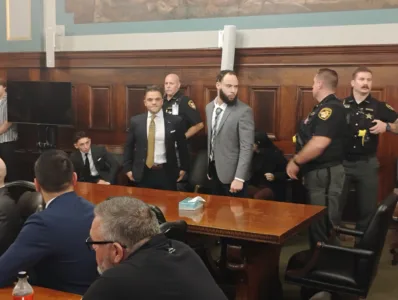 Staff photo / Dan Pompili
 Trending
YOUNGSTOWN -- Darius Smith is a free man.
A Mahoning County jury, seated before Mahoning County Common Pleas Court Judge John M. Durkin, acquitted the 23-year-old south-sider Friday on one count of murder with a firearm specification. Smith faced a minimum sentence of 18 years to life if convicted.
There was no dispute that Smith fatally shot 16-year-old Ty'Ron Perry Jr. on May 27 at Smith's Dewey Avenue home, or even that he shot him seven times. The question before the jury was whether Smith acted in self-defense.
The jury, which returned about 1:30 p.m Friday, apparently believed he did.
Defense attorney Frank Cassese lauded the decision.
"I'm very pleased with the verdict returned by the jury. I believe they got it right. It's a tragedy all the way around, and I said that from the beginning. My heart breaks for this kid" he said. "Unfortunately, under the circumstances, I think that my client acted in self-defense, and the jury thought so too, so I'm happy for Darius Smith."
Perry's family, on the other hand, were visibly distraught by the verdict, although they declined to comment openly, as did Mahoning County assistant prosecuting attorneys Patrick Fening and Daniel Yozwiak.
The case, which began on Tuesday morning and was handed to the jury on Thursday afternoon, focused on whether Smith had good reason to believe Perry Jr. posed a direct and immediate threat to him in the moments before Smith turned and opened fire.
The story presented to the court, by and large, was that Smith's mother, Chancy Kennedy, had been bailed out of jail that night by some friends and an impromptu party at the house woke Smith up, with party guests playing cards and doing drugs. Kennedy's home is a known drug den, according to both the defense and prosecution and the defendant himself.
Smith said he has had possessions stolen from his bedroom before, and he believed he heard some of the people in the dining room that night propose robbing him.
So, he said, he grabbed his gun, put it in his pants pocket and went out to the dining room to check the situation, asking everyone in turn: "are you cool?"
At that point, a verbal disagreement occurred between Smith and Perry Jr. Smith proposed throwing punches, and Perry responded by proposing they "throw bullets" instead. Perry then told Smith to go sit down.
Both defense and prosecution witnesses, as well as the defendant, stated that Smith turned away, took a few steps back toward his bedroom, then turned around and opened fire, killing Perry. The boy sustained four gunshots to the upper chest, one to the right hip, one to the back of his head and another to his left wrist.
The debate over self-defense came down to a question of whether Perry was brandishing or raising a .40-caliber Highpoint handgun at Smith before he was shot.
Multiple witnesses in the case stated that Perry Jr. had placed the gun on a cabinet freezer in the kitchen when he and his father first walked in, with his father having handed it to him.
Ty'Ron Perry Sr. told the court that after he attended to his dying son, he grabbed the gun from the freezer top and ran out of the house to chase down and shoot Smith, who had fled through the front door.
Smith, on the other hand, testified that Perry was holding the gun and had raised it just before Smith shot him. Fening repeatedly challenged him on that point, pointing out that no other witness before Smith - the final person to testify in the trial - had said Perry raised or pointed the gun.
Perry Sr's handling of the weapon after touching his son's blood was also the prosecution's explanation for why the crime lab found Perry Jr's DNA on the Highpoint, as opposed to the touch DNA that would have been left there simply from the boy handling the gun.