
Mums the word
Tips, tricks for taking care of the fall flower
Trending
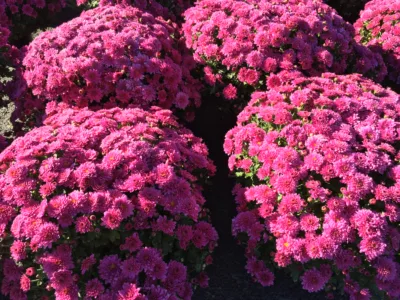
Our flowers are turning brown, and our plants are drooping. In come the mums (Chrysanthemums) to spruce up the color before the winter blah! At this time of year, we begin seeing beautiful fall colors in mums -- red, golds, pinks, yellow, white, purple and burgundy. Blue is the only color that has not yet been perfected in these garden plants. We can also find flowers in a variety of shapes -- pompons, daisy-like, spider and button. They are in yards, on porches and are part of fall arrangements.
Have you ever planted your mum, expecting to find it the following year? And then, there is nothing! Hopefully, this information will help you with that problem, and allow you to see the beautiful flowers return the following year.
Not all mums can survive winter. There are actually two classes of mums when it comes to determining perennial (bloom the following year) and annual (last only one season).
Many of the mums we see today are referred to as "florist mums." They are beautiful and colorful but will not last over the cold winter months because their root systems do not have strong underground shoots. They are sold for floral purposes, either potted or as cut flowers. They can be planted in the garden to add color but will not return the following season. These mums are likely to be sold in grocery stores, big-box stores and locations where you find seasonal, fall decorations
The garden mums, sometimes called "hardy mums," on the other hand, make a great addition to any garden. They can bloom in September, October and even into November. They will normally over-winter in our area. This means that they can be considered perennials and will return next year. They have many branches and can get very large, sometimes even becoming "shrub-like." They can be planted in the spring or in the fall. Hardy mums can usually be found in your garden centers. If not sure, ask!
Hardy mums need a little extra care if you want them to return the following year. As they can get large, they may need staked. To reduce stem growth and to keep them looking fuller, most of the mums will need pinched back two to three times before the middle of June. To pinch a mum, remove about one-third of the new growth, back to the bud. This should be done when the plants are about 6 inches tall. This first pinch encourages lateral branches.
When the lateral branches are about 6 inches, pinch a second time, just above an attached leaf. The result will be nicely shaped plants that are covered with buds. Many of us really dislike doing this, because it seems that we are reducing the size of the potential mum. However, pinching will encourage the growth of branches, increase the width of the plant, and increase the budding.
Garden mums prefer well-drained soil and need to be fed. You can use an all-purpose fertilizer in the spring, when growth starts, and in the middle of summer when the flowers begin to form. They should be watered deeply but infrequently. When the garden mums are planted in the fall, they need a little more attention to watering and winter protection. Chose a sunny area where there will be good air flow.
It is not necessary to cut the mums back after they have finished blooming in the fall. It is best to mulch hardy mums with about 6 to 8 inches of mulch. Pine needles or straw will work very well.
For more information, see: http://go.osu.edu/gardenmums.