
Trending
Have you ever wondered how plants and flowers get their name?
When it comes to naming a newborn baby, expectant parents have plenty of resources available to assist them in naming their child. However, when it comes to the botanical and gardening world, there exists a much more structured method to assigning a name.
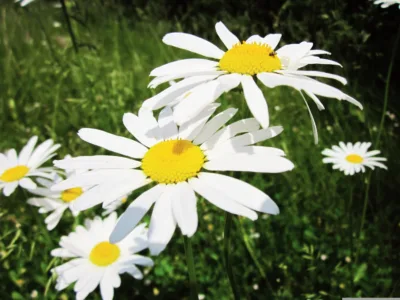
Most people are familiar with the common names of flowers like daisy. Common names are typically easy to pronounce, but are not necessarily the best way to refer to a specific plant. That's because common names can often vary by region, (think soda or pop) which can often lead to confusion when it comes to identifying a particular species. In the case of daisy for example, Penn State Extension states that there are at least 18 different species of this popular perennial.
In order to take the guesswork out of it, according to Purdue University's horticultural department, a Swedish biologist by the name of Carl Linnaeus, during the 18th century, set out to make the naming of plants more precise and universal. His work led to the International Code of Nomenclature for algae, fungi and plants (ICN), which is a standardized two-name binomial system. That system is still in use today and is broadly based on Latin or Greek terminology, which is recognized worldwide.
Gardeners can locate a plant's scientific or botanical name on the plant's tag found at their local garden center.
It is typically located below the common name. In the case of oxeye or field daisy, its scientific name is Leucanthemum vulgare. The first name in this binomial configuration always identifies the plant's genus and is always capitalized. The genus groups together closely related flowers based on a common leaf, flower head, seed or other plant characteristics.
The second name is always in lower case and refers to the plant's species. Species is a subcategory that serves to help better identify a plant based on shared characteristics like foliage, flower form, plant height or color.
Breaking down the oxeye or field daisy aka Leucanthemum vulgare, the genus name is Leucanthemum, which is derived from two Greek words: leukos, meaning white, and anthemum, meaning flower. The species vulgare is a Latin word that means common or ordinary.
So how about the common name "daisy"? How was that name derived? According the Merriam Webster dictionary, daisy gets its name from an old English word, daegeseage, which is loosely translated to mean day's eye.
This name is believed to be given because of the flower's daily habit of opening its petals at dawn and closing them at dusk.