
Trending
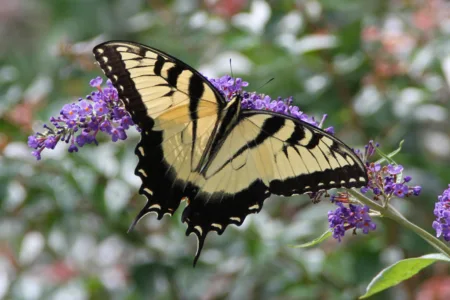
Swallowtail butterflies are large (2¾ to 5 inches) and easy to identify. They are found in a variety of types and colors (spicebush, black, eastern tiger, zebra and pipevine blue). Each one actually resembles the name it is given. They normally are bold black and yellow or black and blue, each one with its own colors and patterns.
Swallowtail caterpillars are found in a variety of colors and shapes, depending on the type. Most have smooth skin; some have long tentacle-like projections and a brightly colored Y-shaped horn (called an "osmeterium") that the caterpillars can extend from behind their heads when disturbed. These horns can secrete foul-smelling chemicals that form their defense.
All swallowtails have a complete metamorphosis (change/alteration), beginning with the egg, followed by larval (caterpillar), pupal (developing inside a cocoon where feeding stops and internal changes take place) and adult stages. Most swallowtails and the caterpillars are active in warm months and overwinter (keep or stay alive) as pupae.
Swallowtail caterpillars have different defenses. Mentioned above, they are able to secrete chemicals that smell and taste bad. This will keep most predators away. Some, such as the spicebush, resemble snake heads. This "look" keeps birds and other large predators away.
Sometimes, the caterpillars actually "let go" of their perch and fall to the ground when disturbed.
Even with these built in defenses, they are attacked by a variety of predators, such as birds, spiders and other insects. The adult is hunted by birds and flying insects, such as dragonflies.
Swallowtail caterpillars tend to feed on various plant life including sassafras, parsley, carrots, parsnip, celery, caraway, and related garden plants. It is the caterpillar, not the butterfly, that causes unwanted damage if they find a "home" in your garden. The best way to rid them from your garden is by actually picking them off. But, if you do, you won't see the beauty of the butterfly!
Swallowtail butterflies are very colorful pollinators in the garden. For a lively garden, plant leafy greens and flowers that attract and support these butterflies and their caterpillars. The most attractive flowers for the butterflies are those that cluster together with bright colors, especially red (a color that bees cannot see!) Large petals and large flower heads allow the butterfly to land. As they consume the nectar from the flowers, they also pick up the pollen and carry it with them to other flowers.
The spicebush swallowtail caterpillar resembles the head of a snake, with an osmeterium (the defensive organ behind the head) that actually looks like a red forked tongue. The butterfly is brownish in color with yellow accents along the outside of its wings.
The Black Swallowtail can usually be found in fields and gardens. It is one of the few pest butterflies because its caterpillar feeds on garden plants. This caterpillar is also referred to as the parsley worm.
The eastern tiger swallowtail is one of the most recognizable, and at times can be found by the hundreds in the right habitat. This butterfly also likes to "puddle," gathering in muddy water to gather moisture and nutrition. This caterpillar can also have a snake-like appearance and feeds on leaves of hardwood trees, such as tulip, ash, birch and cherry trees.
The pipevine swallowtail or blue swallowtail is very showy. The upper surface of its hind wing is iridescent blue or blue-green with pale arrowhead markings. The underside of the hind wing has a row of seven round orange spots in an iridescent blue background. Both surfaces of the forewings are black. Young caterpillars feed in groups, but become solitary when older. A common caterpillar host is the pipevine, hence their name. Their sole food is nectar from thistles and flowers, such as lilac, azaleas, phlox, lantana, petunias, verbenas and lupine. Females lay one to twenty reddish-brown eggs on the underside of host plant leaves. The Pipevine has a poisonous quality to the larvae, much like the Monarch butterfly for protection by feeding on the milkweed.