
Milkweed plays host to ravenous moth caterpillars
Trending
We have a milkweed colony right up to our mailbox, as the township officials are always cutting back the ditches.
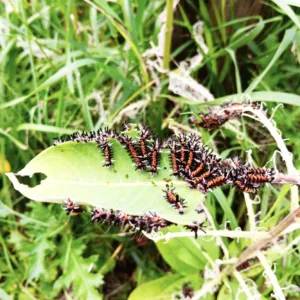
We stopped for the mail and Bill was so excited. Caterpillars on the leaves! I took pictures and I even made a video, as they moved with jerking motions, very unusual. I posted the pictures in haste. A short time later, a fellow Master Gardener sent me a message that these were not Monarch caterpillars as I had labeled them, but they were milkweed tussock moth caterpillars.
I got so excited that I forgot a No. 1 rule -- to always check the facts. Thus I am now writing this article, turning it into a learning experience.
The Milkweed Tussock moth (Euchaetes egle) caterpillar is beautiful as well as interesting. It is covered with dense black, white and orange tufts of hair with these colors signaling its toxicity. These urticating hairs are pairs of tufts that stick out irregularly.
Monarch caterpillars, on the other hand, lack the conspicuous tufts of hair found on milkweed tussock caterpillars and have yellow, black and white bands along their bodies. They, too, have long black antennae. While both eat milkweed, the Milkweed Tussock caterpillar strips the leaves to the veins.
"Milkweed Tussock caterpillars are ravenous eaters and serious competitors to Monarchs," according to Joe Boggs of The Ohio State University.
Their toxicity comes from the white latex sap that is in the milkweed tissue. These caterpillars are native insects and are communal, hanging out at the buffet, making their jerky moves, and emitting an ultrasonic wave that warns bats to stay away at night.
Milkweed plants attract a large variety of insects, including the Large Milkweed beetle, the Red Milkweed beetle and the Milkweed leaf beetle. Along with the Monarchs and the Milkweed Tussock moth (also called the Milkweed Tiger moth), a gardener need not be concerned about milkweed straying into unwanted areas. There are plenty of browsers.
Born from masses of fuzzy eggs on the undersides of leaves, the Milkweed Tussock caterpillars emerge as creamy white tiny eating machines with black heads. By the later instar we see the telltale tufts of hairs warning that if you must handle these beauties, you should wear heavy gloves as these hairs can cause an uncomfortable rash.