
Trending
Every animal, when crossing through a forested area or meadow, leaves a sign behind, whether intentionally or not. Deer leave eaten vegetation, broken branches and, if it has just rained, footprints can be found, all indications of recent animal behavior.
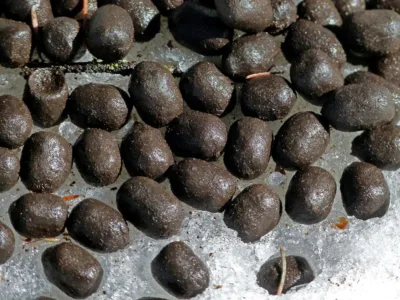
Another interesting and useful method of wildlife identification is scat, or the droppings left behind by mammals.
Scatology, the study of animal droppings, according to the University of Illinois at Urbana, can reveal what species were in the area and even their diet through undigested hair, bones, seeds or plant material. When marking home territories, many mammals return often to areas where they feel comfortable and where a food source is easily available. Whether an animal is sick or healthy or how long ago the animal passed by are among the many ways scientists determine identification.
Scat size is determined by the size of the animal. The smaller the mammal, the smaller the scat as evidenced by rodents, squirrels, chipmunks and rabbits. Many small herbivores, such as rabbits and deer, produce pellet-shaped droppings, while larger herbivores such as cattle and horses produce larger, differently shaped manure. Carnivores, whether foxes, raccoons or skunks, or even much larger ones like bears, have larger tubular shaped scat.
Scientists prefer to collect data from mammals without capturing or causing any undue stress to an animal. Because all cells in our bodies contain DNA, collecting information of any species can even garner information of an individual animal. With a number of samples, determination can be made concerning the health, reproduction, stress levels and food availability of either a group or individual species.
Terminology varies with each species. Whether it is deer fewmets, bat guano, insect frass or earthworm castings, the overall health can be determined by this biomarker with amazing accuracy. Animals also use spraying as well as scat as a map of information for other mammals, whether it is for establishing territory or breeding purposes.
Farmers often use livestock manure to improve soil fertility and provide nutrients for crops. When properly composted and applied according to food safety guidelines, manure is an effective soil amendment.
Unfortunately, animal droppings near crops can introduce harmful pathogens that may contaminate surrounding vegetation. According to the University of Missouri, these pathogens can also spread through irrigation water or rain splash, potentially moving bacteria throughout an agricultural area. Maintaining food safety is an important concern for growers, which is why farmers use various management practices to reduce wildlife intrusion and protect crops from contamination.
Scatology is only one scientific and interesting method of determining the health of an individual or group of wild animals. As scientists increase their knowledge, it will help our wild animal populations maintain a healthy balance.