
China’s imperial cuisine lives on today
Trending
BEIJING -- It is said that Empress Dowager Cixi once dreamed of a pastry during the final decades of imperial China.
The same treat was served to her at breakfast the following morning. Delighted, she summoned her chef and rewarded him with a silver ingot.
"It was originally called 'minced pork pancake,' but because it had fulfilled her dream, it later became known as 'dream pastry,'" said Zhou Tong, a chef at Fangshan Restaurant in Beijing.
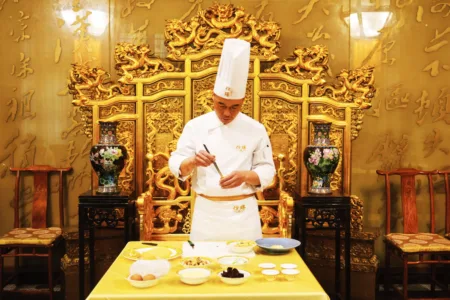
Fangshan specializes in imperial cuisine, preserving dishes like the one associated with Cixi and other culinary traditions from China's imperial court. The restaurant was founded in 1925 by former chefs from the Qing Dynasty at Beihai Park, a garden where royals from several dynasties rested, handled government affairs and performed ritual sacrifices.
"The name Fangshan literally means 'imitating the imperial cuisine,'" said assistant general manager Di Xin.
A handful of other Beijing restaurants also serve versions of imperial cuisine, while the Palace Museum preserves Qing-dynasty objects tied to court dining, including pastry molds.
Imperial cuisine encompasses the meals emperors ate daily and the feasts their courts held throughout the year.
Each had its own rituals. Drinking milk tea, for instance, was an important first step at Qing-dynasty banquets, said Teng Deyong, a researcher at China's Palace Museum.
During the banquet, the emperor bestowed wine or food on princes and officials. Recipients performed rites and paid their respects to him before they ate or drank.
Aside from banquets, sacrificial rituals were held. They followed a separate system and could involve meat offerings.
"At the Palace of Earthly Tranquillity, there was the eating of sacrificial pork, which we know was one of the most important rituals of the Qing imperial court," Teng said.
In that ritual, fatty pork was boiled without salt. After the ceremony, it was distributed among guests, and receiving the sacrificial meat was considered a great honor.
Unseasoned food also appears in earlier Chinese ritual traditions. Wandi Wang, a professor of Chinese at Lehigh University in Pennsylvania, said the "Book of Rites," a classical work on rites and ceremonies, describes a meat broth known as "grand stew" that was served without seasoning during sacrificial ceremonies.
"The absence of added flavoring was itself meaningful: the unseasoned dish evoked an earlier and simpler way of cooking and thus expressed a ritual ideal of honoring antiquity and remembering cultural origins," Wang said.
Pastries were key to imperial cuisine, and the court had an institution specialized in making them.
Sweets made at Fangshan by Zhou include Cixi's dream pastry and a small steamed corn bun. Their recipes are rooted in the imperial court.
"When customers visit, our servers often tell them the stories behind these dishes," Zhou said. "People enjoy them even more because they carry such meaningful history."
He learned his pastry-making technique from a master who had also learned from a mentor. It's a craft that has been passed from one generation to the next.
Traditional imperial methods mean cooking must be done by hand -- no blenders or food processors are allowed. Ingredients like beans are pulverized using sieves and certain flours are handled in custom-made copper pots.
"A machine may be more convenient, but the texture is completely different," Zhou said. "You lose the delicate graininess and sandy mouthfeel that handcrafted pastries are supposed to have."
Among Fangshan's bestselling delicacies are the pea flour cake and the red bean roll. During the busy season, customers order more than 200 of the cakes per day.